


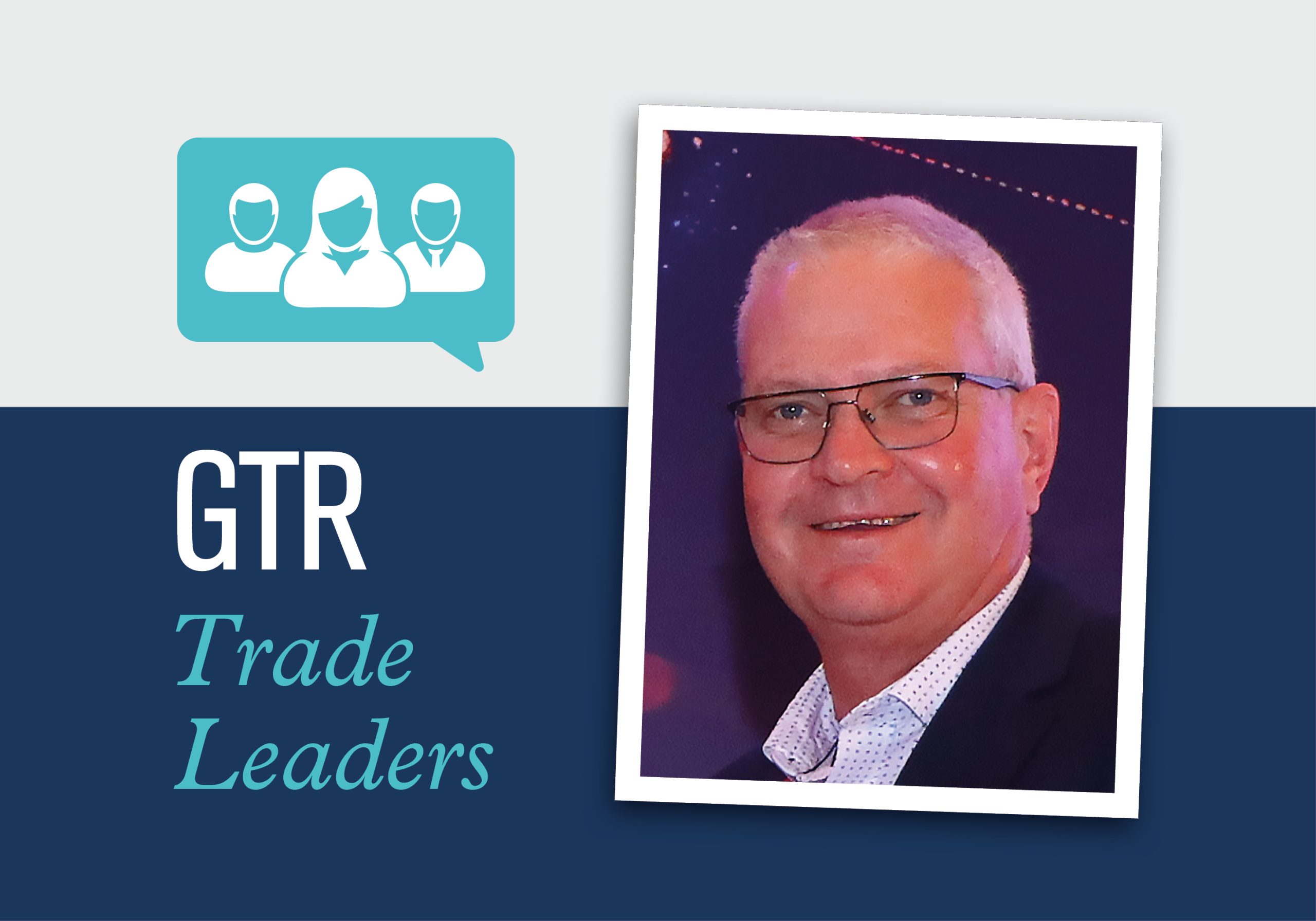
Zhann Meyer does not speak about African agriculture in the abstract. Whether discussing fertiliser affordability, crop rotations, irrigation projects or the economics of cashew harvest across East and West Africa, Nedbank’s head of agricultural commodities approaches commodity finance with the mindset of somebody who truly understands the business of farming.
And even after a career spanning nearly three decades, Meyer is still finding ways to push the envelope. Speaking to GTR on the sidelines of GTR East Africa in Nairobi last week, the agricultural commodity finance veteran discussed the bank’s regional growth plans amid news of its acquisition of a 66% stake in Kenya’s NCBA Group, the rise of secondary processing across the African continent, and how new tools such as remote sensing and insurance-backed models are changing the way Nedbank supports farmers in increasingly volatile markets.
GTR: You have built a solid career in commodity finance, including the past 14 years at Nedbank leading the agricultural commodities portfolio. What first drew you to the sector, and what still keeps you here?
Meyer: When I started my career in banking 28 years ago in South Africa, it happened to be that I was involved in the soft commodity trade business as my first role in a bank. And I just found it absolutely fascinating that a financing institution was actually able to make a difference and to capacitate agriculture. And that’s still the driving force today. The ability to get out there and make a difference.
The exciting part is that we now see secondary processing plants being built and commissioned on the African continent, which wasn’t the case when I started my career. Africa was merely a place where raw commodities were grown, taken to a port and exported to somewhere else in the world to get processed. We’re now seeing banks engaging in secondary processing, enabling financing of capital expenditure, and making a real difference on the continent. It’s not only about adding value to the commodity on site – you are also creating more jobs, more value for farmers on the ground, and foreign currency earnings for governments.
GTR: How has the scope of your role evolved over recent years?
Meyer: Pre-pandemic, it was pretty much a case of a trader would come to us and we would rely on documentation, understanding the flow of commodities, and literally doing a paper-based trade, as was always the case. Post-pandemic, we realised it’s much more important to have face-to-face interaction with clients, understanding the business, and having eyes and ears on the ground. We learned, in some cases very expensively, that it’s in the banks’ interest to understand our clients’ businesses and not merely rely on trade documents and paper. That also led us to become an integral partner in the business, rather than just a financier.
We also see traders more and more investing on the continent, and as banks, that gives us a lot of comfort, because if capital and equity are being deployed on the continent, that trader is unlikely to leave you in the lurch. He’s now got a vested interest in making sure the commodity gets bought cheaply and sold at a premium. That, I think, is where the shift is. We are no longer just suppliers of cash into a system where we do not understand the underlying commodity or where it goes. It’s important to understand that there’s a producer and a buyer on the other side, and there’s value to be added in the middle.
GTR: Nedbank’s planned acquisition of a stake in NCBA is arguably one of the bank’s biggest strategic moves in years. What does that mean specifically for the commodity finance and agricultural trade business and your ambitions in East Africa?
Meyer: We’re very excited about the partnership. The deal is not consummated yet, we’re waiting for regulatory approval, but in terms of what we see as the prospect, it’s eyes and ears on the ground. NCBA has 60 million customers across the region. For us, that is an immense source of data and client contacts, and having a partner on the ground to make sure we understand our clients’ businesses and deeply integrate into their supply chains.
The other thing is that NCBA has skills that we don’t have, and vice versa. I think there is a great collaboration opportunity to build a really powerful tool to actually enhance food security in the region. Agriculture in East Africa has, in the last three or four years, been an important strategic focus for the corporate and investment bank, and we’ve grown that portfolio and mandate quite strongly in the region over that period. I see this acquisition as something that’s going to augment that position and catapult us to where we really want to be, and play the role we want to play in East Africa.
We are also seeing large third and fourth-generation traders in East Africa now embarking on building sugar refineries, putting large irrigation projects on the land to produce food for the country. That’s the type of engagement that I think we’re now getting a licence to play in, where it was very difficult for Nedbank to play before.
Having said that, we’ve got a very strong West Africa presence as well. What we’ve found in recent years is that a lot of our clients, because of the contrasting seasonality – for example, in the cashew nut industry, when the season closes in East Africa, it starts in West Africa – have now started investing in both, because they have a flow of cashew nuts to processors and buyers throughout the year. We feel it’s important to play a role in that chain.
GTR: The Middle East conflict has sent fertiliser prices surging. For African farmers who are already price-sensitive and input-dependent, what is Nedbank seeing on the ground in terms of how clients are being affected, and how is that changing the risk conversation in commodity finance?
Meyer: It’s too early to tell. In South Africa, we’re closely monitoring our clients and the impact on our farmers. Fortunately for us, our winter season is starting now, and most farmers have already bought fertilisers and fuels because the tax year ends in February.
We can only hope the effect is not prolonged, but I do think that the aftermath of this, even if it’s resolved tomorrow, is going to have a huge impact on what commercial farming looks like in the South African context. We will probably see farmers plant less and switch to less fertiliser-intensive crops like soybeans and sunflower seeds.
On the African continent, I think it would be foolish to say that traders are not going to feel the impact. The large fertiliser importers are probably buying less, being very conservative around the positions they hold in fertiliser at the moment, because at US$900 a tonne, it just does not make sense.
In terms of Africa’s dependence on fertilisers and energy from the Middle East, I think this situation will push many farmers to ask hard questions about switching to regenerative agriculture. The availability of fertilisers and inputs for the general African population is also an important barometer of social stability and a political tool. Will governments make fertilisers available for farmers to plant in a situation like this? That needs to play out. We don’t know what that’s going to look like.
GTR: You’ve previously talked about the potential for African banks to add value to GCC partnerships in agricultural trade. With the Middle East now in conflict, has your thinking on the GCC-Africa agricultural corridor shifted?
Meyer: That market is now closed to everybody, and it’s nothing that our clients have done – if the markets open again, the commodities will start flowing again. So I’m not too concerned about the doors being closed forever. But the effect on everybody has been that risk premiums on containers are literally running into thousands of dollars at this point. Some of our clients, especially exporters of red meat, have stopped summarily exporting into the EU because it has become too expensive. They’ve had to find alternative markets. It’s going to take a while for that value chain to be reinstated and for trust to be rebuilt.
On the question of GCC investment into Africa, I don’t think it’s going to be heavily impacted. Africa is still close by, it’s still a vast resource of arable land, and it’s still seen as a food source for the GCC. I don’t think that’s going to change soon.
GTR: With farmers facing simultaneous stress from the Middle East conflict, tariffs, EU regulation and climate shocks, what can Nedbank do to support them, and where are the priorities?
Meyer: It’s critical to understand that farming has inherent risks. It’s also critical to understand that farming is inherently profitable. Our markets are ruthlessly efficient. If there is limited supply, prices go up; if there is abundance, prices go down. For a bank, it’s important to understand that dynamic.
Where farmers are in a position where they have to plant less because fertiliser prices don’t allow them to, it’s within a bank’s portfolio management to understand that the farmer might have carryover debt for one or two seasons. It’s the bank’s prerogative to recognise that the farmer might need to apply for an extended loan, and not to take drastic action due to factors outside the farmer’s management capability or expertise.
We need to realise that farming is risky, and there’s always a weather element. Therein lies the need for us to take policies and procedures to our credit committees that allow us to keep those farmers on their land, because that’s critical for us. That’s the role we need to play.
GTR: Beyond navigating the immediate crises, what goals or ambitions do you have for the next two to three years?
Meyer: We’ve started being innovative around the use of insurance proactively. We have a programme we call Virtual Farm, where we use remote sensing, drones and satellites to make sure we understand the risks on the ground. That’s fairly innovative, it’s a Nedbank-exclusive programme where we wrap insurance over the entire production risk element of the book. We’ve been working on it successfully and I want to roll that out aggressively, because I think it’s a very important solution for African agriculture.
The use of technology, not only on the farm in a tractor or combine harvester, but also for banks to manage risk, is going to become an increasingly important component of enabling us to finance food security. By the same measure, funding a small-scale farmer on the African continent is extremely difficult because the conventional model of taking land as collateral doesn’t work – the farmer does not own the land, it’s communal. You cannot fund those farmers in the conventional way.
In two to three years, what we’ll see is that we are going to use alternative methods of financing to get to those small-scale farmers and get them to create optimal yields and quality on their fields. It’s imperative.
GTR: Finally, what does Zhann Meyer look like away from the Nedbank desk?
Meyer: I love nature, so I’m an avid scuba diver – I’ve just been scuba diving in Zanzibar and go to Mozambique often. And then I run half marathons, for my sins. I’m not very good at it, but at least it keeps me fit.