


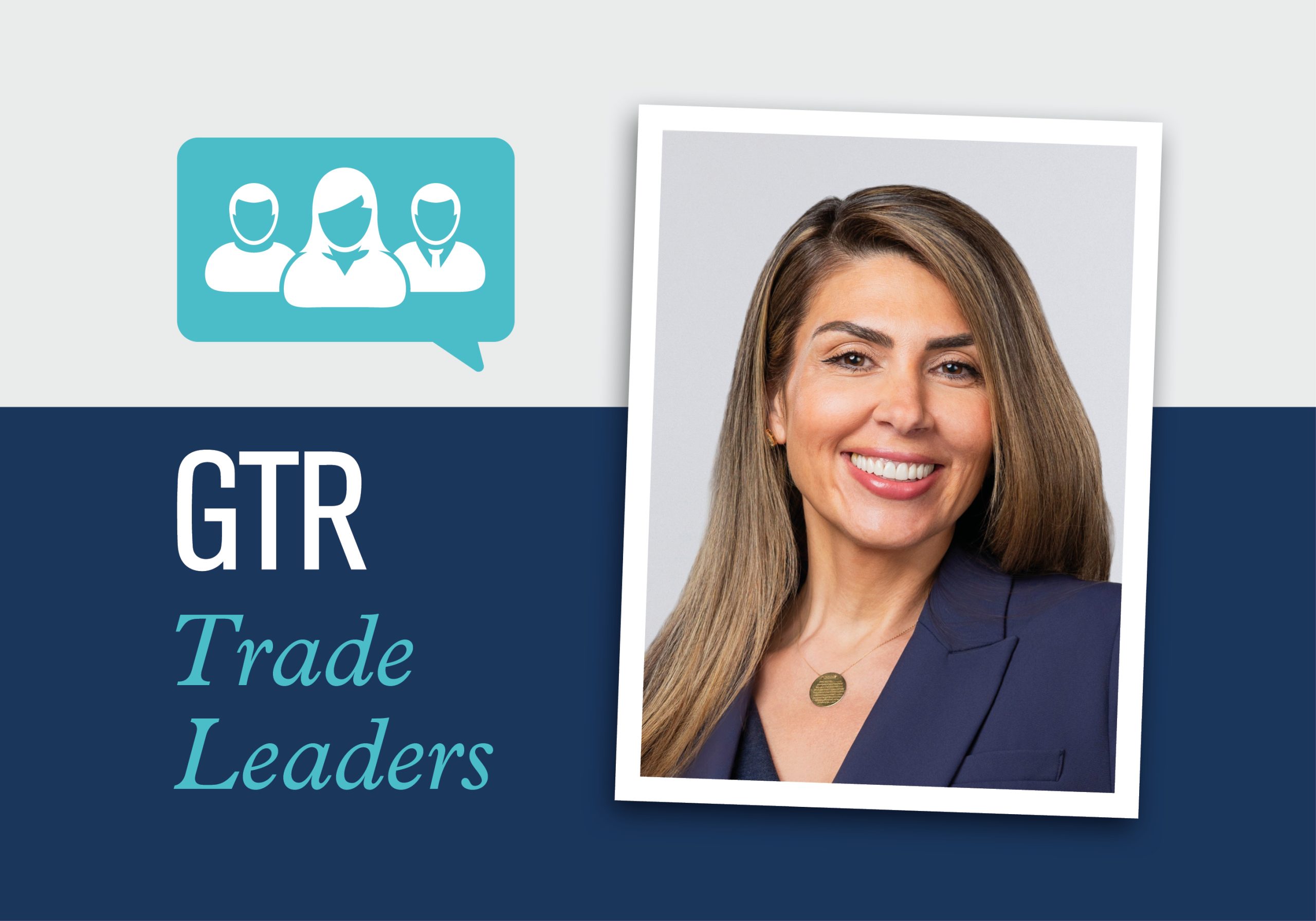
When Sereen Ahmed relocated from Dubai to New York in 2023 to become Americas head of trade and working capital at Barclays, her brief was not simply to grow the business, but to build a more locally anchored trade platform for the region.
Having spent more than two decades across operations, payments, trade finance and transaction banking leadership roles in the Middle East and now the US, Ahmed has overseen the expansion of Barclays’ Americas trade capabilities, including the rollout of Trade360 with CGI, deeper sector specialisation and a growing focus on structured trade solutions for clients with complex working capital needs.
Speaking to GTR in New York in May as part of the Trade Leaders series, Ahmed discusses why sector expertise matters more than ever, how banks are modernising legacy platforms, and why leadership and prudent decision-making remain critical in a rapidly changing industry.
GTR: You moved from Dubai to New York at a pretty turbulent time for global trade. When you arrived in the US, what did you want to build?
Ahmed: When I joined in the US, the focus was on expanding trade and working capital for the Americas as part of the wider transaction banking strategy. From the beginning, we had a very clear idea of how we wanted to position ourselves in the market. We didn’t want to be a bank trying to do everything. We wanted to be a solutions provider and address some of the gaps we still see in trade and working capital.
A big part of the strategy was building stronger local capabilities in the US while still leveraging Barclays’ wider global platform and expertise.
One thing that became very important very quickly was sector expertise. Trade is an extremely fragmented business across industries, jurisdictions and regulations, so building the right team was critical. I’ve been very focused on bringing in people with deep sector knowledge and a strong understanding of the local market.
What I found in the US market is that people are often very product-focused. They may know supply chain finance or receivables discounting very well, but it is much rarer to find people who understand trade more broadly across products and structures.
That’s why a big part of the strategy has been becoming much more sector-led across both corporate and financial institutions group trade. We’ve expanded product management, client management and sales, and brought in expertise across sectors including commodities, energy, power and utilities, insurance and funds.
GTR: And where have you focused most heavily from a business and product perspective?
Ahmed: Structured trade solutions have been a major focus. Clients increasingly need much more sophisticated structuring support, particularly in sectors where funding requirements can be very large and complex.
The biggest shift we are seeing in the market is around liquidity pressure. Higher interest rates, tariffs and broader market disruption are all impacting clients, which is increasing demand for more structured and off-balance sheet solutions.
We’re seeing that particularly across sectors like insurance, energy and commodities, where facilities can be very large and long-dated. Clients are looking for ways to manage contingent liabilities while preserving capacity for capex and day-to-day working capital needs.
That’s driving much more interest in risk distribution structures, insurance-backed solutions and counter-guarantee structures, particularly where companies want to diversify funding sources.
We’ve already closed a number of large and innovative transactions in this area, including some relatively niche structures, and our strengthening expertise has helped us support clients with a much broader range of working capital solutions.
The US is a very large market and there is still a huge amount of opportunity in this space. What we are doing today is really just scratching the surface.
GTR: A large part of your focus has been on building out digital infrastructure and partnerships. Why has that become so important?
Ahmed: When I joined, we did not have local trade capabilities in place in the US. Trade360 with CGI, which went live in the middle of last year, has become a major milestone because it allowed us to start building that local infrastructure and serve clients much more effectively within the US time zone, while still leveraging Barclays’ global product suite.
Across the industry, large global banks are all going through a similar process of retiring legacy systems and moving towards more integration-friendly platforms. Older systems are expensive to enhance and difficult to connect with new technologies.
That was one of the reasons we chose CGI for Trade360. We wanted a platform architecture that would allow us to scale more effectively and integrate more easily with external solutions. Through the platform’s API connectivity, we’ve already integrated with [trade finance platform] Komgo, and we’ll continue adding capabilities over time as part of our wider digital strategy.
The Komgo integration itself was very much client-driven. A number of our clients – particularly in commodities and energy – already use the platform for guarantees and letters of credit workflows, especially in Europe, but increasingly in the Americas as well. Clients were asking us to connect into those existing digital ecosystems.
GTR: A lot of what you’ve described, whether building teams or new capabilities, comes back to leadership. How has working across different regions and banking environments shaped your approach?
Ahmed: Working across different regions has definitely shaped my leadership style. When you have international exposure, you naturally become more inclusive in the way you lead, because you are constantly working across cultures, perspectives and ways of thinking. For me, it’s very important that everyone feels they have a voice at the table.
At the same time, I’m very focused and outcome-driven. I don’t like doing things simply for the sake of doing them – I always want clarity around the objective and the outcome we are trying to achieve.
I’m also very intentional about how I build teams. We’ve grown significantly from where we started, and with every person I hire, I think carefully about where they can develop, what their strengths are and what path they can build within the organisation. I want people to feel they are part of a journey and that there is a clear direction for their growth.
GTR: A lot of people in the market speak very highly of you as a mentor. Why has that become such an important part of your leadership style?
Ahmed: Throughout my career, I’ve had both very strong mentors and periods where I didn’t really have that guidance. So I understand the impact leadership and mentorship can have on people’s careers.
There were times when I struggled to get the right advice or direction, and I think that experience stayed with me. It’s one of the reasons I care so much now about creating that support system for others, particularly for younger professionals coming into the industry.
I try to do that not only within Barclays or within my own team, but more broadly across the industry. Whether it’s through conferences, events or informal conversations, I genuinely enjoy helping people navigate their careers and sharing advice where I can.
One gap we have is that we are not always honest enough with people. We don’t always give the right feedback, and not everyone has the self-awareness to know what they need to improve.
GTR: And finally, what advice would you give to somebody starting out in trade and transaction banking today?
Ahmed: The biggest thing I always say is: be curious. Ask questions. Always keep learning. And don’t wait for somebody to hand you a seat at the table – you have to earn it.
I also think people should stop waiting until they feel 100% ready before putting themselves forward for the next opportunity. Raise your hand and say: ‘I want to try’.