The European Bank for Reconstruction and Development’s Trade Facilitation Programme (TFP) is turning its attention to the next phase of sustainable and digital trade finance, as partner banks move from debating the case for change to working out how to implement it at scale.
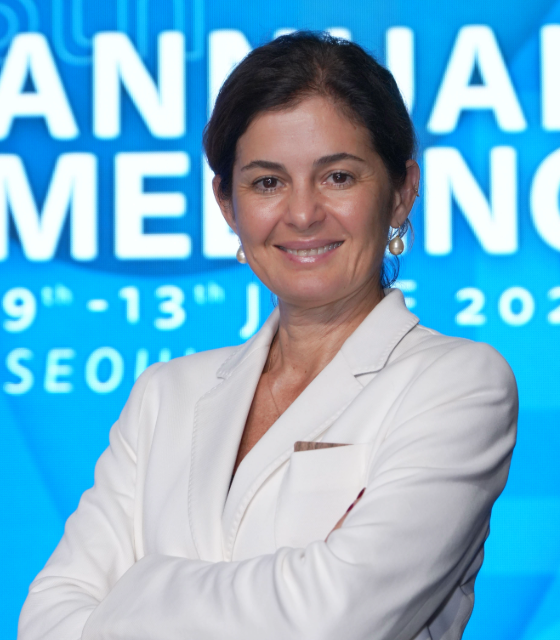
For Nana Khurodze, associate director and senior banker in the TFP, that shift is increasingly visible in sustainable trade. The EBRD’s Green TFP has grown from a relatively niche financial guarantee programme focused on renewable energy and energy efficiency into a broader initiative spanning circular economy activities, agricultural technologies and climate adaptation. In 2025, it facilitated a record €1.14bn in green trade.
Shona Tatchell, director and head of the TFP, says the next frontier is also increasingly digital. Through its Innovation Lab, the TFP is working with partner banks at very different stages of their digital trade journey, from institutions experimenting with AI to those looking to digitise individual trade processes or overhaul core banking systems.
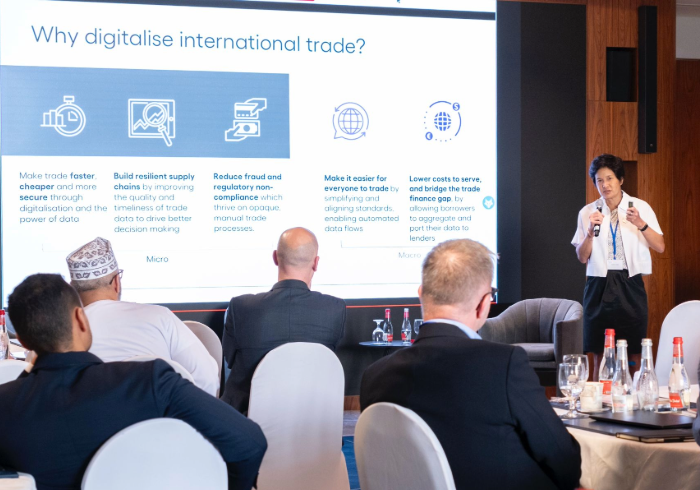
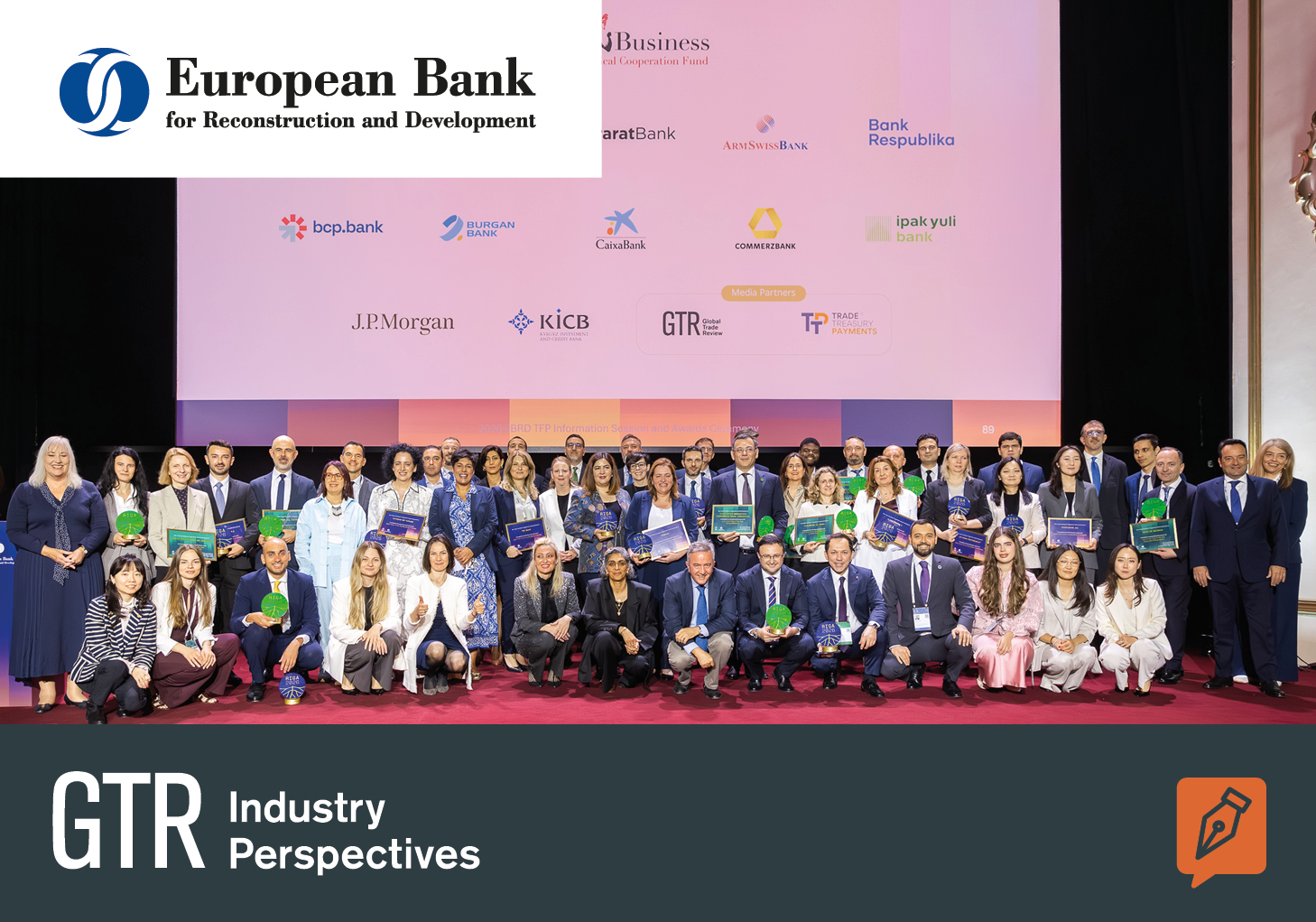
Following conversations on stage at the EBRD TFP event in Riga in June, GTR caught up with Khurodze and Tatchell to discuss how those priorities are evolving, what partner banks are asking for and where the TFP goes next.
GTR: Nana, the Green TFP has grown significantly over the past decade. How has the conversation around sustainable trade changed, and what are partner banks asking for today?
Khurodze: The discussion has shifted to implementation. Partner banks are increasingly focused on practical questions: how to identify eligible green trade transactions, build sustainable trade finance pipelines, use sustainability certifications and demonstrate the commercial value of sustainable finance to clients.
The conversation has broadened beyond climate targets to include energy security, supply chain resilience, resource efficiency and industrial competitiveness. These are all issues that directly affect clients’ profitability and growth prospects.
GTR: Shona, is digital trade seeing a similar shift towards implementation? Where are partner banks on that journey, and how is the EBRD supporting their different needs?
Tatchell: We are seeing different stages of evolution across different countries, with our banking partners all at various points in their investment and innovation journeys.
Our region is incredibly diverse. There are countries like Georgia, Armenia and Türkiye, for example, that are already experimenting with AI, while banks in North Africa are looking to build on customs digitalisation and extend that into banking.
The Innovation Lab was created to give banks a community and a place to bring their digital trade questions, regardless of where they are on that journey. It starts with a simple diagnostic to understand how far each bank has progressed and how committed it is to digitalisation. Some are looking for an entire banking platform, while others have one specific use case they want to solve. From there, the Innovation Lab guides them through different themes, whether that’s regtech and compliance, sustainability technology or operational efficiency.
Elsewhere in the bank, our SME Finance and Development team has launched a Digital Barometer, which takes a similar approach for SMEs, helping us understand where they are on their innovation journeys and where we can support them through training, testing new technologies and, in some cases, accessing concessional financing.
Within EBRD we’ve also created what we call the ‘Digital Trade Network’, bringing together colleagues from different teams to make sure our approach is cohesive.
GTR: Sustainability and digitalisation seem to be converging as part of banks’ wider transformation agendas. How are you seeing those two areas come together in practice?
Tatchell: It’s a subject that’s very close to my heart, as I’ve worked across both areas.
We’ve seen the conversation evolve from what were once bleeding-edge ideas into something that’s becoming much more mainstream. Banks are looking at ways they can help their clients become more sustainable and, within the TFP, we use incentives to encourage that behaviour.
At the moment, both we and our clients still do a lot of our work manually. But we’re now seeing the potential to leverage AI – particularly agentic AI – to carry out many of the tasks that require a lot of manual effort, such as checking documentation.
We’re actually developing an internal tool that would automate that process and produce a result showing whether a transaction qualifies for green finance incentivisation.
So we’re very much seeing those two agendas come together. It’s about changing how transactions are processed while adding a green lens to the decision-making process.
GTR: What separates the banks that are making real progress on digital trade from those that are still struggling to scale? What else needs to be in place for them?
Tatchell: Ultimately, it comes down to people. It’s about mindset and senior management buy-in. Nana and I have sat in many meetings where, when you’re speaking to the CEO of a bank about digitalisation, you can see the penny drop immediately. Operational teams are critical, but securing senior-level support is what gives them the mandate to drive change.
Interestingly, EBRD is going through exactly the same journey itself as we implement a core banking system across our operations, including trade. We’re seeing that mirrored among our partner banks.
For example, one bank in Central Asia initially came to the Innovation Lab looking at a trade application, but is now considering an entire core banking system. In Mongolia, we’ve seen banks that invested heavily in digital retail banking now looking to extend that into trade finance.
Another key success factor is regulatory support. Central banks need to give banks the confidence to experiment with digital tools and become more efficient and transparent.
Different regulators value different things. In Morocco, for example, tax authorities see the benefits of greater transparency, and compliance authorities recognise the value digital trade brings in tackling money laundering and financial crime.
That’s why our TFP workshops bring together banks, regulators and ministries. If you don’t create confidence at the policy level – and if you don’t tackle the legal reform that’s needed – you’re never going to get that shift.
One particularly interesting development is the rollout of MLETR [the UN’s Model Law on Electronic Transferable Records] across Europe. Many EU countries trade heavily with North Africa – Morocco, Tunisia, Egypt and Türkiye – and these are natural digital trade corridors. If those corridors can be fully digitalised at both ends, with customs and banks connected into the system, they can create incredibly efficient trade flows that benefit everyone.
GTR: On sustainability, discussions have broadened from ESG and climate targets to areas like industrial policy and critical minerals. How has that changed the TFP’s approach?
Khurodze: Climate action remains firmly at the core of our approach. Under the EBRD’s latest Green Economy Transition Strategy 2030, at least 50% of our annual financing will continue to be green, with a strong focus on climate change mitigation and adaptation as well as nature.
Resilience and competitiveness are not new objectives. They have always been embedded in the EBRD’s transition mandate and in green projects that reduce energy and resource costs, strengthen supply chains and improve energy and food security. What has changed is that recent climate, geopolitical and economic shocks have made these connections more visible and urgent.
GTR: Sustainability increasingly needs a strong commercial rationale rather than relying solely on environmental ambition – are you seeing that in practice?
Khurodze: Yes, very much so. While environmental objectives remain important, we increasingly see clients pursuing sustainable trade because it delivers real business benefits. Companies are looking for ways to improve efficiency, reduce operating costs, enhance resilience and meet evolving customer and regulatory requirements.
This trend is particularly evident in sectors such as sustainable agriculture, certified commodity trade, energy-efficient machinery and circular economy activities. For example, the Green TFP supported €361mn-worth of certified food commodity imports in 2025, while demand for energy-efficient agricultural equipment remained strong in markets such as Ukraine and Armenia.
The success of the Green TFP pricing discount mechanism also demonstrates the importance of commercial incentives. Following the pilot launch in 2024, pricing discounts were expanded across all TFP countries in 2025. During the year, 112 transactions benefited from discounted pricing, representing more than €625mn in volume.
GTR: The Green TFP and Innovation Lab are at different stages of their development. What does success look like for each today?
Khurodze: Success today is measured both by scale and by the breadth of sustainable trade flows we support. In 2025, the Green TFP facilitated a record €1.14bn of green trade volume compared with approximately €200mn when the programme was launched in 2016.
Sustainability-certified products represented around 43% of TFP transactions in 2025, while circular economy transactions accounted for over 27%, illustrating how the programme has diversified beyond its original focus.
We are also financing increasingly sophisticated transactions. An example includes a first-of-its-kind local currency green leasing transaction in Armenia that enabled local farmers to access modern tractors through affordable leasing structures.
Another important change is geographic reach. While Türkiye remains our largest Green TFP market, we are seeing strong growth in Egypt, Morocco, Serbia and Ukraine. Likewise, pricing incentives have helped generate green transactions in markets that previously had little or no activity, including Mongolia, Kazakhstan and Turkmenistan.
Tatchell: It’s still early days, and banks naturally move at different speeds. But we want the Innovation Lab to be a community where banks feel they’re on the journey together.
We’ve also built a catalogue of around 170 fintechs, ranging from startups to established technology providers, covering everything from AI to more traditional platforms. Simply bringing everyone together around trade finance and giving banks the opportunity to see what’s available has been incredibly valuable.
GTR: Looking ahead, what are the TFP’s priorities for the next phase of development?
Tatchell: In addition to what we’ve already discussed, a major priority is EBRD’s own digital transformation. We’re hoping to implement a platform that employs the latest technology, potentially including agentic AI, to automate many of the repetitive operational tasks.
That would allow our relatively small team to spend more time on capacity building, business development and supporting clients, which is central to our mandate as a development bank.
Beyond that, we’re looking to build on initiatives such as the Innovation Lab and expand our work around women-led businesses. In Türkiye, we’ve been working with one of our partner banks to better understand the challenges, opportunities and financing needs of women-led and women-owned businesses. That research is helping us develop training programmes for bank branches so they can better support those clients.
We’re also working on a sustainable fashion supply chain finance initiative with one of our partner banks in Georgia.
Local currency lending is another major focus. We now have local currency factoring products in five countries, and we see those as an important way of improving access to finance through domestic supply chains.
Finally, we’re continuing to explore how technology can help tackle de-risking in correspondent banking, which unfortunately remains a growing challenge.