


The war in the Middle East is unsettling global trade, with companies reporting growing fears of delayed payments and a fresh wave of insolvencies, according to recent research.
The proportion of firms fearing higher export non-payment risks has risen, with 40% of companies surveyed in Allianz Trade’s latest global survey expecting an increase over the next six to 12 months.
This marks a six-percentage-point rise compared to perceptions before the outbreak of war in the Middle East, though the report noted that it remains below the 53% level recorded after US President Donald Trump’s “Liberation Day” tariffs were announced last year.
According to the report, the deterioration is most apparent in Brazil, followed by the UAE, India, Vietnam and China.
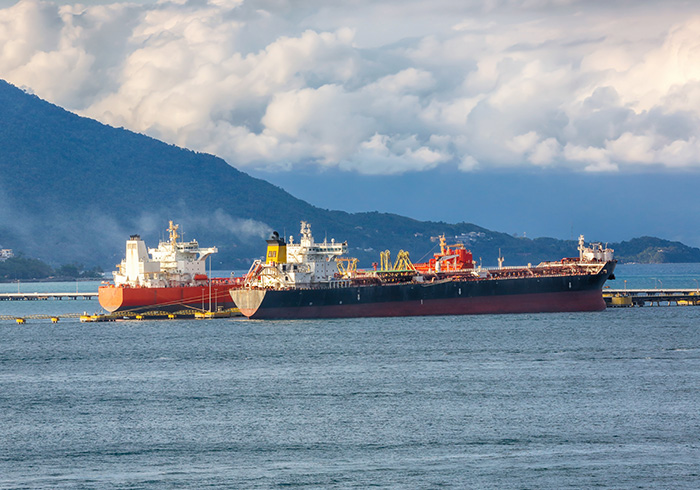
Around a quarter of the world’s oil is shipped through the Strait of Hormuz, including huge volumes of crude as well as refined oil products and LNG, in addition to a third of seaborne fertiliser trade.
“The Middle East conflict has added a new layer of shocks to an already fragile environment shaped by tariffs, weakening demand and declining consumer confidence,” said Allianz Trade.
The survey canvassed views from 6,000 companies in Brazil, China, France, Germany, India, Italy, Poland, Singapore, Spain, the UAE, the UK, the US and Vietnam on their outlook for 2026 before and after the outbreak of war.
It found that payment cycles were lengthening, with just 7% of companies paid within 30 days and almost a quarter paid after 70 days – an increase of seven percentage points year on year.
The sectors most exposed to long payment delays are transport equipment, pharmaceuticals and computers/telecoms.
Fresh research has also shown that the rate of insolvencies and the impact on GDP worldwide depends on how long traffic remains disrupted through the strait.
Credit insurer Atradius’ most recent insolvency figures forecast a global 3% increase this year, compared to a 5% increase year on year in 2025. Insolvencies are set to drop by 6% in 2027, as firms adapt, it said.
But Atradius based its predictions on a scenario in which shipping traffic through the Strait of Hormuz remains near zero for two months, before returning to normal.
If it extends beyond that period, “the economic outlook and insolvency projections are subject to downward revision”, Atradius said.
Allianz Trade said global business insolvencies had “reached record highs, running 24% above their pre-pandemic average”. It forecasts a further 5% increase worldwide this year.
For GDP, the latest figures from the Peterson Institute for International Economics (PIIE) expect real global GDP to slow from 3.3% in 2025 to 3% in 2026, though it is projected to improve to 3.1% next year.
Allianz Trade, meanwhile, is slightly more pessimistic, predicting 2.6% global GDP growth in 2026.
While investments in AI continue to drive growth across countries like the US, war in the Middle East has created new risks, said Karen Dynan, senior fellow at PIIE. As a result, a “renewed escalation” of the conflict could lead to “a more pronounced stagflationary shock”.
Bad debts
SMEs are particularly at risk during the disruption, invoice and trade finance provider Bibby Financial Services (BFS) said, with one in five firms in the UK holding back payments to preserve cashflow.
Derek Ryan, chief executive for North West Europe at BFS, said this was a “worrying development that should ring alarm bells for businesses of all sizes, as well as for policymakers seeking to safeguard the resilience of supply chains across the UK economy”.
BFS’ SME Confidence Tracker, which surveys 1,000 UK-based SMEs, found businesses were owed an average of £66,770 in unpaid invoices – up 10% year-on-year.
A total of 30% have written off nearly £30,000 on average due to customer insolvency or payment default, BFS said.
The firm said it had seen an uptick in its clients buying bad debt protection, which covers non-payment and insolvency.
“SMEs are increasingly choosing to protect their entire sales ledger rather than selectively covering a few customers only,” BFS said.
“This suggests payment risk is spread more widely across supply chains, rather than limited to a few struggling firms.”
Payment delays had also lengthened year on year for 62% of the surveyed SMEs.
Theo Noyek, director at Manchester-based timber merchant Theo’s Timber, said the business could clearly see the impact of the conflict in the Middle East on its supply chain.
“Much of our materials supply comes from China and the Far East through the Strait of Hormuz. But shipping diversions there have pushed up typical delivery times from 12 to 16 weeks, and every delay racks up costs and prices,” Noyek said.
“This is having a significant knock-on impact for our customers, including driving up insolvencies which seem stubbornly high and reminiscent of 2008.”