

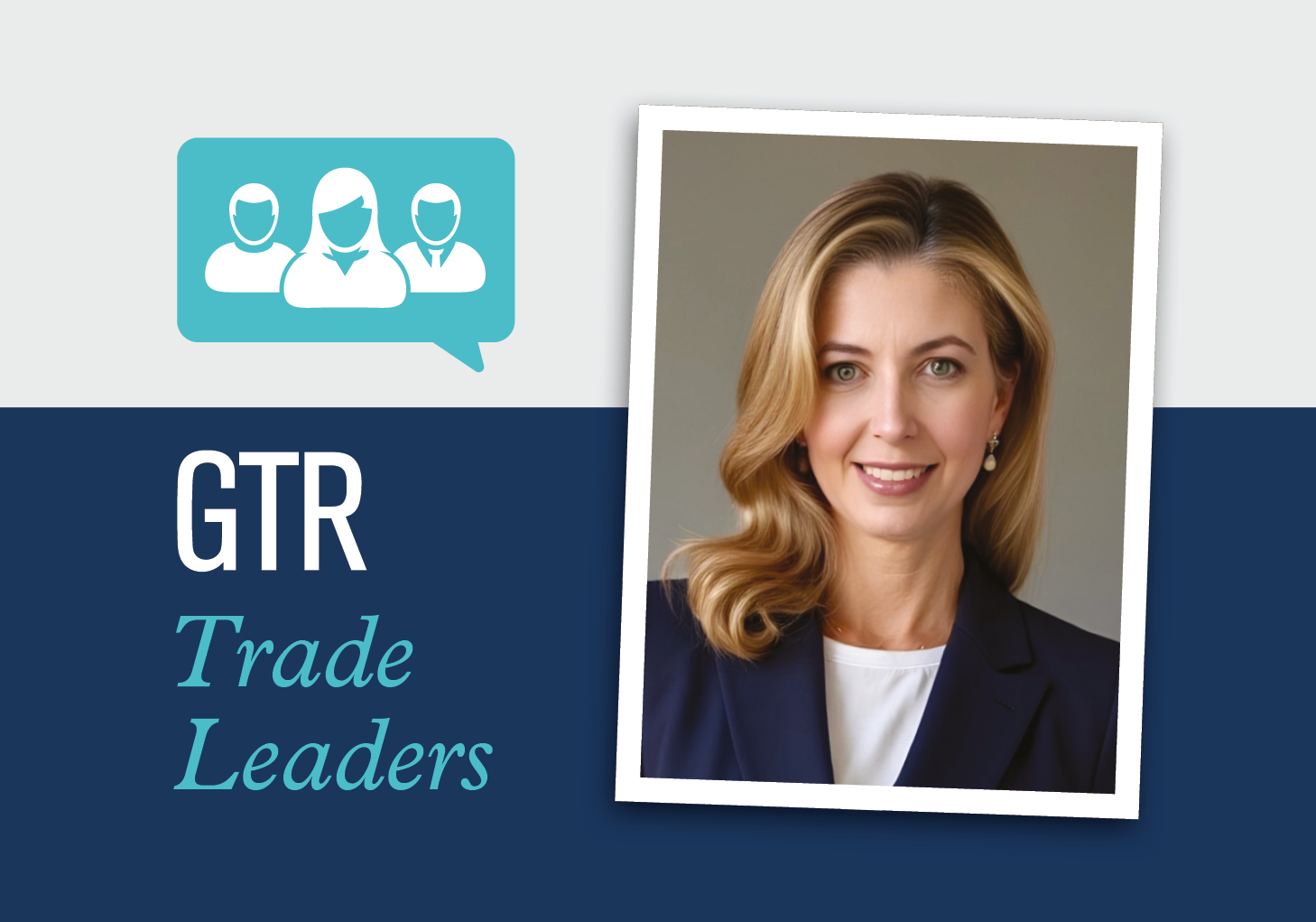
The warning signs that once preceded a corporate failure are becoming harder to spot. Amid abrupt tariff changes, shifting trade relationships and geopolitical uncertainty, companies are having to react more quickly and layer different forms of protection. Christina Montes de Oca, president and chief executive of Coface North America, argues that this process should begin well before an insurance decision – including when selecting and onboarding customers.
Montes de Oca took the helm at Coface North America in September 2025, following 19 years at Allianz Trade and a stint leading Marsh’s US trade credit practice.
In this instalment of GTR’s Trade Leaders series, she explains how her time on both sides of the market has shaped her thinking, why trade credit insurance still struggles for recognition among US middle-market companies and where Coface sees room to grow.
GTR: You are approaching your first anniversary as president and CEO of Coface North America. What have been your main priorities?
Montes de Oca: Three priorities have evolved since I joined: accelerating growth, strengthening our position as a leader in our business information vertical and investing in our people.
We are strengthening our focus on the middle market, where we see significant opportunities to support businesses navigating a complex economic and geopolitical environment. We are also investing in sales and marketing to increase our reach, deepen customer relationships and drive awareness in the US.
We are continuing to evolve our product suite to meet changing customer needs. Growth is not just about selling more; it is about ensuring we have the right products, partnerships and go-to-market engine to help our clients succeed.
We have tremendous data and expertise, and want the market to fully understand its value. Companies are looking for greater clarity and confidence in their decision-making, not just a transfer of risk. Our business information [a suite of services providing company credit risk data and insights] helps them assess risk and identify opportunities. We believe information is a competitive advantage, and want to help clients turn data into better business decisions.
Our strategy only works if we continue to invest in our people and what they bring to the table every day.
GTR: We often hear that companies think about trade credit insurance only after suffering a loss or missing an opportunity. What does a more proactive approach look like?
Montes de Oca: North American companies are seeing uncertainty as the new normal. Being proactive starts well before an insurance decision. It is about using information and insights to understand where risk is changing, where opportunities are emerging and determining the right response. That may be adjusting credit decisions, pursuing growth with greater confidence or transferring risk through insurance.
The real value is the broader ecosystem: combining information, insights and insurance to make better decisions before the risk becomes a loss. With the rapid pace of technological change and access to data, bringing those together is critical.
GTR: How does that work in practice for a company trading internationally?
Montes de Oca: One example is our global client Macsteel International, which has been a trade credit insurance client for more than 16 years. It sources from 30 supplier countries and sells in more than 50 destinations, so it has a very complex ecosystem to manage amid today’s uncertainty.
It started with a small specific policy that evolved into a global multinational programme as its needs changed. Along the way, Macsteel has also used our business information to gain deep insights into buyer support, customer selection and onboarding. Today, its global insurance programme helps Macsteel manage credit risk consistently across markets while supporting its broader multinational growth.
It also comes down to selecting and onboarding the right client profile. Managing a loss, even with insurance, is not what anybody wants. Combining business intelligence and trade credit insurance gives businesses the ability to trade with more confidence from the start.
“A company’s risk profile is changing quickly, so businesses need greater visibility and are layering on more solutions to make sure nobody is surprised by the changes happening.”
Christina Montes de Oca, Coface North America
GTR: How are you seeing tariffs and changing trade relationships impacting how companies engage in trade?
Montes de Oca: The biggest concern we’re seeing is the speed of change, specifically around tariffs, shifting trade relationships and geopolitical uncertainty. A company’s risk profile is changing quickly, so businesses need greater visibility and are layering on more solutions to make sure nobody is surprised by the changes happening.
One thing may not work on its own. It may be trade credit insurance for risk transfer, business intelligence, or strengthening your internal credit practices, procedures and teams. In the past, we could see a company’s long deterioration; but given the speed of change, you do not have that benefit anymore. Pulling together the right tools and resources, both internally and through external solutions, is what I see more often.
You will also see businesses adjusting their terms of sale, layering on different tools to protect themselves and managing past dues more strictly if things start to deteriorate. Perhaps people react a little more quickly because of what is happening.
GTR: Our cover story looks at emerging sectors such as AI and data centres, which require enormous investment. Does the insurance market have the capacity and solutions needed?
Montes de Oca: What I see around AI and data centres is the sheer scale of investment required and the complexity it creates from a risk and financing perspective. These projects can generate very significant exposures across multiple counterparties and stages of development. That creates opportunity for trade credit insurance to play an important part of the broader risk and financing solution even where no single insurer can provide all the capacity required.
I am seeing a lot of sophistication in layering solutions required for financing, or where an exposure is above a company’s own risk appetite. A handful have been done so far. I’m curious to see how that evolves.
If you think about data centres and all the components that go into them, including equipment and flooring, they will also require insurance solutions. It is definitely going to require creativity.
GTR: You spent 19 years with an insurer before leading Marsh’s US trade credit practice and then returning to the carrier side. What did the broker experience teach you?
Montes de Oca: It was a worthwhile experience because the broker side gave me broader visibility into how client needs are evolving and how the market is evolving to meet them. When you spend 19 years within one carrier, you grow up in a certain way, with viewpoints that are very specific to that culture. Going to the broker side gave me a much broader view of what the market is doing and the creativity emerging.
It reinforced that carriers must keep pace, providing greater flexibility and more tailored solutions. With a specific product, a carrier can become laser-focused, but there is a much bigger world of client solutions.
Bringing that back in-house has shown me where our products need to evolve, where flexibility is emerging and what clients need in terms of simplicity and trust.
GTR: Trade credit insurance remains less widely recognised in the US than in Europe. Is that changing?
Montes de Oca: Awareness remains one of the biggest barriers, but also one of the biggest opportunities. Particularly in the middle market, we continue to invest in expanding our reach and making trade credit insurance more accessible and relevant to a broader set of businesses. It has been that way since I started and remains one of the biggest hurdles in the US.
The US has seen aggressive broker acquisition, with many smaller middle-market brokers acquired and integrated. That has opened up the need to reinvest in the middle market.
Products need to be simpler and easier to use, with broader access through partnerships, associations and other areas where you can reach larger groups of businesses that need solutions.
GTR: What can the market expect next from Coface North America?
Montes de Oca: We will continue to build on the three priorities I mentioned: investing in growth, helping our clients make smarter decisions through data and ensuring our people have the skills and opportunities they need to succeed. I am proud of the progress we have made in the first year and equally excited about what is ahead.
GTR: Finally, what drives you outside of the working environment?
Montes de Oca: Family is the centre of everything for me. I am getting ready, hopefully, to launch my 17-year-old off to college. Beyond that, I am passionate about fitness and being outdoors. I love hiking, so fresh air, movement and time with my family are really how I recharge.