

Export credit agencies are developing new products and enhancing existing instruments to support government policies, from helping to drive financing for the energy transition and Ukraine’s reconstruction to securing critical minerals and boosting SME exports. GTR speaks to four agencies around the world to examine how those efforts are taking shape.
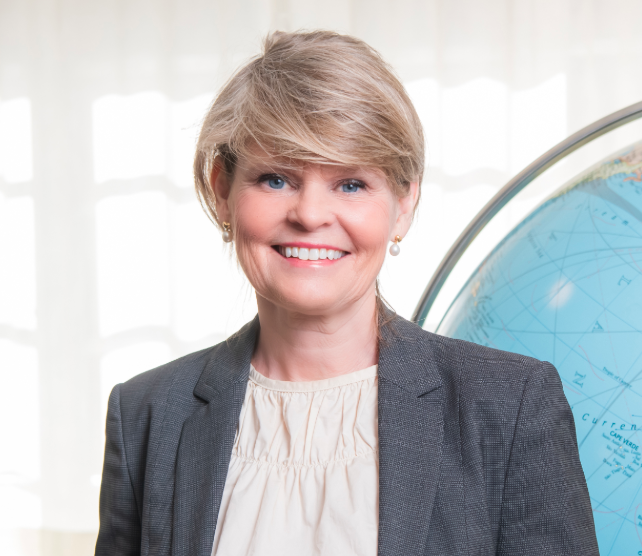
Sweden’s EKN: Lena Bertilsson, director and head of business area large corporates
GTR: EKN recently introduced an extended risk cover for supplier credit guarantees. What prompted the launch, and how does the product work in practice?
Bertilsson: Our extended risk cover on supplier credit guarantees allows banks to discount receivables on better terms. We launched the scheme in March 2025 as Swedish exporters were struggling to get support from banks due to stricter capital adequacy rules. With the extended risk cover, banks will now be able to classify EKN cover as an unconditional on-demand guarantee.
Banks and exporters had been asking us to look into this for quite some time. We have seen demand from day one and have extended 17 guarantees worth SKr232mn (US$24.7mn). This figure will grow even further as exporters and banks get informed about and implement the new set-up.
We have supported various types of exports, such as transportation, hospital equipment, machinery and commodities trading houses, covering both SMEs and larger corporates. The scheme typically covers up to 95% of the transaction value for the banks.
GTR: Beyond that, what other new instruments has EKN rolled out, particularly in relation to Ukraine, defence exports and development-linked financing?
Bertilsson: Like many other countries, we established a framework agreement for Ukraine’s reconstruction and returned to the market in 2024. It took a while for activity to resume because of our initial terms and conditions, which have since been improved. The framework is worth SKr888mn (US$94.4mn), and to date, we have issued guarantees for approximately SKr170mn (US$18mn).
Activity is not as high as other countries, but we increased cover from 80 to 95% in 2024 and introduced longer tenors of up to 10 years. Demand is picking up and our budget will be fully utilised within a short period of time. Previously, we could only target short-term deals but are now able to support medium-term export contracts.
We also launched a special defence equipment framework for Ukraine in July 2025. This is new, and there have been no guarantees issued yet. Support is targeted mainly towards the SME segment.
“We have supported various types of exports[to Ukraine], such as transportation, hospital equipment, machinery and commodities trading houses.”
Lena Bertilsson, EKN
EKN launched another instrument in August 2025 that we used to offer a long time ago, and which is already being provided by some other ECAs. The product combines development aid with export financing, so in effect, tied aid. The instrument is aimed at developing countries. Deals must be funded by SEK and they must be fixed-rate loans.
The whole idea is to fill the gap between development finance and ECA offerings, thereby supporting economic and social development in low to lower middle-income countries.
Here in Europe, there has been a lot of discussion around the EU’s Global Gateway initiative and different types of instruments that can bolster European competitiveness. The official development assistance rules will apply, and so support is limited to projects that would generate negative cash flow without EKN’s intervention. A concessionary element of at least 35% is required and 50% for the poorest countries.
Quite a few countries in Africa could be beneficiaries of this product, such as Ivory Coast, Angola and Tanzania, and in Asia, perhaps Bangladesh or India. We will target projects in infrastructure or transportation as two examples.
This is a five-year pilot, so for 2025, EKN may issue grant decisions for up to SKr1.2bn (US$128mn). The instrument could be applied to lower interest rates or loan instalments.
GTR: What are the types of challenges you face when rolling out new products to Swedish exporters and banks?
Bertilsson: There’s unsurprisingly no bank appetite for Ukraine and companies have enough commercial risk entering the market, without factoring in all the political risks involved with doing business there. Increasing cover from 80 to 95%, and extending tenors, has led to good results.
In terms of other challenges, it has taken a few years for us to see notable activity under our raw materials guarantee, launched in 2022. Competition is fierce for raw material and different types of minerals and concentrates, and the need for ECA cover is typically on more complex transactions – project financing – and mining usually occurs in more difficult jurisdictions. As such, it can take some time to close these kinds of transactions.
We now have a strong pipeline and expect to close deals this year, but the product has been slow to start with, and competition is increasing even further due to the current geopolitical environment.
Requests are being made by mining companies and smelters.
GTR: What’s next; are there plans to enhance any of the products soon?
Bertilsson: We have a few ideas, but we will need to do more internal and external homework before any amendments are made. We are assessing how we can broaden our green, transitional kind of guarantees, but will have to come back to you on that one.
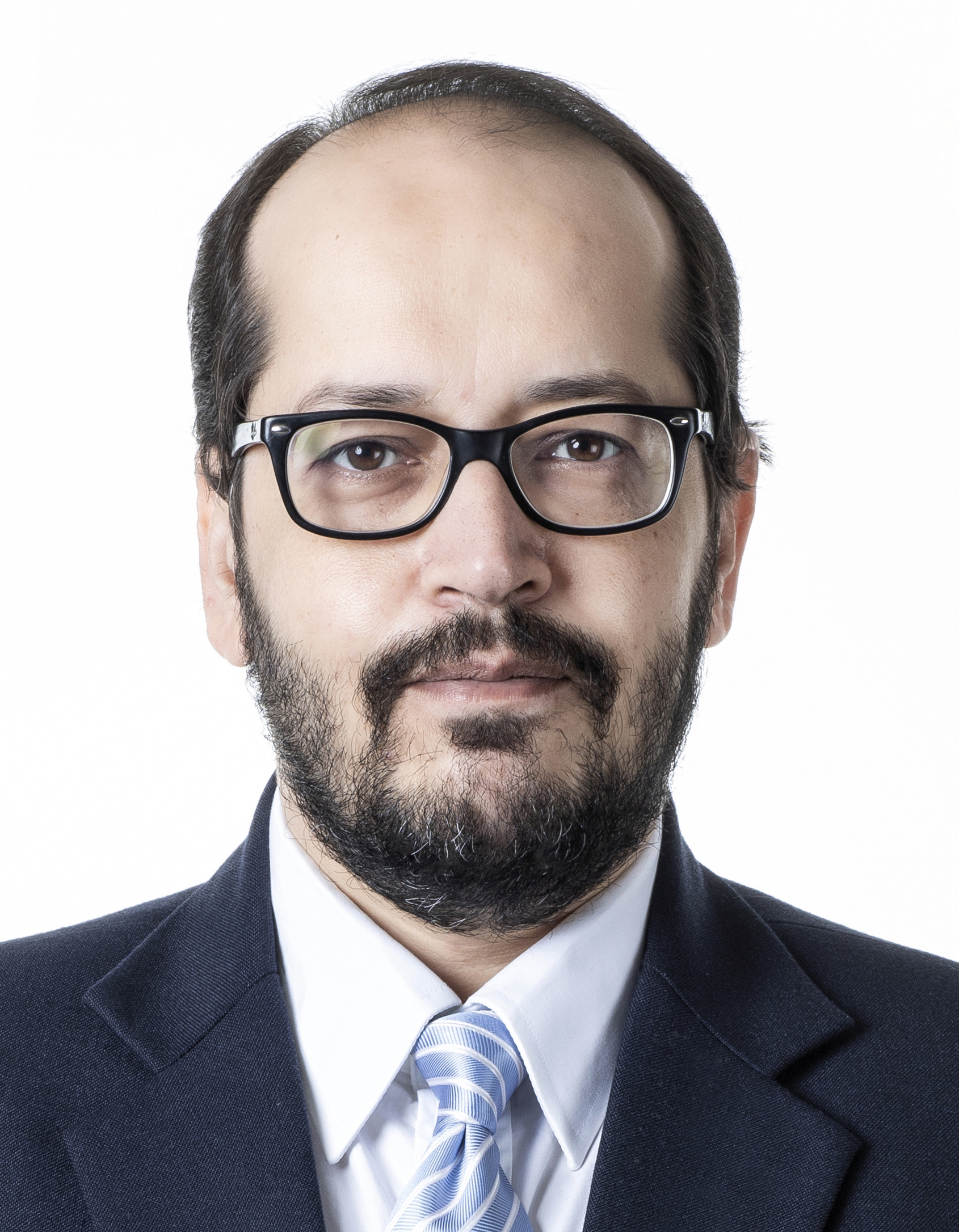
Export-Import Bank of India: Tarun Sharma, deputy managing director
GTR: Which products has India Exim launched recently, and how are they progressing in terms of coverage, transactions and export impact?
Sharma: Over the last four decades, our primary focus has been on providing medium to long-term financing for exports and export capacity creation. Trade finance, meanwhile, traditionally has been under the ambit of commercial banks – a dynamic we are happy with. Our core operations include project financing in India and overseas, supporting companies in their exports and facilitating overseas investments.
When we first started developing our Trade Assistance Programme (TAP), the global trade finance gap was estimated to be US$1.6tn and has since touched US$2.5tn, according to the Asian Development Bank. We noticed several ECAs and multilateral institutions were expanding their activities in the short-term trade finance space.
To respond effectively, we set up a project team and benchmarked the best practices globally. The result was TAP, which serves as an effective bridge between Indian financial institutions and foreign banks, particularly in non-traditional markets across Asia, Africa and Latin America.
India Exim Bank has operational activities in over 150 countries and we deal with a lot of banks in these geographies. So, we asked how best we could leverage these relationships. The solutions could vary, from simple letter of credit confirmation to risk participations or a standby letter of credit – or some other risk mitigation mechanisms for the buyer and the seller. Through these various mechanisms, TAP mitigates payment risk and country risk in trade transactions.
“We have set up relationships with over 100 banks.”
Tarun Sharma, India Exim
As the programme has grown, we have set up relationships with over 100 banks in about 52 countries. Our aim is to reach 74 geographies within the first phase of the product’s launch. So far, we’ve facilitated US$3.6 bn in exports and over 1,600 transactions have been covered, supporting SMEs, mid-sized and large corporates. We have backed exports across a wide array of sectors such as auto components, two- and four-wheel vehicles, textiles, pharmaceuticals and even items like books.
During product development, we identified the potential of the programme to address six of the UN Sustainable Development Goals, thereby also contributing to our ESG commitments.
GTR: What challenges did India Exim encounter in rolling out the Trade Assistance Programme, particularly in terms of market adoption and pricing sensitivity?
Sharma: This is a first-of-its-kind programme in India, and participants in emerging economies tend to be a little sensitive to pricing, and more willing to take risks. Many prefer to avoid paying additional costs. That being said, over time, companies have realised the benefits of TAP and are able to see that by spending a little more, they can achieve less delinquency across their transaction portfolio. It has taken time for the market participants to appreciate the programme, but over the last 18 months, that understanding has developed.
GTR: Away from TAP, is India Exim developing any other products?
Sharma: As part of its ESG commitments, India Exim has increasingly sought to enhance its funding base by issuing sustainable bonds and has also revamped its ESG policy. Every credit proposal undergoes review by a sustainable finance committee, which assigns an ESG risk rating.
Building on these initiatives, last year, India Exim launched its sustainable finance programme to help companies transition to greener processes and cleaner sources of energy, thereby supporting domestic renewable energy generation and promoting exports of sustainable products from the country. India has a commitment to reach net zero by 2070 and India Exim is seeking to contribute towards this. We have supported nearly 40 companies under the programme thus far, and it is progressing well.
Thirdly, India Exim has established a factoring subsidiary in Gift City, which started operations in September 2024. We’ve seen roughly 1,200-plus transactions up to August 2025. While it is still at a nascent stage compared to TAP, the business is gaining momentum and the volumes are starting to come through. A large majority of the company supported are MSMEs, while buyers include several big companies in the US and Europe, including Amazon, Walmart and TK Maxx.
When the new factoring bill came out in India, we identified an opportunity to further bolster support for trade.
After careful deliberation, we decided to launch a subsidiary. As Gift City was being established as a finance hub – similar to places like Dubai – we decided to set up the subsidiary there and start operations.
GTR: In the coming months, do you anticipate India Exim will provide relief or additional support for companies feeling the effects of US tariffs?
Sharma: We are closely understanding and monitoring challenges being faced by various types of Indian exporters. Several steps are being taken to alleviate the challenges, including by helping companies in the diversification of export markets and also develop alternate strategies. An example is the textiles sector. The Indian government is temporarily allowing cotton to be imported with zero import duties, aimed at reducing input costs.
We aim to help companies navigate their tariff challenges by offering financial support as well as advisory services. The bank is working towards ensuring that exporters are equipped, both financially and strategically, to adapt to the changing global environment.
UK Export Finance: Carl Williamson, co-head of business group and director of SME and trade finance

GTR: What new products or enhancements has UKEF introduced over the past couple of years, and how have these initiatives progressed in supporting both SMEs and larger strategic investments?
Williamson: Not only have we launched some new products, but we have also introduced enhancements to existing products to make our financial support more widely accessible.
If I start with our SME clients, we have enhanced the auto-inclusion threshold under UKEF’s General Export Facility, thereby enabling banks to automatically take advantage of our guarantee up to a higher level. UKEF is not required to manually underwrite facilities for banks below a certain level. Doubling the threshold from £5mn to £10mn has had a material impact on deal volumes.
In 2023/24, we issued over £210mn via auto-inclusion deals – this amount increased to £487mn in 2024/25.
UKEF also introduced a new product variant under our export credit insurance programme, called the Small Export Builder, which is aimed at SMEs. This initiative has been complemented with the creation of a digital application process. Previously, if you wanted to apply for our credit insurance, you had to do a paper form but now it is all online. The Small Export Builder allows exporters with credit limits under £25,000 to incrementally increase the limit up to £100,000 automatically based on trading experience. It is much quicker when there are very small requests.
For larger products, we recently introduced an investor variant under UKEF’s Export Development Guarantee, enabling greater investment into the UK. This has begun to develop in the past 12 months and we have extended £1.5bn to date.
We backed £590mn alongside K-Sure for Korean manufacturer SeAH Steel Holdings’ wind technology factory, and that is underway in the Tees Valley. Elsewhere, there was an investment worth over £1bn to redevelop the Shotton Mill paper recycling plant in North Wales. These deals enabled businesses to develop infrastructure and undertake more export activity.
Critical minerals is another area where we have introduced two complementary products: supply finance and an Export Development Guarantee, which both help the UK to import critical minerals.
“We want to promote the Small Export Builder and really start to grow our credit insurance product. Watch this space.”
Carl Williamson, UK Export Finance
GTR: Has there been much activity to date under the critical minerals programmes?
Williamson: We introduced our programmes in the past 12 months and we are discussing how they can be utilised with banks and clients. Nonetheless, there’s a strong pipeline of deals. We anticipated the launch of the government’s Modern Industrial Strategy and were trying to get a little bit ahead of the game.
I cannot say too much about specific cases or commodities, but we are assessing opportunities around the world. The UK needs vital components for the automotive and aerospace sectors, and certain countries have previously dominated the minerals space.
GTR: What was the rationale behind launching some of these SME products and enhancements; was UKEF struggling to support smaller firms?
Williamson: We’re not struggling – we saw an opportunity to help more SMEs and we’ve acted. We have been growing the number of SMEs that we’ve supported, but we obviously recognise that we need to continually review and work with our stakeholders to develop and enhance our processes and review our offering.
GTR: Has UKEF faced any challenges as it has introduced these products?
Williamson: The major challenges have been market education and awareness, and that’s always been the case. SMEs are particularly unfamiliar with export credit support. There’s a continuous challenge and need to work alongside our marketing and press teams, publicising what UKEF does and raising awareness locally and regionally. We’re not just London-centric; we are pushing the message out right across the UK.
GTR: Looking ahead, does UKEF plan to expand any of its current programmes over the next year, or introduce new products to better support exporters?
Williamson: We want to promote the Small Export Builder and really start to grow our credit insurance product. Watch this space.
We will always assess and work with our partners to improve our products. We may well look at eligibility or other parts of how the scheme works. We’re always doing that. We have regular conversations with our stakeholders. The Small Export Builder was an example of this in action, of us looking at the credit insurance product and realising it is not really helping really small businesses who only really want a very small credit limit. Surely, we can make this quicker and easier, we thought, so we spoke with brokers and insurance companies. We decided the risk parameters were acceptable.
We review all our products and do that on a continuous basis.
Export-Import Bank of the United States: Spokesperson
GTR: Over the past two years, which new programmes has US Exim introduced and how much financing or cover has been extended under these initiatives to date?
US Exim: There have been a few: the Supply Chain Resiliency Initiative (SCRI), approved by Exim’s board of directors in January 2025, is designed to strengthen supply chains by supporting overseas projects, particularly in the critical minerals sector, that are increasing offtake to US refiners and end-users. The goal is to reduce US dependence on adversarial nations and bolster supply chain resilience.
SCRI operates under the umbrella of Exim’s China and Transformational Exports Program, which mandates that 20% of Exim’s annual financing supports transformational sectors aligned with US strategic interests. While SCRI is still in its early implementation phase, Exim has developed a robust pipeline of project finance transactions currently under review. The initiative was launched just weeks before the US faced several rounds of export restrictions on critical minerals and rare earth elements imposed by the People’s Republic of China.
Although first launched in 2022, the Make More in America Initiative directly supports the new administration’s priority to rebuild American manufacturing and secure critical supply chains. By pairing domestic capacity-building with export outcomes, Exim continues to align federal financing tools with the national imperative to make more in America and ship it worldwide – creating jobs, strengthening communities and enhancing US competitiveness.
While we are actively managing a robust pipeline of projects under these programmes, and have committed significant financing to date, we typically do not disclose exact figures publicly due to business confidentiality and ongoing commercial sensitivities.
GTR: Which types of companies is the SCRI targeted at?
US Exim: Exim’s product offerings are thoughtfully crafted to support a broad array of companies, with a strategic focus on sectors that are essential to the economic vitality and national security of the US.
The SCRI, due to the inherently complex and capital-intensive nature of project finance transactions, is expected to involve larger ticket sizes, reflecting the scale and sophistication of these efforts.
GTR: What challenges has US Exim faced in rolling out the Supply Chain Resiliency Initiative, particularly given its shift from traditional export-focused financing, and how have these been addressed?
US Exim: As with any new and innovative product, the rollout of the SCRI has involved navigating some early stages of implementation and adapting to new operational dynamics.
A crucial aspect of implementing SCRI has been educating both international project sponsors and US stakeholders about how Exim’s financing can uniquely support critical minerals projects that align strategically with US supply chain objectives. Because SCRI represents a significant departure from Exim’s traditional export-focused financing, this educational effort has been essential to build understanding and trust.
Given the complexity and global scope of these projects, Exim has dedicated substantial resources to developing a strong project pipeline, coordinating across government agencies, and engaging closely with trusted partners and allies to ensure successful adoption and impact.
Overall, these early challenges have provided valuable lessons and are helping Exim further refine its tools, processes and outreach strategies. The strong interest and growing pipeline for SCRI, as well as its inclusion in executive orders such as “Immediate Measures to Increase American Mineral Production”, is a clear indicator of its relevance, and Exim remains focused on scaling this programme to meet the evolving needs of US exporters and supply chains.
“Exim is evaluating potential enhancements to increase the responsiveness and flexibility of its programmes.”
US Exim spokesperson
GTR: Looking ahead, how does US Exim plan to further develop its new programmes over the next year, and are there additional initiatives under consideration to expand support for strategic sectors?
US Exim: Over the next 12 months, Exim will continue to refine and expand the impact of the SCRI, while actively executing new deals under these strategic mandates.
The agency is also focused on enhancing interagency collaboration and delivering more targeted support to industries that align closely with national priorities, efforts that are especially vital under the China and Transformational Exports Program.
Exim’s strategic role has been formally recognised through inclusion in several sector-specific executive orders, including those focused on critical minerals, nuclear energy, drones and artificial intelligence, underscoring its integral position in advancing US economic and security objectives.
As global trade dynamics continue to shift, Exim is evaluating potential enhancements to increase the responsiveness and flexibility of its programmes. This includes initiatives aimed at accelerating approvals, customising risk assessments and broadening eligibility criteria where appropriate, all designed to better serve US exporters in an increasingly complex environment. These efforts reflect Exim’s unwavering commitment to modernising its portfolio, supporting exporters in critical sectors and strengthening the resilience and global competitiveness of the US economy.