
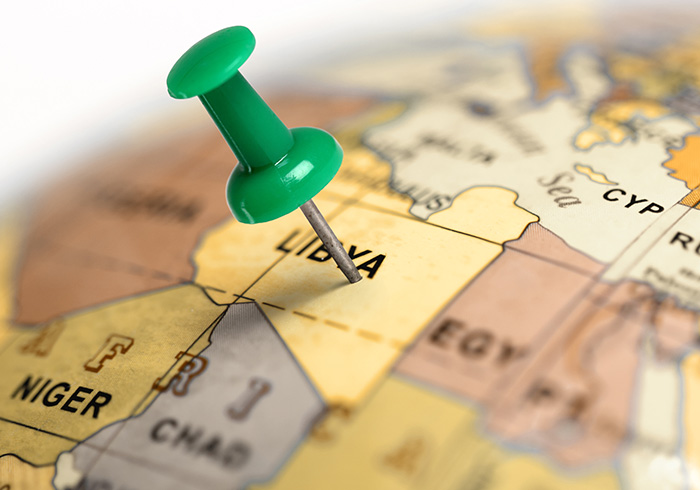
A Libyan businessman allegedly used up to US$300mn in loans from an Abu Dhabi-headquartered trade finance bank, alongside state funds, to support an attack on Tripoli.
An April report from investigative and policy organisation The Sentry claims that Ahmed Gadalla used US$300mn in loans from the Arab Bank for Foreign Investment and Trade – known as al-Masraf bank – to help finance elements of field marshal Khalifa Haftar’s failed 2019-2020 attack on Tripoli.
The loans were backed by the Libyan Foreign Bank (LFB), a subsidiary of the Central Bank of Libya (CBL), and the majority of them remain unpaid, The Sentry said. At the time, LBF and the Emirates Investment Authority each owned 42.28% of al-Masraf.
Gadalla, also known as Ahmed Alushibe, is a businessman from Benghazi with ties to Haftar and his sons.
While the UN recognises the Government of National Unity, formed in 2021 and based in Tripoli, Haftar draws his authority from the House of Representatives, which was elected in 2014 and appointed him general commander of the Libyan National Army the following year.
In 2022, the parliament elected a rival government based in Benghazi, in the east of the country, but it has not been recognised by the international community.
The report alleges that in 2019, al-Masraf loaned US$300mn to three Dubai-based companies controlled by Gadalla to support imports, exports and distribution of commodities and supplies: JTA General Trading, al-Mored Oasis General Trading and AMAA General Trading.
Yet al-Masraf also secured a deposit from the LFB for the full amount to guarantee the loan, which is “difficult to reconcile with routine commercial lending to creditworthy borrowers”, The Sentry said.
In April 2019, the Libyan Arab Armed Forces launched an offensive against Tripoli, backed by Abu Dhabi, with the aim of ousting Prime Minister Fayez al-Sarraj and taking control of state-run institutions.
The funds from al-Masraf “helped sustain the armed offensive, and part of the money likely went toward remunerating Russia’s Wagner Group, which engaged on the front lines of the assault between September 2019 and May 2020”, the report said.
This has never been publicly disclosed and has been pieced together via “interviews, research, and analysis of numerous financial and other documents”, The Sentry said.
“After Haftar’s offensive collapsed, the loans have remained largely unpaid, leaving the Libyan public to bear the financial burden while Gadalla has faced no accountability.”
The CBL blacklisted Gadalla’s three entities in 2023 due to a suspected letter-of-credit fraud. An investigation by the Libyan attorney general is still pending.
Gadalla is also alleged to have overseen the printing of billions of unauthorised 50-dinar banknotes in Russia and to have helped evade the UN arms embargo on Libya, which was extended by the UN Security Council on April 14 to August 2027.
Taken together, Gadalla’s “prolific, multi-domain operations provide evidence of the profound structural deficiencies plaguing Libyan economic institutions”, The Sentry said.
Justyna Gudzowska, executive director of The Sentry, added: “Ahmed Gadalla helps the Haftar family turn military force into cash and cash into weapons.
“He helped bankroll a devastating assault on Tripoli with Libyan public funds, participated in flooding the economy with unauthorised dinar banknotes, and orchestrated arms shipments that appear to defy international law – all without facing a single consequence.”
In response to the findings, the report recommended that global correspondent banks increase monitoring of politically exposed persons (PEPs) in Libya.
“Given the centrality of state resources to many illicit practices, PEPs, who in Libya often hold high political office or prominent technocratic positions, present a higher risk of potential involvement than others.”
The report also advised that al-Masraf’s shareholders and advisors should begin an independent investigation into the bank’s relationships with Alushibe Group entities – a group of companies controlled by Gadalla – and Gadalla-linked accounts.
The investigation should review “whether the initiation and execution of trade finance facilities” for these clients comply with al-Masraf’s compliance and AML policies, and how the financing was utilised, the report said.
UAE financial authorities should also “open an independent investigation into al-Masraf’s US$300mn loans to Gadalla’s Dubai-based companies, as well as into the LFB guarantee deposit that has shielded al-Masraf from default risk”.
It also recommended that the US, the UK, and Canada should designate Gadalla under their respective Magnitsky-style sanctions, which allows sanctions against individuals.
Oliver Windridge, senior advisor for the UK and EU at The Sentry, noted: “Gadalla might be prolific, but he’s not an outlier. He represents an entire class of enablers who do the dirty work for Libya’s warlords.
“Issuing international sanctions now against Gadalla and his network would send a clear message that the international community is willing to go beyond the warlords themselves and dismantle the illicit financial flows that sustain them.”
More widely, the report suggested that Libyan authorities refer the case for prosecution and bring in requirements for commercial banks and state-owned enterprises to publish audited financial statements.
The Sentry has previously published investigations into alleged abuses of a US$993mn letter-of-credit scheme and a deal that raised red flags for trade-based money laundering and bribery, both in South Sudan.
Al-Masraf, the LFB and the Alushibe Group did not respond when contacted for comment.