

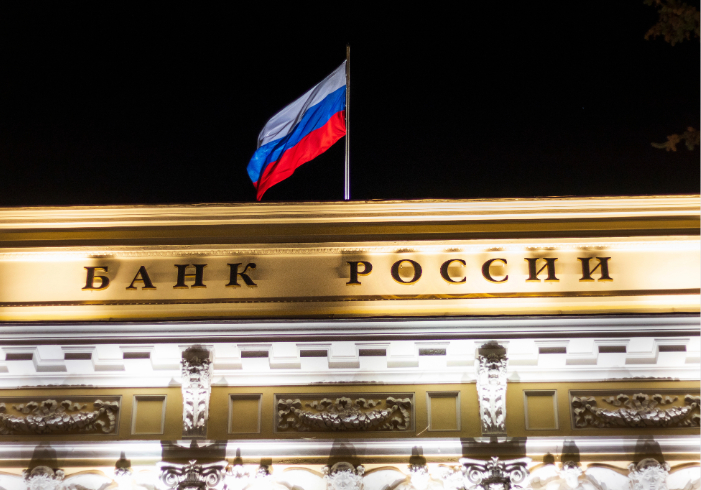
A lawsuit by a Russian central bank subsidiary targeting major commodity traders including Bunge, Cargill and the Louis Dreyfus Company can go ahead, a judge has ruled.
In a case filed in 2023, the central bank entity National Bank Trust claimed Russian businessman Mikail Shishkhanov conspired with the traders to “loot” lenders Rost Bank and Binbank, which he owned, through fraudulent trade finance transactions.
Cargill has previously denied the allegations. Bunge and Louis Dreyfus have not publicly commented on the case.
A judge in the British Virgin Islands (BVI), where the case has been brought, last month rejected applications by some of the traders and other defendants that the Caribbean territory is the wrong jurisdiction.
Judge Abbas Mithani found Shishkhanov and the commodity traders had failed to prove that the BVI was not the appropriate jurisdiction to hear the claim and that Russia, the alternative proposed by Shishkhanov, was not suitable.
The defendants have been granted permission to appeal the judgment, a court official told GTR, meaning proceedings will be on hold until the appeal is decided.
The Russian central bank took over Rost Bank and Binbank in 2017, folding their assets into a “bad bank” called National Bank Trust, through which it is seeking to recover what is claims are stolen funds.
It brought the claim in the BVI because it alleges that several companies linked to Shishkhanov incorporated in the territory received the proceeds from the purported trade finance scheme.
In previous New York court filings, National Bank Trust claimed there was a “convoluted” multi-year scheme whereby Rost Bank and Binbank issued letters of credit to international commodity traders for allegedly fictitious trades.
The proceeds of the letters of credit were transferred to BVI companies allegedly linked to Shishkhanov through loan agreements, the bank claimed.
Cargill has previously said National Bank Trust’s “wildly inaccurate” claims were based on a misunderstanding of trade finance, and that evidence showed the transactions financed by the Russian lenders were legitimate.
The Russian central bank’s allegations closely echo those made by Kazakh lender BTA Bank last year against a separate group of commodity traders it claimed engaged in a fraudulent letter of credit scheme.
The traders, including Bunge, went on to successfully thwart BTA’s attempt to sue in the BVI, with the court finding that Kazakhstan was the most suitable jurisdiction to hear the claim.
But Judge Mithani found “the factual matrix of the [Russian] case differs materially from that in BTA”.
He wrote: “The fundamental deficiency in the trader defendants’ submissions lies in their failure to identify an appropriate alternative forum for the adjudication of claims against all, or at a minimum, the majority of the defendants, notwithstanding their rejection of the BVI as the appropriate forum.”
Bunge and Louis Dreyfus Company declined to comment on the judgment. Cargill and a lawyer representing Shishkhanov did not respond to a request for comment.
In 2023, National Bank Trust asked a court in New York to grant the lender access to bank records for several of the traders it alleges were involved in the scheme. Those proceedings are ongoing.