

Several large-scale infrastructure projects in the Global South could remake global trade corridors this year as they reach financial close, break ground or come online.
A “new wave” of major transport routes, ports and energy systems is expected to make significant progress in 2026, with the potential to expand export capacity and reduce logistics costs, according to a report from specialist intelligence advisory firm Pangea-Risk.
Routes in Africa, Asia, the Middle East, and Latin America will “help redefine trade flows over the next decade”, as well as reshape industrial capacity and regional integration, it said.
Infrastructure in “emerging and frontier markets” is now increasingly shaped by “political continuity, geopolitical alignment and long-term strategic relevance”, the report noted.
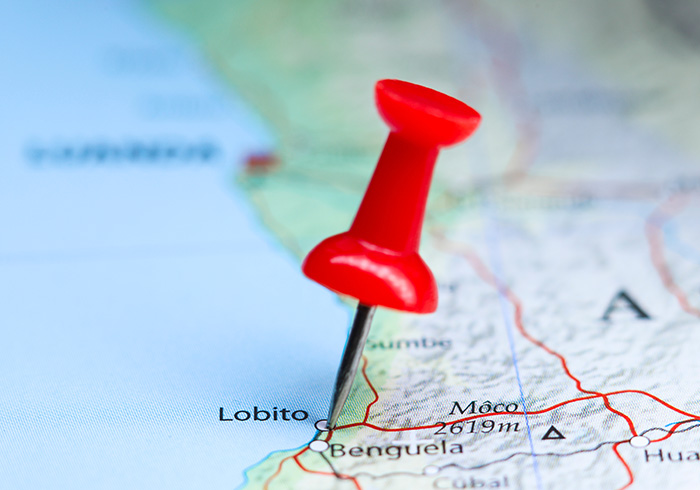
Among these projects, many of which Pangea-Risk advised on, is the Lobito Corridor, a 1,300km rail and logistics network linking the Angolan port with mining areas in the Democratic Republic of the Congo and Zambia.
With investment from the US, the EU and the African Development Bank, Pangea-Risk said the project’s aim is to “rebalance copper and cobalt trade away from eastern corridors”, with phased construction taking place throughout 2026 and 2027.
China has previously invested heavily in the area as part of its Belt and Road Initiative (BRI), which last year hit record heights of investment in metals and mining.
Similarly, the US$4.7bn China-Kyrgyzstan-Uzbekistan Railway is a key part of the BRI, with major works continuing on it this year. The 523km route is slated to carry up to 15 million tonnes a year and give Kyrgyzstan and Uzbekistan their first direct rail link to China.
Another trade route focused on critical minerals is the 2,300km Capricorn Bioceanic Corridor, connecting Brazil, Paraguay, Argentina and Chile by road and creating new export routes for agriculture, mining and manufacturing.
The corridor is expected to cut freight costs by up to 40% and shipping times by 15 days, with completion in late 2026 or early 2027, the report said.
In Guinea, the Simandou Trans-Guinean Railway aims to unlock iron ore reserves by linking them to Atlantic export infrastructure, while the US hopes to route supplies of the material through Liberia via rail and port upgrades for the US$1.8bn Liberty Corridor.
Two major projects in the Middle East include the US$17bn Iraq Development Road, which connects southern Iraq to Turkey by land and sea, and the GCC Unified Rail Network, which aims to link all six Gulf states with planned investment of more than US$250bn.
Demand for metals such as lithium and copper is expected to outstrip supply within the next decade, according to forecasts by consultancy McKinsey.
“Critical minerals, hydrocarbons and access to markets are at the forefront of reinvigorated geopolitical competition across Africa and Central Asia, as well as Latin America,” said Robert Besseling, the advisory firm’s chief executive.
Emerging markets boost
Higher metals prices are supporting emerging market sovereigns in a return to international debt markets after many nations faced debt crises during and after the Covid-19 pandemic, the report found. Copper, gold, platinum and lithium prices all rose at the start of the year.
“These dynamics have strengthened reserve coverage, narrowed current account deficits, and improved near-term liquidity across a subset of emerging markets,” it said.
Sovereigns including Angola, Nigeria, Côte d’Ivoire and South Africa led a return to international debt markets in 2025, signalling market access could continue this year.
Pangea-Risk also predicted that 2026 would see a number of peace deals as well as conflicts, with a potential “increase in transactional ceasefires and managed de-escalation in selected interstate conflicts”.
This might trigger a “re-pricing of risk”, it said, as fewer disruptions across shipping lanes, energy routes and trade chokepoints “can generate unexpected upside shocks to logistics costs, commodity markets and investment sentiment”.
It also flagged that more than 40 countries across six continents are expected to host elections in 2026, including Bangladesh, Colombia, Thailand and Brazil.