
- TotalEnergies has “waived” a US$640mn Standard Chartered loan covered by Atradius DSB
- Campaigners call on other ECAs and banks to pull out of the deal
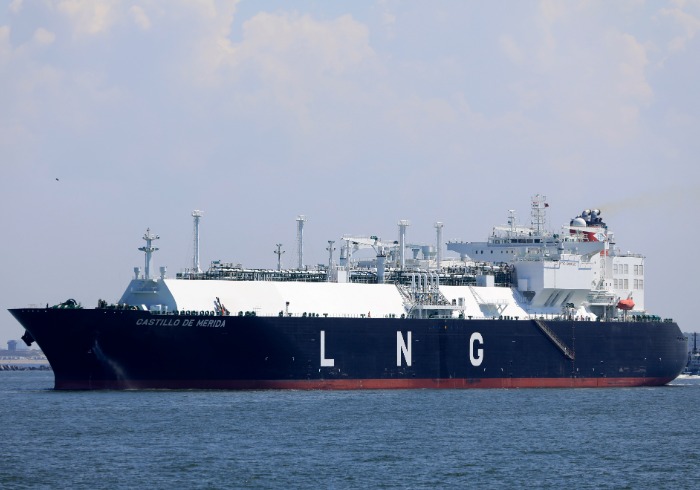
TotalEnergies has raised further funds from equity partners for its US$20bn liquefied natural gas development in Mozambique, after the French energy giant cancelled export credit cover from the Netherlands and lost the UK government’s backing.
UK Export Finance (UKEF) and Atradius DSB agreed in 2020 to provide support of up to US$1.15bn and around US$1.3bn respectively for the LNG project, which has since been beset by civil unrest and sharply criticised by environmental campaigners.
UK business and trade secretary Peter Kyle said in a statement to the House of Commons on December 1 that “my officials have evaluated the risks around the project, and it is the view of His Majesty’s Government that these risks have increased since 2020”.
“This view is based on a comprehensive assessment of the project and the interests of UK taxpayers, which are best served by ending our participation in the project at this time,” Kyle said.
“Whilst these decisions are never easy, the government believes that UK financing of this project will not advance the interests of our country.”
Kyle’s statement said the decision was made “with the agreement of the project sponsors and other participants”, and that UKEF would refund premiums already paid. TotalEnergies placed the project in force majeure in 2021 after an attack by Islamist insurgents near the site left dozens dead. Société Générale, listed as the export credit agent bank for the UKEF cover, declined to comment.
The Dutch finance ministry wrote in a December 1 letter to parliament that TotalEnergies said late last month it had “decided to waive the portion of the financing insured by the Netherlands”.
That financing was a US$640mn loan from Standard Chartered, according to the letter, which an Atradius DSB spokesperson said was insured for up to US$1.09bn. Standard Chartered declined to comment.
A second insurance policy issued to Dutch company Van Oord, which has carried out dredging and other preparatory work at the project site, remains in place. The spokesperson said the Van Oord policy has a maximum liability of US$213mn.
In a December 2 statement in response to the UK and Dutch announcements, TotalEnergies said that after it lifted force majeure, “Mozambique LNG partners decided to proceed without the participation of UKEF and Atradius since these two export credit agencies had not yet reconfirmed their commitment”.
The firm said its partners “have unanimously agreed to provide additional equity to replace the UKEF and Atradius contributions, representing in aggregate approximately 10% of the external financing”.
“TotalEnergies and its partners would like to thank the lenders representing around 90% of the external financing who have confirmed their commitment to the financing of the project, acknowledging its positive contribution to the development of Mozambique,” the company added.
In October, the French energy giant announced plans to resume work on what is set to be one of the largest infrastructure projects in Africa.
Human rights and climate concerns
UKEF’s financing for the Mozambique deal came shortly before it introduced a policy prohibiting support for most fossil fuel projects.
At the time, the agency’s decision to support the Mozambique LNG project faced an ultimately unsuccessful judicial challenge from environmental campaign group Friends of the Earth, which went all the way to the Supreme Court.
Environmental groups welcomed the UK’s decision to halt the funding and called on other banks and ECAs to follow suit.
“The UK government is absolutely right to withdraw support for this deeply damaging and controversial development – and deserves credit for doing so,” said Asad Rehman, Friends of the Earth’s chief executive.
“This Mozambique gas project is a huge carbon timebomb, linked to serious human rights abuses. It should never have been given UK taxpayer-funded support in the first place.”
Oil Change International labelled the project a “human rights and environmental disaster”.
It said in a statement following UKEF’s announcement: “It’s time for the other financiers – governments like the Netherlands, the United States, Italy and Japan, and private financiers like Standard Chartered – to pull out too, and put an end to this nightmare project forever.”
But NGO Both Ends criticised Atradius DSB’s ongoing policy for Van Oord and said “the Dutch government’s inability to take action while all the alarm bells were ringing illustrates the inadequacy of current Dutch policy and the contracts that Atradius DSB enters into”.
“The Netherlands must not allow itself to be drawn into dangerous projects again without being able to withdraw responsibly if human rights are violated,” it said.
A human rights report published by the Netherlands’ finance ministry found “the Mozambican Defence and Security Forces have a troubled record of human rights violations in the region surrounding the project’s site in Afungi”, but that the situation has “steadily improved” since the deployment of Rwandan troops in mid-2021.
TotalEnergies said in response that the authors of the report did not visit Mozambique and relied “mainly on information collected through third parties”.
Last month a human rights group filed a war crimes allegation against TotalEnergies with French prosecutors.
TotalEnergies said in mid-2020 that a number of export credit agencies would back loans from some 20 financial institutions, chiefly commercial banks.
These included the Export-Import Bank of the United States, the Export-Import Bank of Thailand, Italy’s Sace, Japan’s Nippon Export and Investment Insurance, the Export Credit Insurance Corporation of South Africa, Atradius DSB of the Netherlands and the African Export-Import Bank.
Earlier this year, US Exim confirmed it would still provide a US$4.7bn loan to TotalEnergies.
This headline and body of this article were updated on December 3 to include statements by the Dutch government, the human rights reports, and a statement from TotalEnergies.