
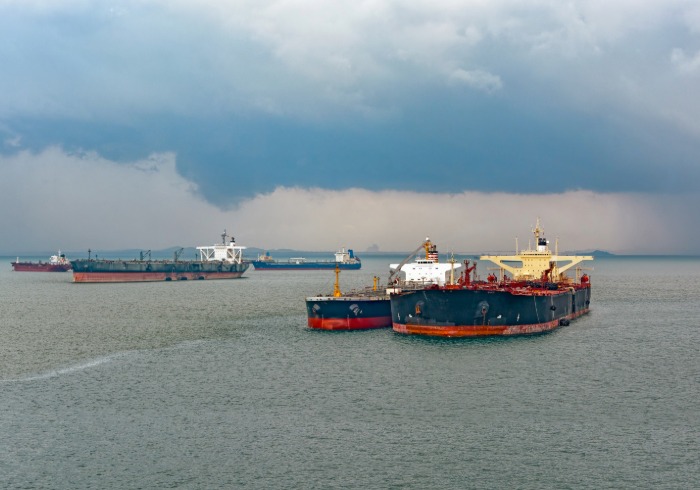
The vast majority of Iranian oil cargoes remain destined for China, despite the US government saying a relaxation of sanctions on Iran would redirect supply to other markets, researchers have found.
The US Department of the Treasury issued a general licence on March 20 allowing the sale and delivery of previously sanctioned Iranian oil and petroleum products, including cargoes transported via ‘dark fleet’ vessels, provided they had been loaded before that date.
Treasury secretary Scott Bessent said Iranian oil had been “hoarded by China on the cheap”, and that the waiver would “quickly bring approximately 140 million barrels of oil to global markets”, relieving supply pressures caused by the near-closure of the Strait of Hormuz.
The general licence specified that even imports of Iranian oil and petroleum products to ports in the US would be authorised.
However, a report by maritime intelligence firm Windward said China has so far remained the primary destination for Iranian cargo, with 90% of Iranian crude exports destined for the country. More than 150 million barrels were en route to China as of March 24, it said.
Vortexa, which estimated there to be around 161 million barrels of Iranian oil on the water as of March 22, said China “will likely remain the key destination for Iranian crude on water, with limited scope to broaden the buyer base for now”.
One issue is that trading Iranian oil would likely remain a breach of restrictions in other jurisdictions, including the EU, UK and Switzerland, which maintain sanctions on the National Iranian Oil Company (NIOC), noted David Tannenbaum, director of Blackstone Compliance Services.
Another is that the NIOC has repeatedly been referred to in US Department of Justice enforcement actions as an agent or affiliate of the Islamic Revolutionary Guard Corps, which is designated as a foreign terrorist organisation.
“This means that a US person utilising this license could theoretically be charged with the myriad of crimes associated with terrorism,” Tannenbaum said.
There has been speculation the move could impact other trade corridors. Kpler analyst Sumit Ritolia suggested last week that India – which prior to 2018 was a significant importer of Iranian crude – could emerge as a “key demand centre to watch”.
The country quickly grew imports of Russian crude after a separate US sanctions waiver earlier this month, and Bloomberg reported on March 24 that India’s Reliance Industries had purchased 5 million barrels of Iranian crude from the NIOC.
Kpler’s Ritolia also suggested that larger Chinese oil companies and state-owned enterprises – rather than the so-called teapot refineries that usually import Iranian crude – could also add demand, as could other Asian countries.
But in the immediate term, Kpler said that “ongoing constraints in payments, shipping and counterparty trust are likely to deter new buyers, keeping flows concentrated through existing channels”.
The general licence did not address financial flows associated with sales of Iranian oil, but Bessent’s statement said Iran “will have difficulty accessing any revenue generated”.
Policy organisation United Against Nuclear Iran, which is chaired by former Florida governor Jeb Bush, noted that the US previously imposed “strict ringfencing” on payments for Iranian oil after the Trump administration withdrew from the Iran nuclear deal in 2018.
Funds would have to be deposited into restricted accounts in the buyers’ domestic banking system and were not freely transferable to Iran.
United Against Nuclear Iran argued the latest waiver “should be understood as operating within the same framework”.
Tannenbaum said he had hoped to see similar measures taken, but said the general licence “contains no such requirement”.
“There is little in this licence to prevent the Iranian government from benefiting from it,” he said.