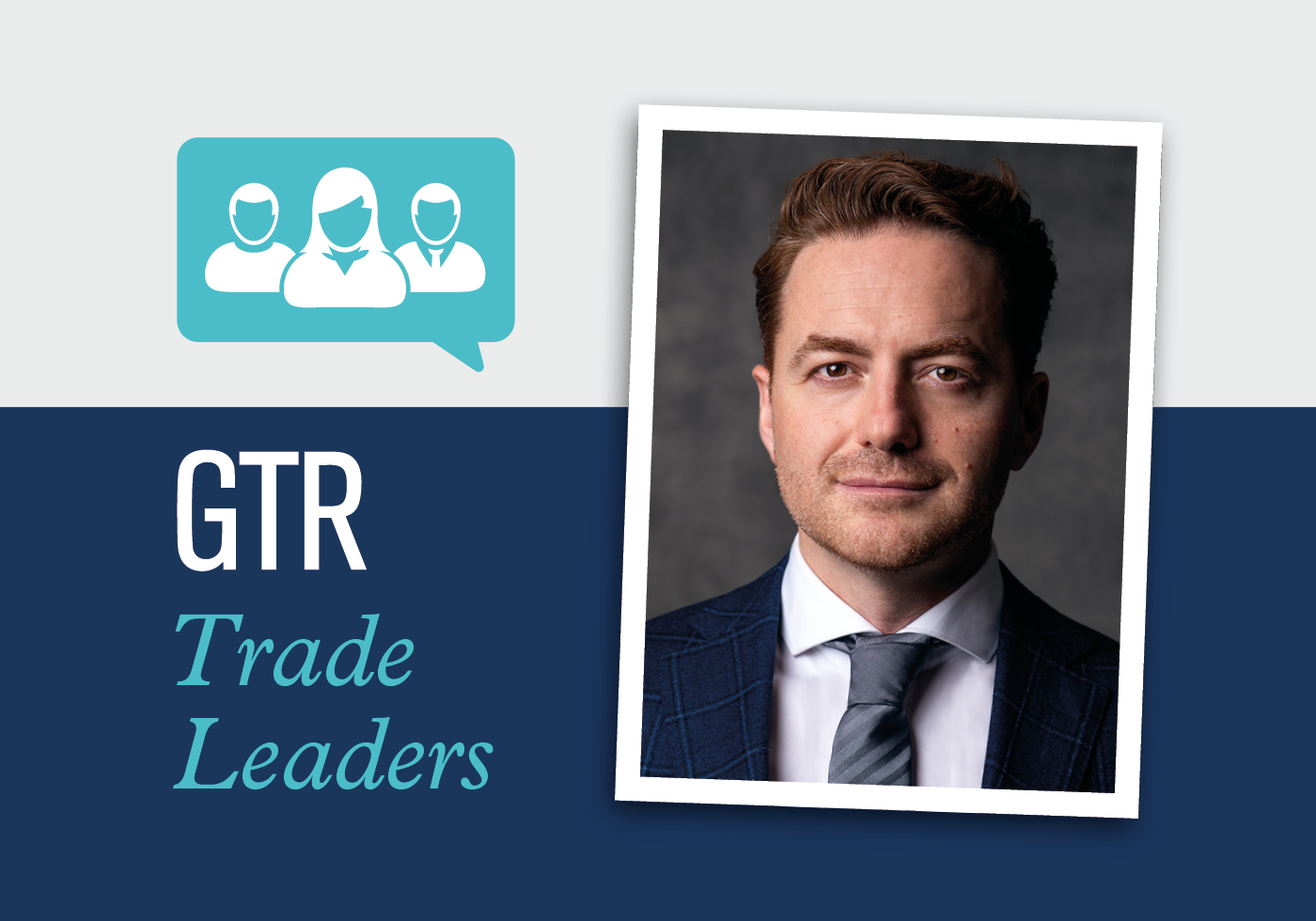



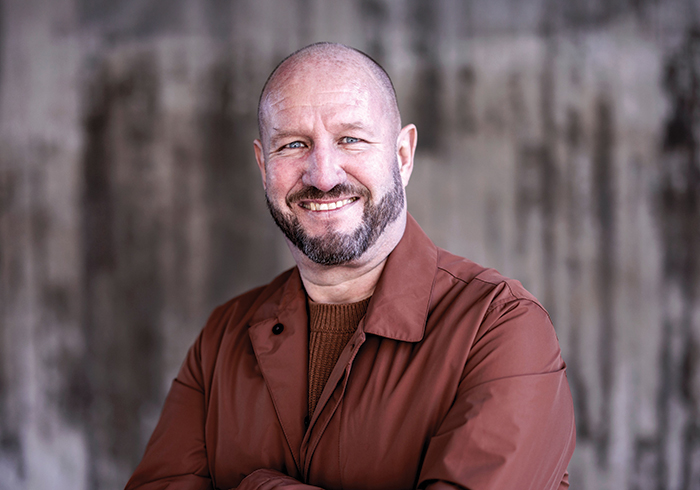
Maersk’s head of trade and customs on facing supply chain disruptions head-on, the value of owning data, and why some trade documents need to go.
Lars Karlsson wasn’t meant to be in trade.
The now-head of trade and customs at one of the world’s largest logistics and shipping companies, Maersk – and a leading voice in the international trade community – was supposed to have become a professional handball player.
Having grown up in Sweden playing the sport, Karlsson was taking it more seriously by the time he got to university, where he studied IT. But between classes, his mother insisted that it was “a good idea that I made some money, so she suggested I get a job at the local customs facility”, he recalls fondly. “It’s still the only job I ever applied for!”
Being a customs officer was only “supposed to be a temporary job”, but something “clearly clicked” for him. Karlsson worked his way up the Swedish customs ranks, eventually becoming director general in the early aughts.
His rise coincided with a particularly fruitful period for Sweden’s Tullverket, an agency often ranked among the world’s best customs authorities. It was famously behind the first single trade window in 1989, a pioneering model that aimed to create a single gateway for imports, exports and customs declarations, and to digitise trade-related data long before such systems were widely adopted across the EU.
Sweden also created one of the first trusted trader initiatives, the ‘stairway concept’, which brought together the private sector and government to secure supply chains and became a blueprint for many similar programmes globally.
“We were early on all those aspects,” Karlsson says, noting that export-oriented, raw materials-rich Sweden helped drive that modernisation.
This also meant the Nordic country had a pivotal role to play at the World Customs Organization (WCO), where Karlsson was nominated to a coveted director role in 2005, beginning a five-year stint flying the customs flag around the world.
At the time, the WCO already counted 186 members covering 99% of world trade, but its importance was “about to become bigger than we thought”. “International trade changed dramatically during those years,” he recalls.
“9/11 was a turning point, with major changes in security. Then you had the global financial crisis from 2008 to 2010, which had a huge impact on trade.”
Meanwhile, the way trade itself took place was also shifting. Integrated value chains were becoming the norm, with goods increasingly “made in the world, moving across borders four or five times during production”, Karlsson says.
Regulations were tightening in many countries, and technology was being adopted more widely. The WCO therefore tasked him with running a “big capacity programme to make governments and border agencies ready for those changes we saw coming”.
At the time, not every player was comfortable sharing vast amounts of information in a bid to make supply chains less blurry, he notes. But the customs organisation championed the idea that digitalisation and simplification on an international scale could be achieved in a “safe, secure and compliant way”, Karlsson says.
“That was the agenda we carried during those dynamic years up until around 2010-2012,” he adds, with the efforts resulting in the creation of “many of the international standards we still use today”.
It was his combined wealth of technical, compliance and regulatory expertise – paired with some strong lobbying muscles – that catapulted Karlsson into an executive role in the private sector in 2012, at pan-European customs, border and trade policy consultancy KGH Border Services. Nine years later, the firm was taken over by Maersk in a SEK2.6bn (US$280mn) deal.
“Some trade finance documents should be removed. That is a hill I will die on.”
‘The integrator’
“When Maersk came along, I thought ‘what am I going to do now?!’” Karlsson recalls. “But they had a plan.”
The Danish-headquartered company, already the biggest ocean shipping company at the time, was exploring future business avenues amid a rapidly digitising industry in which clients’ needs were shifting.
Maersk asked him to join the company and help “turn it into the first global customs organisation, from a private sector, end-to-end point of view”. This meant “fundamentally changing the business model”, Karlsson explains.
Maersk’s structure had traditionally been split into three distinct focal areas: ocean, terminals, and logistics and services.
Karlsson’s vision was not to approach them as “separate pillars”, but to interconnect the data flows across all departments and become a “control tower for the global movement of goods”. To d o so, he built on a previous supply chain blockchain initiative between Maersk and IBM called TradeLens – a now-defunct platform that facilitated information exchange for more than 65% of containerised trade, initially launched in 2018.
Over the years, TradeLens built up a network of over 300 members, including other big ocean carriers as well as numerous terminals, inland depots, customs authorities and intermodal providers. But at the end of 2022, Maersk and IBM pulled the plug on TradeLens, citing “commercial unviability”.
Reflecting on its end, Karlsson concedes “the idea of an independent blockchain was maybe premature at the time”. As the platform expanded, it also became clear TradeLens couldn’t be “Maersk-owned” because there was a lot of data from competitors – especially on the logistics front – going into it.
“It had to be handed over to someone to govern and manage,” he says. But “nobody was willing or ready”.
He doesn’t see TradeLens as a failure, since it came with “tremendous learnings about how to digitise trade, onboard exporters, importers, brokers, transporters and logistics companies into a single connected platform, and use that data for supply chain visualisation”.
Karlsson says the insights gained from TradeLens “gave us an advantage in managing data differently” and accelerated Maersk’s own transformation. The company has since been able to go beyond being “only an ocean shipper” to offering end-to-end integrated services and data flow management to clients, he notes.
“We became ‘the integrator’.”
Geopolitics and supply chain turbulence
This restructuring process hasn’t exactly been smooth sailing, taking place against a backdrop of turmoil for the industry in recent years. Karlsson joined Maersk at the height of Covid-19, an exceptionally challenging period that he wryly describes as “an interesting time”.
But what followed in the years since has been no less astonishing: multiple global conflicts, a container ship stuck in the sand that caused a massive blockage in the Suez Canal, the Panama Canal drought, the Baltimore bridge incident, the Red Sea and Strait of Hormuz crises… the list goes on.
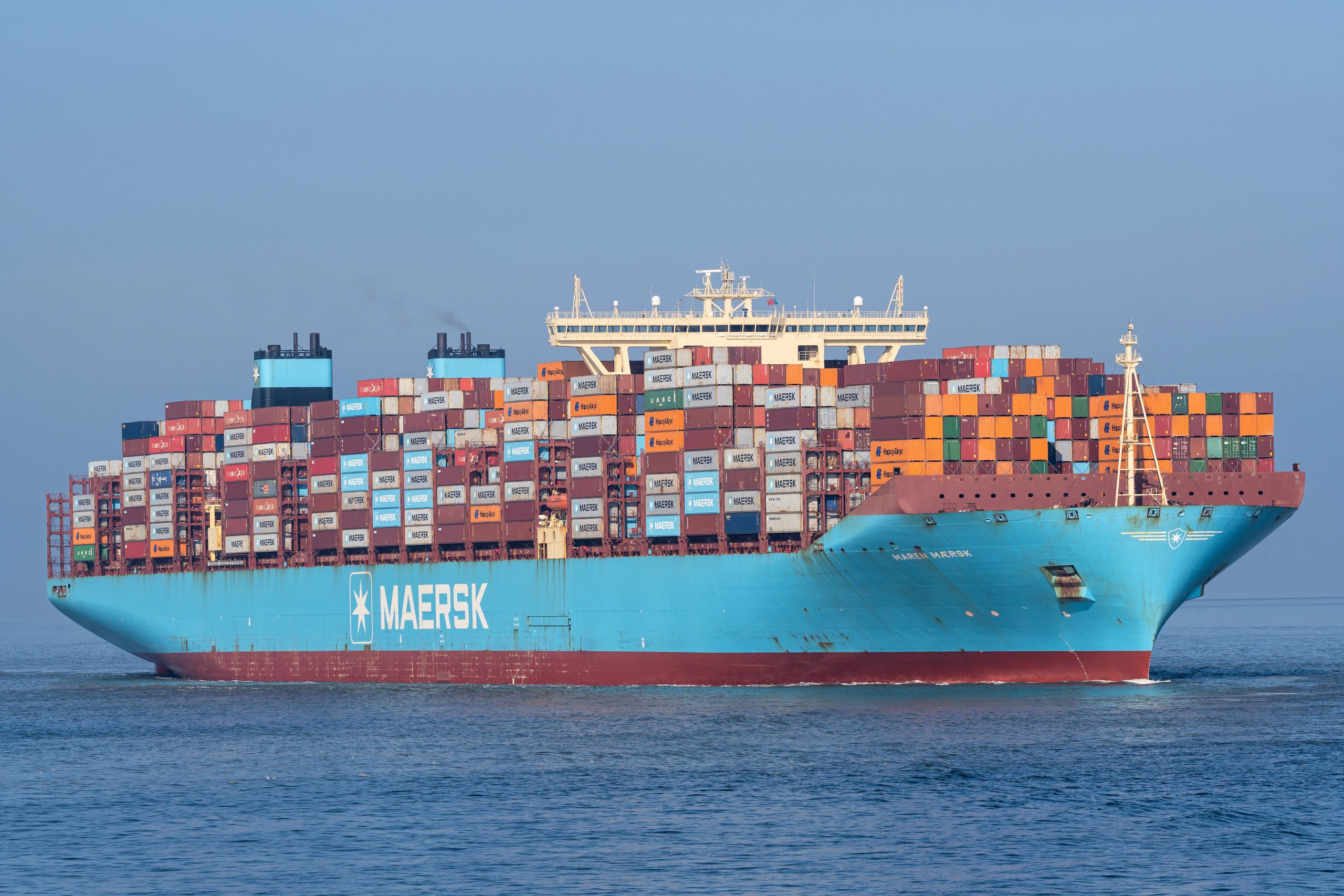
Karlsson says that the supply chain incidents of recent years have also renewed the company’s focus on “decision-making as early as possible and flexibility to adapt mid-route, reducing vulnerability to disruptions”.
This is where Maersk’s long-term operational collaboration with German rival Hapag-Lloyd also comes into play. The ‘Gemini’ partnership covers around 30 mainline East-West ocean services supported by more than 300 vessels, with the aim of offering a schedule reliability target of over 90%.
“Maersk is strong on major trade lanes, moving large volumes from A to B, and controls the dedicated shuttle services within the Gemini alliance. Together, we move goods closer to the market and deliver them faster and more reliably,” Karlsson says. “It’s been very positive.”
The approach is clearly working. In November 2025, Maersk upped its EBITDA range forecast for the full year, from US$8-9.5bn to US$9-$9.5bn, despite concerns about the effects on global demand from President Trump’s tariffs.
This is not to say that the higher import duties many countries are now facing haven’t badly affected global businesses, many of whom are Maersk’s customers.
“We have clients who pay hundreds of millions of dollars more every year” in tariffs, Karlsson concedes. “It’s very challenging for them.”
But he also believes that “trade is like water – it finds a way”. Indeed, while shipments from China to the US contracted in the third quarter of last year, Maersk reported it expected global container demand growth to be 4% year-on-year in 2025, boosted by imports in Europe, Africa, Latin America and West Central Asia.
The upside, he notes, is that the tariff situation has brought the customs discussion to the limelight, with corporates more attuned than ever to the costs of getting their compliance wrong.
“Even when global tariffs were low, companies often overpaid 5-6% because they didn’t understand the rules” or didn’t take advantage of free trade agreements’ preference rates, Karlsson says. “That’s leaving money on the table.”
Compliance challenges and the role of technology
At Maersk, using notoriously segmented global data to deliver better compliance outcomes for clients hasn’t been easy. But the company is experimenting with different solutions. These include conducting customs and compliance checks early on in the supply chain to identify potential tariff or ESG risks before shipment; using AI to help companies understand their exposure to regulatory shifts like tariffs; and running promising ‘trusted trade lanes’ pilots, where data is collected along a particular route to create a “kind of passport for goods” that could enable more seamless trade in the future, Karlsson explains.
“Even when global tariffs were low, companies often overpaid 5-6% because they didn’t understand the rules. That’s leaving money on the table.”
The real challenge over the next two to three years will be collecting this all-important data, especially across highly integrated industries, such as automotive and chemicals, that rely on an ecosystem of small and medium-sized companies, Karlsson believes.
Still, there is potential to leapfrog using technology – specifically, AI – with small companies likely to benefit the most from these advancements, he notes.
“When companies own and share data responsibly, AI can support customs, HS codes classification, risk management and supply chain visibility. We’ve been working on this for three to four years, and it’s starting to pay off.”
At the same time, trade digitalisation is accelerating. While there are discussions about digitising dozens of trade documents, following the example of the bill of lading, Karlsson’s view is that some of them should be removed altogether.
“That is a hill I will die on, because they were created for a different time. There’s obvious duplication, and some documents have lost importance, yet they remain for traditional reasons,” he says. Instead, the industry should “focus first on what data is actually needed – we might only need five of those documents”.
On this front, the biggest obstacle, he argues, is the slow pace of standardisation. “Whether it’s the EU, the WCO, WTO, OECD… we’re part of these organisations and support them, but it’s a slow process to get 200 countries to agree on common standards.”
Nevertheless, Karlsson remains positive that progress is happening. “Having seen developments over 20 years in digitalisation, customs and trade, we’re entering what I call Global Trade 2.0; a different world that won’t go back.”
To keep the momentum going, Karlsson firmly believes that “we just need to talk much more about it”.
“Trade is good. We just need to make sure it’s fair, inclusive and that it works.”
What’s the best business advice you ever received?
“The customer is always right since nothing is impossible.”
And one piece of advice you’re glad you ignored?
“We have already tested this; it didn’t work.”
What do you do in your downtime?
I hike with my wife and our two dogs, and I watch football games – preferably my club from the age of four, Malmö FF.
What’s your favourite good to buy across borders? Any duty-free guilty pleasures?
I buy a lot online and across borders, especially apparel, since trade is good. I never feel guilty for shopping!
Most underrated country?
Having travelled to 173 countries, my favourite countries are: Australia, Brazil and Iceland. Most underrated: Uruguay, Vietnam and Sweden.
What is your key takeaway from your new book, ‘When Elephants Fly – Leadership and Management of Customs, Trade and Borders in a Globalized World’?
It is not about where you come from but where you are going that counts. Leadership is not talent only, it is about practice. You need to train, execute and learn leadership every day. That is how you become good at leadership and as a manager.
Funniest ship name you’ve ever encountered?
‘Ship Happens’
What do you wish politicians knew about trade that they don’t?
How important trade is for growth, job creation, poverty reduction and prosperity. One would think that they know this already, but they don’t.