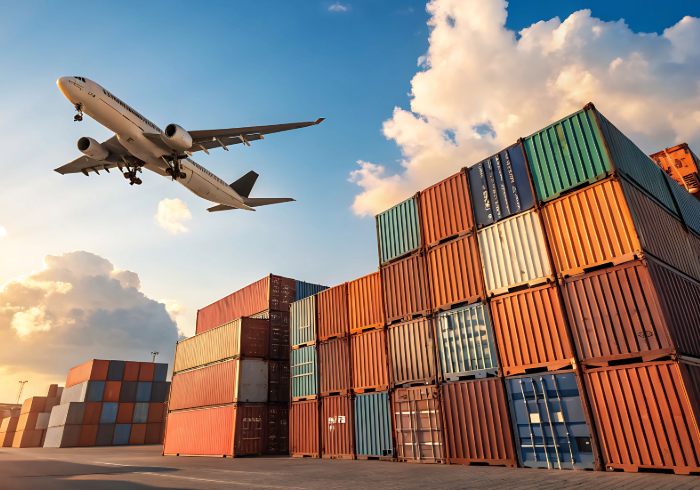


The UN General Assembly has adopted a convention that will give a comprehensive legal basis to negotiable documents of title for cargo shipments by land and air, much like shipping’s bill of lading.
Developed by the UN Commission on International Trade Law (UNCITRAL), the convention on negotiable cargo documents was adopted on December 15 and has been three years in the making.
Previously, the only document of title in trade finance was the bill of lading, which only covered transport of goods by sea.
But under the new convention, all modes of transport will be covered – including air, road and rail – by a single, electronic document.
Banks can use the document as collateral, just as the bill of lading has been for decades, enabling lenders to provide trade finance more easily.
Anna Joubin-Bret, UNCITRAL secretary, told a press briefing the convention “is going to be a real game changer in international trade”.
“Everybody knows about the bill of lading, which enables goods to be bought, sold or used as collateral while they’re still in transit,” she said.
“In contrast, the documents used for goods transported by road, rail and air are typically non-negotiable, meaning that those documents cannot be transferred to another party or to a bank as a means of transferring rights to the goods they represent, or the financing of a transaction.”
In 2019, the Chinese government asked UNCITRAL to consider developing a global legal instrument to make rail consignment notes negotiable documents of title.
GTR reported that UNCITRAL was in the final stages of developing the treaty in June 2024.
According to Joubin-Bret, “the new convention will reduce the costs of trade along inland routes and will assist both landlocked countries and countries with large mainland territories in integrating more effectively into global supply chains”.
It will also support other countries, including coastal nations, in the digitisation of negotiable cargo and transport documents, she said.
“We are very proud that this success stands as another example of effective multilateralism in developing modern, harmonised legal frameworks to facilitate trade,” Joubin-Bret said.
Tomasch Kubiak, policy manager for the International Chamber of Commerce Banking Commission, said the convention’s adoption “closes a long-standing legal gap and makes global trade faster, safer and more accessible, supporting sustainable economic growth.” He added that the reform is expected to improve cash flow for businesses in the developing world.
Individual countries will now be required to ratify the treaty. To garner support, Joubin-Bret said UNCITRAL had contacted industry representatives, such as shipping companies and freight forwarders, to help them encourage states to sign up to the convention.
In response to a question from GTR, Joubin-Bret said she was “extremely confident” that many countries will adopt the convention.
“We had discussions with the African Continental Free Trade Area, which is all about facilitating intra-African trade and having one single document of transport for all these countries involved is going to be a very meaningful tool.
“Similarly, we know that the Central Asian countries that are along the trade corridors that go from China to Europe are going to be extremely interested in joining. We’ve had many countries already inquiring.”
The signing ceremony for the convention is expected to take place in Accra, Ghana, in the second half of 2026.