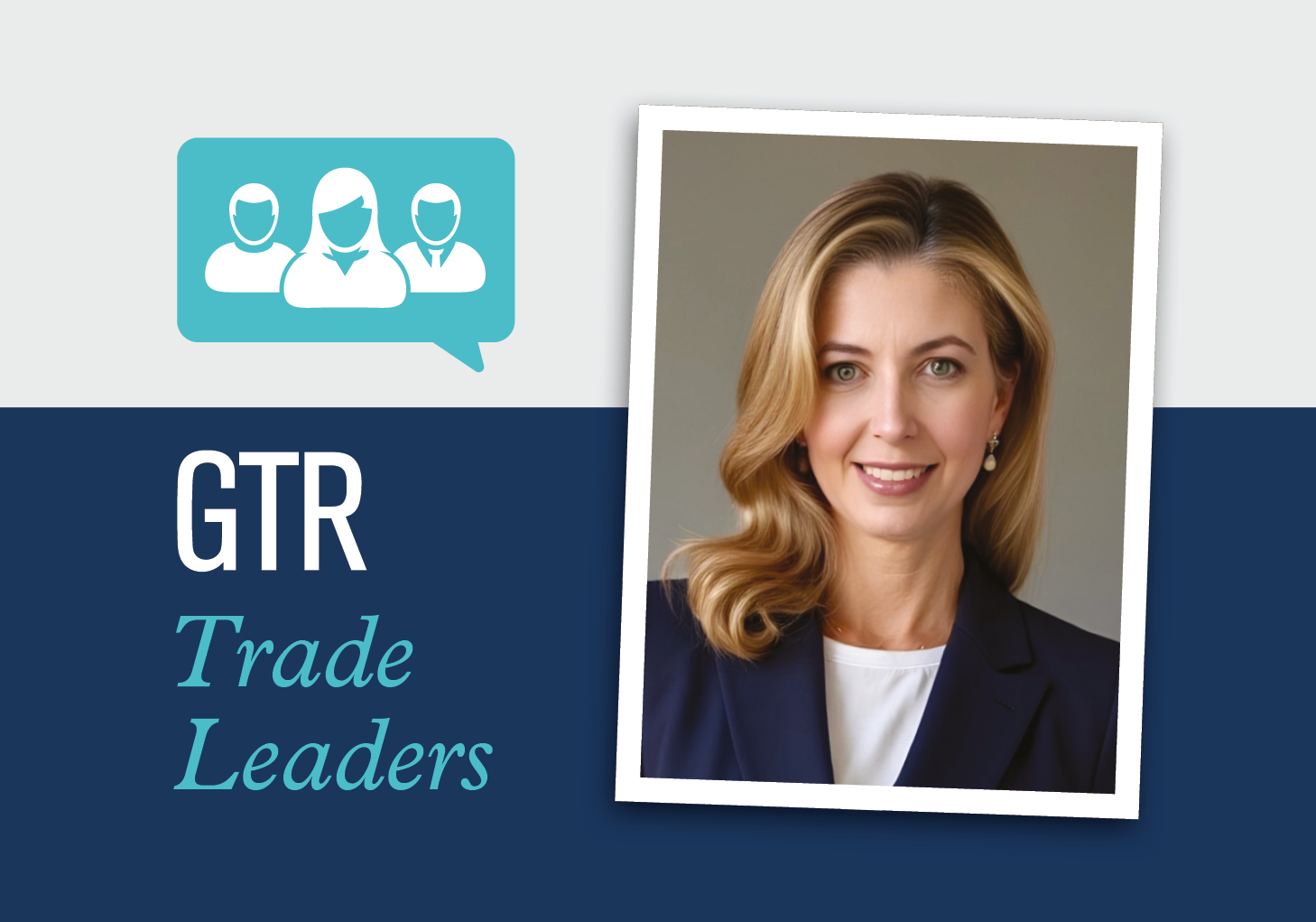


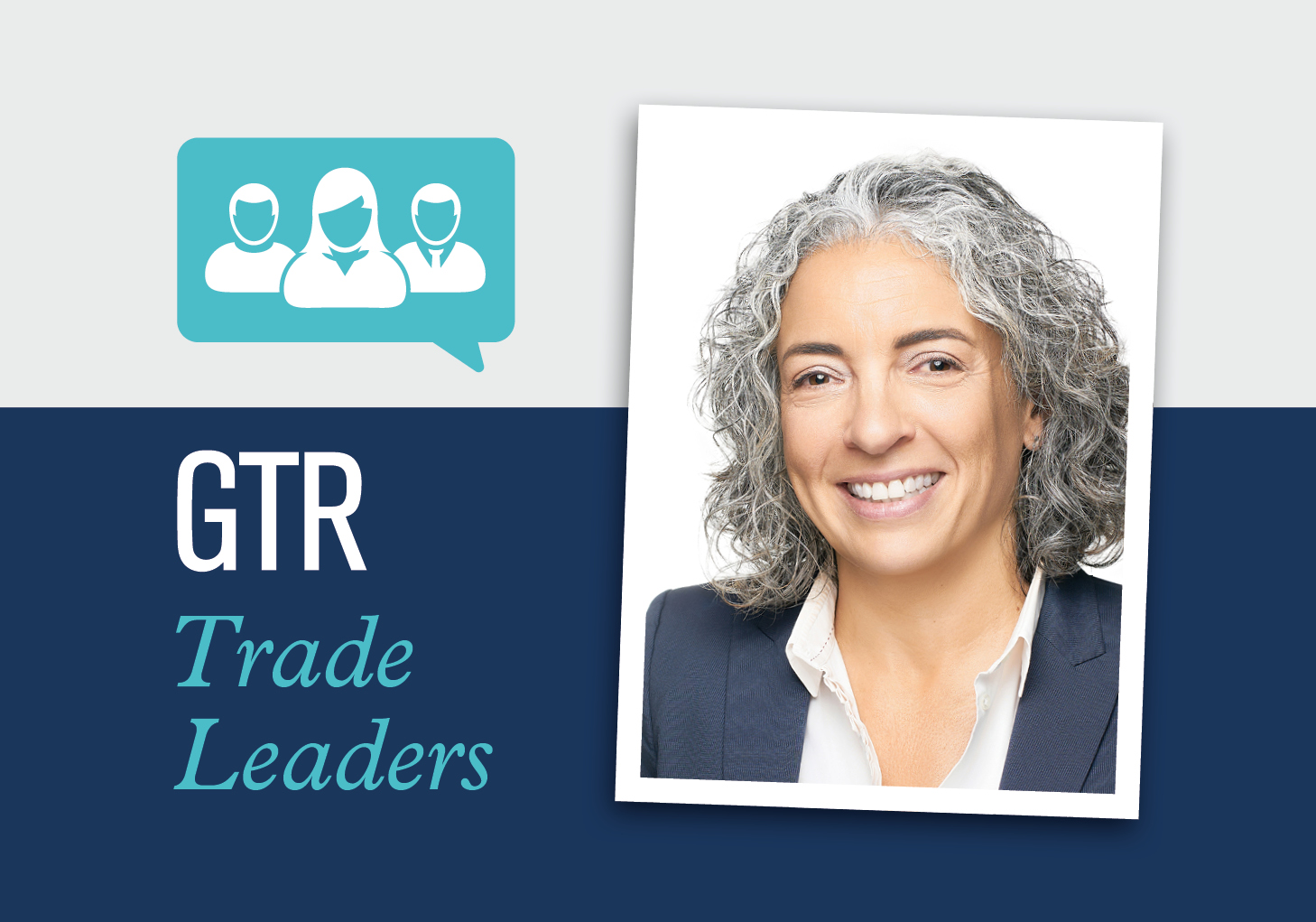
Souleïma Baddi spent close to two decades at Société Générale, including leading its commodity trade finance business in Geneva, before founding Komgo in 2018 – spinning the platform out from the bank’s blockchain proof of concept work into an independent, multi-shareholder network.
Under her leadership, Komgo has moved beyond its blockchain origins to become one of the more resilient digital infrastructure providers in trade finance, connecting hundreds of banks and corporates from across the globe.
For GTR’s latest Trade Leaders instalment, Baddi discusses why Komgo has thrived when others haven’t, what’s driving the company’s surge in bank and corporate adoption, and how her risk-tolerant and restless personality shapes her approach to building and running a scale-up.
GTR: You spent nearly 20 years at Société Générale before founding Komgo. What was the moment you decided the industry needed something built outside a bank, rather than another internal initiative?
Baddi: In 2010, I moved to Geneva to launch Société Générale’s commodity trade finance business in Switzerland. I was coming from a capital markets background, where everything was digital, and I ended up managing paper documents and wet ink signatures – it came as a shock, because I didn’t know this world at all. But I was busy building the business, so I managed it as the industry traditionally manages it, with the constant risk of losing documents.
However, this topic of digitising the industry was always in the background. The risky nature of commodity trading, combined with increasing sanctions and compliance requirements in Switzerland, also meant banks were under a lot of pressure to digitise their businesses.
Then in 2016, when blockchain arrived, we were also caught up in this wave – at SocGen, we had a pool of blockchain experts, so we started working on PoCs [proofs of concept] and did two very famous ones with ING and Mercuria. Then the bank told me: ‘your PoCs are very nice, but we need something we can use on an everyday basis’.
That’s when I started working with the team on the thought process that became Komgo. We noticed everybody trying to digitise trade was doing it very much in isolation, because of a lack of trust. That’s why we decided to build this company with strategic shareholders only, who could lend that trust through their shareholding. And to avoid being seen as belonging to only one side of the industry, we decided to have a combination of corporates and financial institutions fund and own the company.
For those reasons, it could not be a single-bank platform, or even a solely bank-owned platform. We immediately felt that building a network of trust was one of the key things needed to succeed in this journey. It was a question of products, obviously, but also of networking – and that’s what you have in Komgo today: both.
GTR: What was the hardest part of that spin-off process?
Baddi: Everything’s hard in the journey of building a business. It’s been eight years now, and even though it’s a success, it still remains a very difficult journey.
The most challenging part for me was the personal commitment. When you launch a business, especially when you want to scale it as fast as we wanted to, with the visibility and magnitude it had, it becomes your life. You’re totally drawn into it, and it’s very difficult not to lose all balance. It’s a bit less the case eight years down the road, but it’s still a big part of my life. I have three kids, so this is my child number four, in a way.
But it’s a super rewarding experience. What we’ve been able to do with the team – to say we’ve achieved trade digitalisation success by building this infrastructure with the industry on a global scale… The company belongs to the industry; Komgo will survive all of us.
GTR: Komgo’s early years were defined by blockchain framing, but then you pivoted. How much of that early days’ technology is still relevant today, given what the platform has evolved into?
Baddi: It’s not [relevant] – and the reason is very simple: we’re here to solve problems, and clients don’t care about the way we solve them. What’s important for them is that it has to be secure, it has to be trusted, it has to be confidential and neutral. They have to have their data in a safe place.
But it has nothing to do with technology. Technology is just an enabler to solve problems for the client, but it should never be your driver. When we saw that very large clients were reluctant to use blockchain because it was expensive and did not solve their problems, we decided to drop it. It was one of the best decisions we took, if you look at what became of the other blockchain-based companies.
GTR: Many of those platforms that launched alongside Komgo at the time have wound down or stalled, and our own coverage this year has pointed to something close to a stalemate in digital trade. What else did you do differently to maintain momentum?
Baddi: I think what we did right was build something you could think of like Swift for interbank payments: it’s a neutral, multi-institutional network, and the value comes precisely from the fact that no single participant owns it. Other parties have software and sell it, but they don’t have this full infrastructure.
It’s funny you mention digital fatigue, because I think I was the one talking about it a few years ago, when clients didn’t know which platform to choose. They were kind of lost with all the solutions and networks. I don’t think it’s the case anymore, I think there’s a lot more clarity, and there are fewer players today.
From our perspective, across 2024 and 2025, we’ve seen volumes grow significantly – more than 30% per year, which is massive, both from a project-implementation perspective and a new-client perspective.
GTR: What’s the secret to the success?
Baddi: For a bank, the analysis is quite simple: they want to get rid of client emails. For that, they can build their own trade finance portal – which is one option corporates will adopt if they don’t have more than four or five banks – but beyond that, they need a multi-bank solution.
What’s also interesting about what we do is that we operate the platform as the bank’s own trade finance portal too, so more and more banks use us as their white-labelled multi-bank platform. Their strategy is to push all their clients onto it, because that’s how they maximise their ROI – they only have one integration to maintain, one provider in front of them, and they push more clients to adopt it.
The [Komgo] team also knows how to implement and navigate very large projects, and we give a lot of feedback and case studies to clients on how to simplify trade, which is very important to corporates.
So [the success] is a combination of all that. It’s difficult to get there, but I think now that we’ve reached that point, it’s accelerating quite rapidly. If I look at the number of extremely large projects we’re implementing this year, it’s twice as many as last year.
GTR: What’s driving the pace of onboarding right now?
Baddi: Companies now know that they can invest with a high probability – quasi-certainty – of having a positive ROI and an operational platform in less than three to six months, depending on the complexity of the corporate or the bank. The fastest ones are on the platform in less than three months.
For corporates with hundreds of banks, the good news is we’ve now connected all those banks across many, many countries. So, it’s the product’s quality, connectivity with banks, the team’s experience implementing and adding value to simplify trade, and the ability to make it all happen fast.
I think that’s very compelling for corporates who want to digitise. More and more corporates are putting Komgo as their communication medium in the RFPs they run with their banks, and some are even putting a lot of pressure on banks to integrate with the platform.
And on the other side, now that banks see the ROI coming and can justify their trade finance budgets by showing that it works, they’re also pushing their clients onto the network much more than they ever have. So it’s really a combination of both today.
GTR: You’ve also expanded into new markets and beefed up the team across the US and Asia Pacific. Where is demand strongest right now, and where do you plan on putting resources next?
Baddi: Emea has been our growth engine until now. Now, our best salespeople are refocusing on the Americas and Asia Pacific, and we expect these regions to contribute much more to our growth starting next year – Australia, India and Hong Kong.
This trade finance portal offer is also very compelling to many regional banks in Vietnam, Thailand, and other countries that lack a simple, off-the-shelf portal that’s easy to deploy.
We’ve also added a very experienced salesperson for Latin America, where our name was nowhere to be seen, so we’re adding a new region to generate growth going forward.
But I think the US seems the most promising region, and Canadian banks are also starting to join the network as we speak.
GTR: You’ve built Komgo largely outside the traditional banking hierarchy you spent 18 years inside. How has your leadership style changed as you moved from a large institution to running a scale-up?
Baddi: I’m not sure it’s changed a lot. I’ve been a manager for 23 years now – I started working in 2000 and started leading teams in 2003, and I’ve always managed teams in small, quite independent set-ups, so moving to the Komgo set-up wasn’t a big difference for me. I’ve always been building things – obviously, launching Société Générale’s commodity business in Switzerland with the brand behind me was a much easier journey, but it was still a business launch.
I think I make many more decisions per day at Komgo than I did at a large institution, where a lot of people make decisions for you – which was very frustrating for me at the time, by the way. I like the pace here, we’re much more agile, we adapt much more. I think the team is amazing, it’s very difficult to build a team and find people with the mindset to accept that not everything is standard or stable, and to adapt every six months. You don’t have time to get bored here. So I really enjoy that part.
I’m maybe more assertive on certain things. I remember at the beginning of the company, all the shareholders wanted a board seat, and I just said a company with a board of 14 or 15 shareholders wouldn’t work. I think I always make decisions in the best interests of the company and the team because they’ve invested so much in making this a success, so I try to support them as much as I can. That’s what drives me in those decisions.
GTR: Do you have any advice for someone early in their career who wants to move from banking into building something like Komgo?
Baddi: What I’d say to a young person is to understand and go deep into what they do. Especially in trade, it’s a difficult industry and it really deserves a lot of work and commitment if you want to have an impact and build on it.
Building a company is also a matter of mindset and timing. It doesn’t work for everybody, so knowing yourself and when you want to do things is very important. I would never have been able to do Komgo if I’d wanted another child, for example, and that’s totally fine, it’s just a question of being aligned with what you want to do.
And this can change, by the way – it changed many times in my life. When I had my kids, I wasn’t travelling as much as I am today, and that’s totally fine. We work for 40 to 50 years, so we have time for many professional chapters. But know yourself, what you want to do and where you want to spend your time, so you’re not frustrated later.
Maybe the last thing is about seizing opportunities. Things don’t happen by magic, and sometimes you need to take risks to progress. I know I have a very good tolerance for risk from a professional standpoint, but not everybody has that kind of risk appetite, so you need to know your own sensitivity, how comfortable you are exposing yourself.
It’s all a question of knowing yourself and being aligned – that’s the most important thing.
GTR: What gives you energy outside of building a successful fintech?
Baddi: Family and friends. Mountains and nature are very important to me. My biggest challenge is doing something alone – I like being alone, which is very difficult in this kind of position, but I often achieve it when I’m travelling.
Funnily enough, each time I travel, I try to escape and walk for an hour somewhere I can re-energise. Given the busy days we have and the pace of things, just having nothing taking up my time is important too.