



UK Export Finance (UKEF) provides domestic companies with a vital line of support for international infrastructure projects, but its approach has sometimes led to frustration among exporters.
At this roundtable discussion, hosted in partnership with the British Exporters Association (BExA) at June’s GTR UK event in London, a group of UK exporters specialising in engineering, procurement and construction discussed the challenges faced when seeking UKEF support – not least the application of UK content rules and the speed of executing transactions.
For the agency, the message was clear: let’s have the conversation.
Participants:
- John Basquill, senior reporter, GTR (moderator)
- Christopher Breeze, managing director UK, Ellipse Projects
- Simon Bunckenburg, head of infrastructure and construction, UKEF
- Andrew Colquhoun, vice-president financial solutions, Dints International
- Geoffrey de Mowbray, chairman, British Exporters Association (chair)
- George Isaak, project procurement manager, Hassan Allam Holding
- Nick Oliver, managing director, Globespan Infrastructure
- Guilherme Pereira, deputy procurement manager, ERG International
- Youssef Sennou, sales development manager, African Supplies
As the UK’s export credit agency (ECA), UKEF has stepped up support for domestic exporters over recent years. In June last year, the government expanded its capacity from £60bn to £80bn, and that figure is expected to double to £160bn thanks to a parliamentary bill passed in March.
The agency has doubled the size of its portfolio over the last six years, and it has introduced a range of new products, including automated guarantees for working capital facilities and a small export builder product aimed at SMEs.
However, for roundtable participants, the most pressing theme was the agency’s UK content requirements, which apply to transactions where there is an export contract between a UKEF-supported exporter and an overseas buyer or borrower.
Overseas projects often include imports from a variety of countries. To qualify for UKEF support, a minimum of 20% of a project’s content – defined as goods, services and intangible assets – must come from the UK.
But as Simon Bunckenburg of UKEF explained, the agency is now “taking a more granular approach to measuring the UK content”.
“That’s relevant for EPCs [engineering, procurement and construction firms] in the infrastructure space in a range of ways, but I think what companies would have seen most clearly is a more structured and rigorous approach to doing due diligence on the supply chain with the EPC,” he said.
“We want to make sure that’s genuine UK content, genuine UK activity. So the process we go through now looks beyond whether the company is registered in the UK: what’s their head count, what’s their activity, are they manufacturing or just a sales office for goods produced elsewhere? We have been rolling that out for the last year and a half and we look at this on a case-by-case basis.”
Nick Oliver of Globespan Infrastructure noted there has been “frustration” over local content and eligibility rules, but welcomed the change in approach.
“I have advocated for some time that content rules should be tightened, that UK percentages should be increased, and that companies should have a real base in the UK – employing more than a part-time secretary – and actually doing what they say they do,” he said. “This is to protect companies that are genuinely UK-based and paying UK taxes.”
But for other participants, the gradual nature of the shift has created issues. One point of contention has been that the adjusted approach was set out in an update to UKEF’s website towards the end of 2025, rather than through an official announcement.

BExA’s Geoffrey de Mowbray suggested that some EPC companies “have based their projects on the previous rules, had them approved, and now their costs are coming in and it’s looking unprofitable for them”.
“There’s no blame to be attributed there, but I’m concerned about the reputational damage that might do to us collectively,” he said. “Ideally, after the project’s finished, the trading relationships would continue, and we don’t want companies to be fed up with dealing with the UK after finding it too expensive.
Competitive disadvantage
In practice, UKEF’s approach to UK content is creating practical challenges in the infrastructure sector, said Yousseff Sennou of African Supplies.
If companies are not able to find sufficient products from the UK, EPCs “sometimes cancel the whole package” and source items from elsewhere, he said. Sennou suggested that if UKEF does not “make it a little easier” for EPC companies, they are more likely to seek out support from rival agencies.
“It would probably only be a small economic loss but a significant win for EPCs that are trying their best to stick with UKEF’s guidelines, while also making UKEF more attractive,” he said.
De Mowbray added that could create an incentive for UK companies to start producing the 20% of products that are missing.
“If we’re going to grow our exports, what we need to do is containerise what that demand is that we don’t currently have here, then make it attractive for companies to either begin producing it or investing in the UK.”
Geoffrey de Mowbray, BExA
Another challenge is where manufacturers sell through non-UK distribution channels rather than directly to the EPC contractor, pointed out Guilherme Pereira of ERG International.
“I appreciate the focus should be on a genuine connection with the UK, but at the same time, we don’t manufacture everything in the UK. For example, there are manufacturers of fibre optic cables that are established in the UK, they have a good team, they are taxpayers, but don’t want to sell directly to the EPC contractor,” he said.
“There are other routes we should consider as well. We have a manufacturer in Scotland that prefers to sell via a distributor channel, because they don’t want to deal with export documents and they have already defined their geographical strategy. As an EPC contractor, we need to respect that and go through the distributor line. These routes are not being considered any more, and this is critical for procurement. Flexibility is important for EPC contractors.”
Greater flexibility could also help infrastructure projects in higher-risk markets, which may not have the purchasing power to source inputs from the UK, added George Isaak of Hassan Allam Holding.
“The focus on UK content is good, because we’re all taxpayers and we don’t want to see anything export-related being done in an unethical or ineffective way,” he said.
“But when it comes to some of the territories we’re focusing on – let’s say a country coming out of a war zone that the UK wants to support – there could be a little bit more flexibility in terms of the procurement strategy. If all the products are manufactured in the UK, with UK labour and pricing, it might push the budget out too far for the client.”
Speed of execution
The more rigorous approach to UK content rules has also added to the bureaucratic burden for UKEF-supported companies, potentially leading to costs and complications, suggested Andrew Colquhoun of Dints International.
“We need to make sure everybody’s aware of the consequences and challenges that the changing picture of UK content can bring. Drawdowns can be delayed by months because of UK content levels not being met, sometimes because of changes to the availability of UK content since approval,” he said.
Colquhoun gave the example of factory closures or stock availability issues affecting UK content levels.
“The result can be months of delays while alternative UK content is sourced and integrated to the project,” he said. “Everyone’s losing there, whether it’s the manufacturer with stocks waiting in a warehouse, the subcontractor on the ground who’s having to put up working capital to keep the project moving, or the British ambassador locally who’s losing political capital by a project not moving forward.”
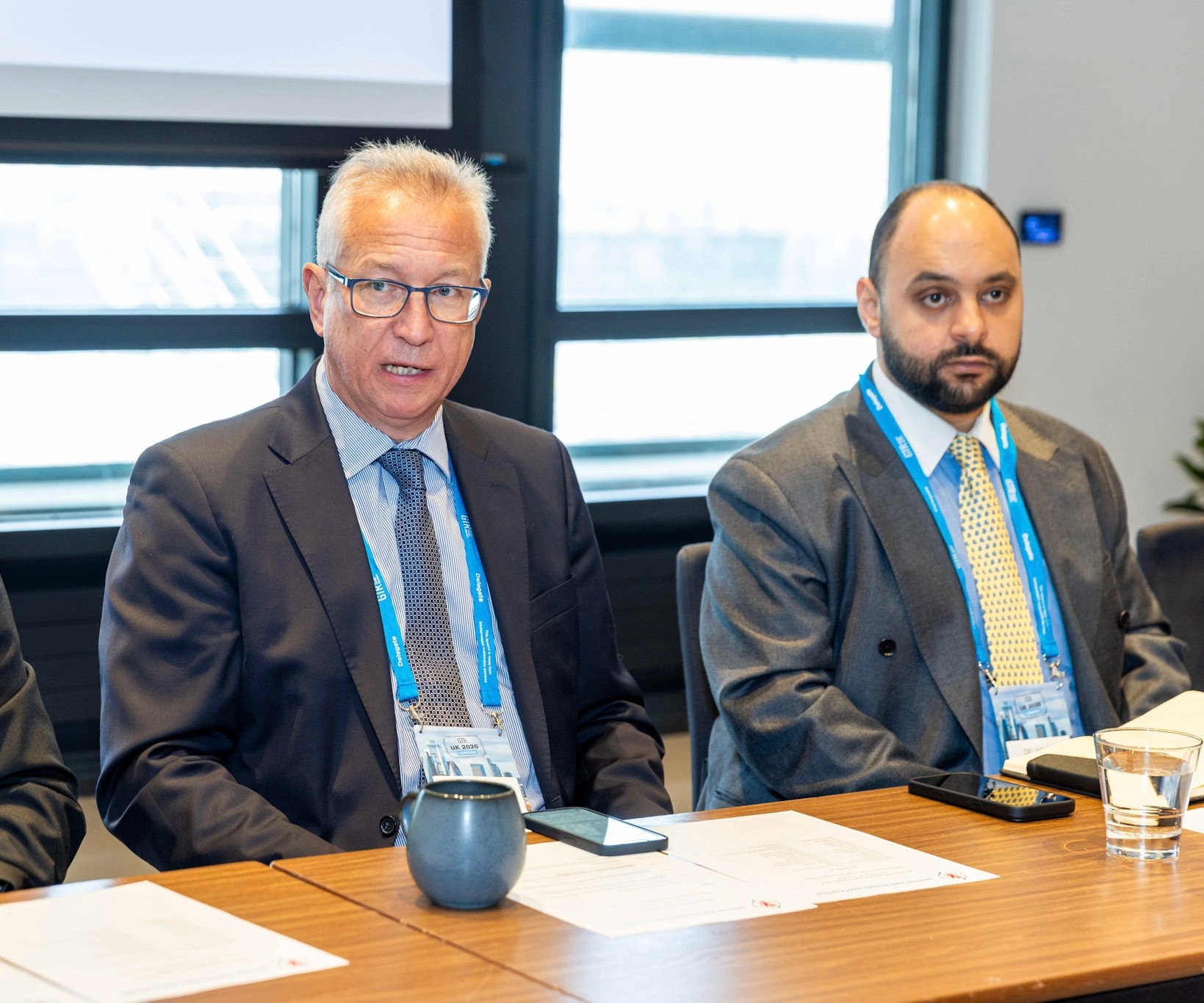
Christopher Breeze of Ellipse Projects added: “I completely applaud the need for being rigorous about UK content. I don’t applaud the extra bureaucracy – going through Companies House records of 140 suppliers to find out what their revenue was last year and how many employees they have. It’s very time consuming, and for a small enterprise adds quite a big burden.”
This issue is compounded by existing frustrations about the speed of execution when dealing with UKEF.
Globespan Infrastructure’s Oliver noted that many market participants believe UK government – and therefore UKEF – rules and procedures “are giving us a disadvantage in the fast-moving international markets, compared to our competitors”.
“The criticism is not that UKEF is unnecessary – most people accept that having strong export credit support is essential – but more on speed, complexity, flexibility and competitiveness relative to rival ECAs,” he said.
“The process can be perceived as slow and document-heavy, but large infrastructure and export deals often move at pace, particularly in emerging markets. Sponsors and sovereign clients may want indicative financing structures within weeks, not months. It is often taking longer to get funding in place than it took to get the contract signed.”
Ellipse Projects’ Breeze said that while he appreciates UKEF’s flexibility in most areas, time “is a killer, not just for the deal, but for your bottom line”.
“The knock-on commercial impact of something being this year rather than next year is enormous,” he said.
UKEF: Let’s have the conversation
Bunckenburg said that for local content rules, the agency is keen to “get the balance right”.
“We are very happy to have conversations around things like distributors or unusual structures, and would welcome feedback. Generally we want UK content to be recognised. That’s the guiding principle, and we don’t want contracting structures or existing commercial arrangements to get in the way of that,” he said.
“The headline message is let’s have the conversation.”

He acknowledged that projects in higher-risk countries mean higher content limits than companies might expect, but again urged participants to contact UKEF if requirements are proving a challenge. The agency is “always looking at things on a case-by-case basis, but even more so in high-risk markets”, he said.
“When it comes to speed, the challenge for us is what needs to be done before we underwrite, particularly when there’s a direct loan,” Bunckenburg added.
“Our purpose is to support exports, but that always has to be balanced with the range of risks we’re taking on, for example, environmental and social, or compliance, and doing the due diligence there is important.”
He said UKEF has taken steps to streamline that process, including pushing banks to take on a greater role.
“We’ve often found that due diligence packages land on our desks without the banks having reviewed them, but we expect them to do that first,” he said. “The exporter shouldn’t necessarily be doing things like appointing advisors or consultants; they could be doing other things with their time.”
The burden does not fall only on banks, however.
“It’s important everyone is on the same page around who’s supposed to be doing what,” he said. “Also, we sometimes see delays with things like governments closing out approvals or getting general legal opinions. We try to push along here as well, but it’s important to recognise that emerging market sovereigns move at their own pace as well.”
Looking ahead
BExA’s de Mowbray was keen to highlight a constructive and optimistic spirit among participants, with demand for UK expertise in infrastructure, engineering, professional services and project delivery remaining strong.
“The discussion shouldn’t be framed as UK content versus competitiveness,” he said. “The real opportunity is to use demand from international projects to strengthen UK supply chains, create new capability and bring more British companies into export markets.
“If we work together across exporters, government, finance and industry, we can turn these challenges into a genuine growth opportunity.”
The UK “has all the ingredients needed to succeed internationally – exporters, manufacturers, financiers, insurers, advisers and government support”, he said. “What we often lack is coordination.”