

The Middle East crisis is sending another jolt through commodity markets, but the bigger shift lies in how trade risk is managed. As transport, insurance and counterparty pressures rise, firms are being forced to rethink how disruption is priced, absorbed and insured.
The outbreak of war in the Middle East has sent another shock through commodity markets, exposing how little slack remains in a trading system already strained by inflation, supply chain upheaval and rising geopolitical risk.
For traders, lenders and insurers, the immediate question is whether the conflict develops into a more serious supply disruption. Beyond that lies a larger consideration: what changes when disruption is no longer temporary, but built into the way trade works.
Energy may be at the centre of the initial shock, but the disruption is spreading more widely through the trade system. Shipping, credit, insurance and contract terms are all being repriced, and that pressure is feeding directly into commercial decisions.
Asia is one of the clearest pressure points. A prolonged disruption in Gulf energy flows would be felt across the region, but weaker importing economies would have far less room to absorb higher costs.
“Circa 80% of Asia’s oil and LNG supply passes through the Strait of Hormuz, so the region will be materially affected. The cost of trade will certainly go up,” says James Ponsford, head of structured credit and political risk Asia at Aon.
As the cost of moving and protecting trade rises, the effects spread beyond oil and gas, feeding into contracts, balance sheets and end-market pricing.
Metals are already feeling that pressure, as higher energy prices raise costs and put strain on counterparty limits. Agricultural flows look exposed too, especially when disruption affects goods that cannot easily be stored while trade routes or counterparties are reworked.
“In the agri space, fertilisers have been materially impacted from a supply perspective,” says Ponsford. “And in the credit and political risk market, soft commodities are perceived as a more challenging underwrite largely because of the perishable nature of the goods and lower recovery potential. That makes those transactions more challenging for insurers to assess.”
The consequences do not stay confined to commodity desks or insurance markets. When fertiliser and soft commodity flows come under strain, the effects feed through into food costs, import bills and wider affordability pressures.
Detail in the disruption
Those pressures are changing behaviour across the trade system too. Even where flows continue, firms are becoming less willing to treat geopolitical disruption as a passing shock and more likely to plan for it as a recurring commercial risk.
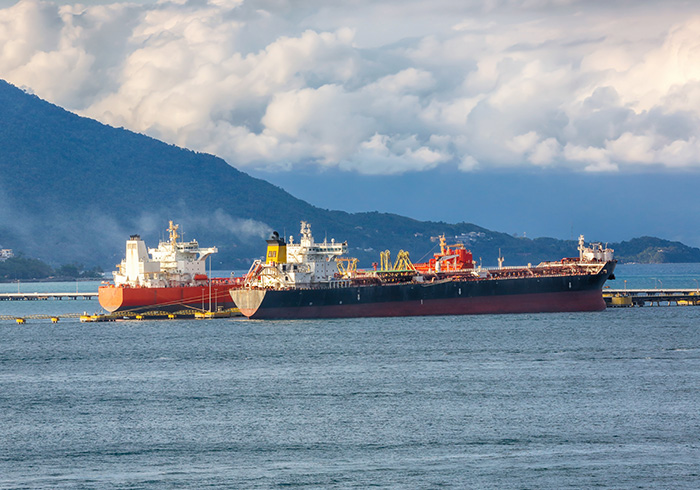
While routes outside of the Strait of Hormuz remain largely open, with cargoes still moving and deals being made, the calculations behind them are becoming more cautious as higher transport, insurance and counterparty risks are priced in. The clearest sign is cost, with shipping and war-related cover rising sharply even when the route itself remains open.
“Across the marine market, from marine cargo to marine hull and war, rates have gone through the roof,” says Ponsford. “Pricing can reach up to 10% per transit through the Persian Gulf, and these are not annual rates. They may only provide cover for two or three weeks, which makes them very expensive.”
Increases of that scale force traders and financiers to treat geopolitical risk as a direct cost of doing business rather than a distant macro concern. Traditional pricing benchmarks may still capture the commodity price, but they are becoming less reliable as a guide to the full cost of completing a trade in a more fragmented market.
Where cover counts
Resilience is becoming more practical, from contingency planning and route diversification to the legal and financial details of how risk is insured.
That scrutiny starts with the contract. Force majeure is back on the agenda, as clauses that can sit in calmer markets become important when conflict disrupts performance, pushing firms to look more closely at where contractual protection ends and insurance protection begins.
“If you are buying a non-payment policy, you need a legal, enforceable debt. If there is a valid force majeure event, which exits the counterparties’ contractual obligations, that policy is not going to respond,” says Ponsford.
Conflict-related losses often emerge before a non-payment claim exists. A shipment may be delayed, a contract frustrated, or a project stalled, leaving firms exposed beyond traditional debt-based cover.
“Trade disruption insurance can help protect clients against that kind of risk,” says Laurie Flaux, deputy head of political risk and structured credit at Aon. “It is a named perils policy covering marine, political and physical perils, and can cover clients for property damage, additional costs, loss of profit and contractual damages.”
For companies exposed to volatile trade routes, the priority is to review risks early, before capacity tightens and cover becomes harder to align with contractual and funding obligations.
Pre-shipment and post-shipment structures are under scrutiny because timing can matter as much as cause. Costs can build earlier, leaving firms vulnerable before a shipment is completed.
“Pre-shipment cover can protect against costs incurred over and above an advanced payment,” says Flaux. “In a conflict scenario, that could mean costs arising before goods are shipped, including those linked to war-related disruption.”
The conflict is exposing a gap between what buyers believe they have bought and what their cover provides. Terrorism, war and political violence may sound closely related, but policy wording can draw sharper distinctions.
“Many companies assumed that because they had terrorism cover, they were protected in a conflict scenario. In reality, that has not always been the case,” says Flaux. “War and political violence can be treated very differently, which is why wording matters.”
The price of hesitation
Uncertainty over what cover actually does and when it responds is pushing insurance further up the decision-making chain. Political risk appetite has tightened in parts of the Middle East, while underwriters are also paying closer attention to delayed payments, contract frustration and pressure on counterparties’ balance sheets.
That is also driving demand for earlier scenario planning and better risk analysis, with data playing a bigger role in helping clients act before volatility hardens into loss.
Capacity remains available across the broader credit and political risk market, but the advantage is increasingly with buyers who come prepared and engage consistently rather than waiting for volatility to force the conversation. Early planning also makes it easier to align cover with financing and contractual obligations, while giving lenders and trading partners greater confidence that protection is in place.
“The clients who have been most successful are the ones that continue to buy through the cycle,” says Flaux. “When companies approach political risk cover strategically rather than opportunistically, insurers are often more willing to support risks that sit closer to the edge of their appetite.”
In today’s trade risk environment, delay comes at a cost.
“Waiting for clarity in the headlines often means engaging after markets have paused, repriced or withdrawn,” says Flaux. “At that point, the question is no longer how to manage the risk, but whether it can be transferred at all.”
A new operating rule
The current conflict may be the latest flashpoint, but the lesson reaches far beyond it. Commodity trading is becoming more expensive and more demanding, rewarding firms that build flexibility into routes, contracts, cover and counterparties before the next disruption hits.
For companies exposed to volatile trade routes, the priority is to review risks early, before capacity tightens and cover becomes harder to align with contractual and funding obligations. “We often find that strategic users of the market can create a genuine competitive advantage, rather than only stepping in when the house is already on fire!” says Ponsford.
That is the operating rule now. “Engage early,” agrees Flaux. In a world where disruption is becoming part of normal business, it sounds less like tactical advice than basic common sense.