Trade finance in the UAE is entering a new phase, in which digitisation is no longer a future ambition but an increasingly urgent commercial and regulatory necessity. Hosted on the sidelines of GTR Mena earlier this year, industry experts from banking, fintech, payments and the corporate world met to discuss how working capital tools are evolving, and how banks and new market entrants are adapting.
Roundtable participants
Hussam Al Faqir, head of manufacturing, trading and services, corporate banking, United Arab Bank
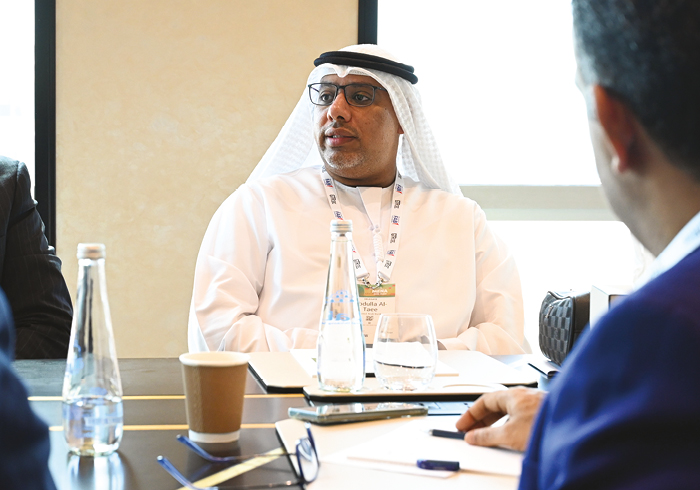
Dr Abdulla AlTaee, chief operating officer, United Arab Bank
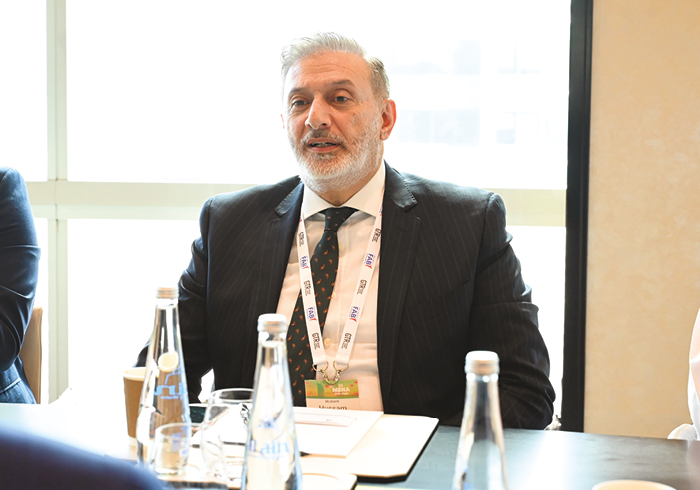
Maninder Bhandari, director, Derby Group and Middle East representative, GTR
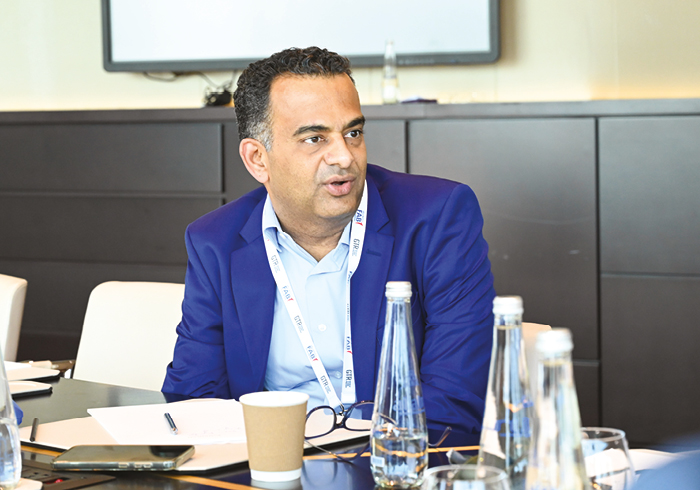
Sameer Jain, senior vice-president, HSBC Middle East
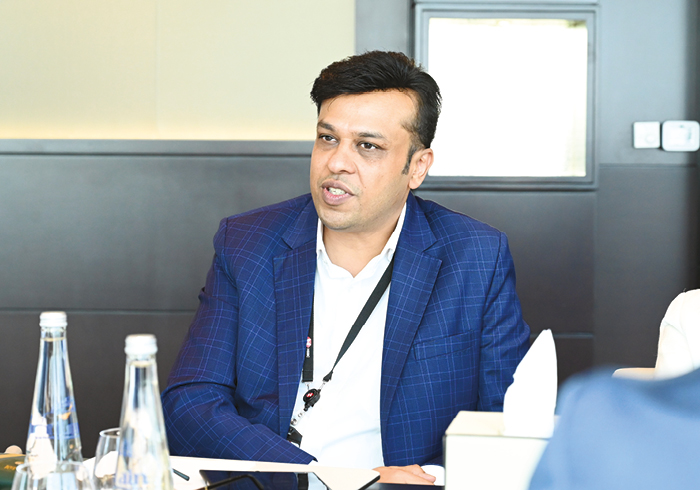
Vikas Jha, senior executive officer and managing director, Finneva
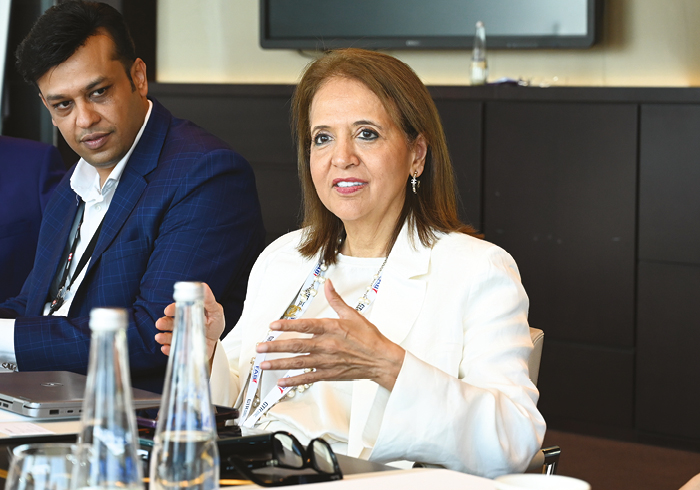
Talat Qureishi, vice-president, business development, commercialisation, Mastercard
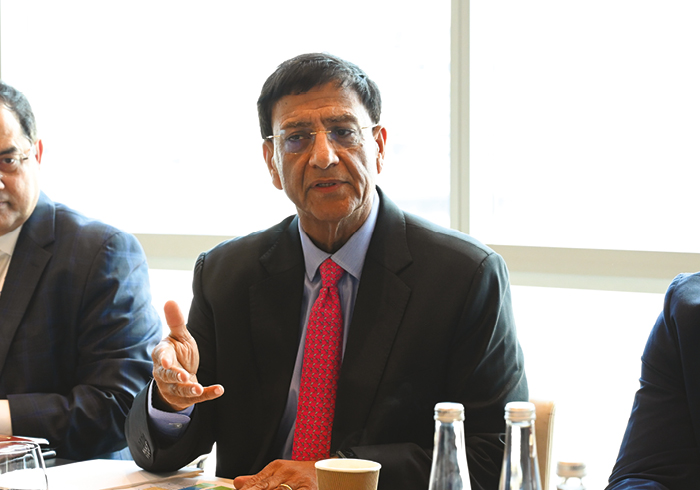
During the discussion, hosted by United Arab Bank (UAB) in February, speakers at the roundtable explored the growing importance of digitised receivables, the challenge and opportunity posed by the SME financing gap, and the role that commercial cards and embedded finance can play in reducing friction across trade.
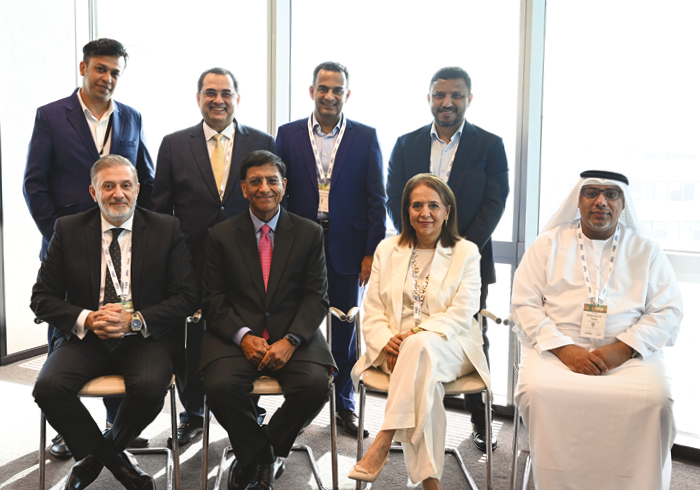
Back row, left to right: Sameer Jain, Jitender Kumar, Ramaprasad Nagarajan, Vikas Jha Front row, left to right: Hussam Al Faqir, Maninder Bhandari, Talat Qureishi, Dr Abdulla AlTaee
Trade finance is changing
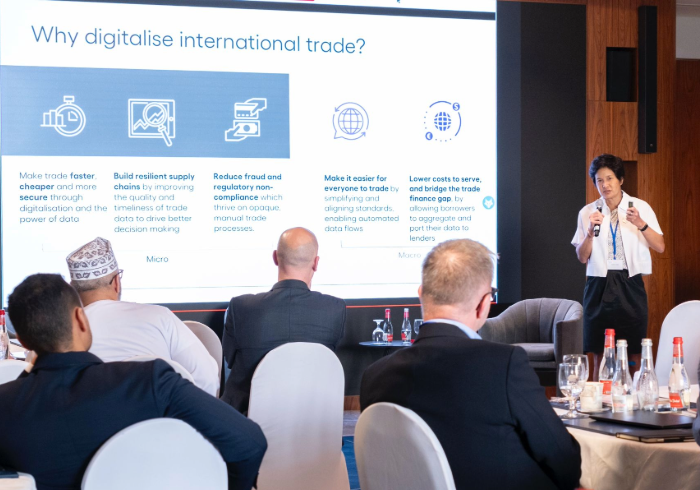
Digitalisation was a central topic of the discussion, as participants agreed that it is gathering pace in the UAE’s trade finance market.
The transition to digital is “a constantly evolving space”, said Sameer Jain, senior vice-president at HSBC Middle East. Competition from non-bank financial institutions and insurers has complemented the already robust strategy and direction of the traditional trade finance product providers in this space.
The regulatory shift, particularly through e-invoicing requirements, is further adding to the pace of change.
“The enforcement of e-invoicing is a ‘game changer’,” said Abdulla AlTaee, chief operating officer at UAB. “All banks will have to adapt. We’ve seen that there is a very big opportunity there.”
Participants suggested that the opportunity extends well beyond compliance, creating scope for more efficient processes, better data quality and stronger connectivity across trade and working capital ecosystems.
Where multinational banks can differentiate themselves and leverage their experience, Jain said, is in expanding interoperability by bringing the same technology, global accounting standards and other best practices across markets. This may also help set them apart in an evolving environment and lead the change, he said.
Large lenders are also playing a role in broadening the investor base for trade finance, with increasing interest from non-banks and other financial institutions to participate in these assets.
Trade finance is especially attractive as a great short-term, yield-generating asset class for investors that are not traditional players in the space, Jain added.
Comparing traditional trade finance products such as letters of credit and guarantees with newer, more data-driven and open-account-based structured solutions, Jain said they address different problems.
“The enforcement of e-invoicing is a ‘game changer’. All banks will have to adapt. We’ve seen that there is a very big opportunity there.”
Abdulla AlTaee, United Arab Bank
“Structured solutions” include supply chain finance, receivables finance, inventory and other working capital solutions that rely on transaction data and visibility, he said, which are often aimed at improving resilience while strengthening and supporting the end-to-end ecosystem of a customer from order to cash.
Crucially, though, “both of them have to co-exist”. “Today, when we go to a client, we talk it through from order book to cash and the impact on the client’s liquidity, supply chain resilience, their competition, their sales journey and any financial matrix and balance sheet impacts,” Jain explained, emphasising that traditional products continue to play an important role.
“This whole journey is reliant on robust traditional trade and open account solutions that go hand in hand.”
The SME gap
A key focus for roundtable participants was the persistent financing gap for SMEs. Ramaprasad Nagarajan, senior vice-president at Redington Gulf, an IT distribution company operating across the Middle East and Africa, noted there is a wide range of opportunities for banks and fintechs to better serve this space.
Vikas Jha, Finneva
“These are the places where there is a genuine requirement for financing. Financing is available, but firms are underserved or overcharged – therefore, it does not happen,” he said.
Discussing the credit risk of SMEs, which is often cited to explain the financing gap, Vikas Jha, senior executive officer and managing director at Finneva, a digital working capital solution, said this was not the main issue.
As a former banker now working in the fintech space, Jha said he “realised credit risk was not the problem – the problem was that the cost dynamics never made sense”.
“The way banks are structured, any deal which is less than Dh10mn (US$2.7mn) often doesn’t make sense, because your processes are the same. It’s a very costly way of underwriting credit,” Jha said.
Technology that enables faster decision-making with more reliable data is seen as key to plugging this gap, he added.
“There has to be a digital way of underwriting so that the process that the bank follows to analyse the credit is fast-tracked and more efficient,” Jha said.
“If e-invoicing can automatically be reconciled into your ERP [enterprise resource planning], and then with the vendor via a platform, that definitely would be very useful.”
Jitender Kumar, Sharjah Cement Factory
Technology can also help address the operational burden of handling large volumes of small-value transactions. In the healthcare sector, for instance, Dh1mn in transactions will have as many as 10,000 invoices, including for tiny amounts, Jha said.
“But these are invoices you will have to cater to,” he pointed out. “You can’t just say, ‘I’ll reject all of them’. So how do you do that? What is the technology to do that part?”
Jitender Kumar, chief financial officer at Sharjah Cement Factory, gave the corporate perspective. “If e-invoicing can automatically be reconciled into your ERP [enterprise resource planning], and then with the vendor via a platform, that definitely would be very useful,” he said.
“The banks have to help us,” Kumar added. “It should be more like a proactive partnership, rather than just selling a product. The other factor is speed. If I need a solution for my customer or for myself, if the proposal takes 90 days to go through books and books of data, then that becomes very impractical.”
Banks can’t do it alone
Many in the group agreed that new entrants in trade finance and working capital – particularly fintechs and alternative lenders – are becoming a permanent part of the ecosystem, and that while banks have the edge in some cases thanks to their scale, collaboration is emerging as the most viable path forward.
Sameer Jain, HSBC Middle East
Hussam Al Faqir, head of manufacturing, trading and services, corporate banking, at UAB, said banks have to either work with fintechs or develop their own in-house capabilities.
“We’re seeing the electronic bill of lading now replacing paper documentation, so things are definitely changing,” he noted. “The way I see banks sticking to their conventional way of managing working capital, there’s going to be severe competition.”
In the UAE, UAB’s AlTaee suggested the era of banks investing heavily in their own, standalone digital platforms may be waning, largely due to the complexity of integrating them with legacy systems.
“Banks have started to partner with fintechs to support big corporates and SMEs,” he said. “This is happening not only in the UAE – collaboration is happening all over the Mena region.”
For fintechs, this shift is not just about technology, but about accessing a segment of the market that has historically fallen outside traditional banking models.
“We’re seeing the electronic bill of lading now replacing paper documentation, so things are definitely changing.”
Hussam Al Faqir, United Arab Bank
Finneva’s Jha added: “Practically every customer I met early on, typically with turnover below Dh50mn, had no or minimal formal banking lines – they were doing well, but relying on alternative lenders and using banks mostly for liability business.”
The reason why, Jha explained, is not because they “didn’t want money” but that they had been rejected by banks too often. Finneva is aiming to work with banks to capture this portion of the market.
“We also provide liquidity,” Jha added, but stressed that the fintech is not replacing the banks. Instead, it provides a proportion of the transaction, while banks can choose to cover the rest. “What we are doing is giving you that trust, that we are not just giving you a lead, we are also taking the risk. We are also going to have skin in the game to give you comfort and build the business together,” he said.
Commercial cards, new opportunities
The group also highlighted the emergence of new payment rails, including commercial cards and embedded finance solutions.
Talat Qureishi, vice-president of business development, commercialisation at Mastercard, drew a parallel with retail consumers.
Ramaprasad Nagarajan, Redington Gulf
“When you think about trade finance, you’re always talking about buyers and suppliers who don’t know each other. There’s an element of trust risk, and all they care about is, ‘do I get my payment on time?’”
When consumers shop in stores, “you use a piece of plastic. They don’t look at your name, but they will look at the brand; they will trust the brand and make the transaction”, Qureishi said.
“We’re now taking that same concept into B2B payments, using our brand to create trust across the ecosystem.”
At Mastercard, she explained, virtual cards are a core part of its strategy, designed to reduce manual intervention and minimise errors. Speed of settlement is also critical. “That’s what you need; you need the payment to come through,” Qureishi added.
Within trade finance, she noted that Mastercard’s approach is focused on “multi-rail” solutions rather than cards alone.
Redington’s Nagarajan cautioned that “when we talk about commercial cards, it ultimately comes back to the same banks that need to write a limit. These are not million-dollar limits. It’s for a smaller play, and the fees are there too.”
“For us, embedded finance is the next wave we’re going through, combined with virtual cards.”
Talat Qureishi, Mastercard
He explained that the business had worked with commercial credit cards in the past, but the scheme had struggled to scale due to limited bank appetite.
UAB’s AlTaee pointed out that commercial credit cards can serve as an alternative rail for short-term working capital, offering easier access for corporates with large supplier bases.
While the technology is different to credit cards for individuals, again, working with a third party makes it much more achievable, he added.
“Today, these things are very easy if you have a proper card processing management system. You just need to build the front-end window where you have the workflows and the credit part, and the rest is managed by a strategic partner or fintech.”
The rise of embedded finance
More broadly, embedded finance is gaining traction, as trade finance becomes more readily available within non-financial platforms and ecosystems
Roundtable participants pointed to recent initiatives to embed financing directly into client workflows. Mastercard’s Qureishi explained that “for us, embedded finance is the next wave we’re going through, combined with virtual cards”.
But the real success, she added, is whether these innovations genuinely reduce friction for users.
Maninder Bhandari, Derby Group
Discussing the firm’s work with leading multinational banks, Qureishi said that early feedback had been positive. “We’ve expanded those virtual cards into mobile payments, so that you can have that same consumer-grade experience using your mobile phone rather than plastic.”
Looking at another major theme, Finneva’s Jha pointed to the growing role of AI. “It’s a fundamental change. I think we’re living in a very exciting time. Everybody always had a lot of data, but we never had tools to analyse it all,” he said.
“With AI coming, the game is changing. Now, we have the toolkit to implement it much faster. In future, we will be able to underwrite better and faster, at a fraction of the cost.”