
Maritime intelligence company Vortexa has warned that the crude oil market faces a potential supply crunch, driven by a “simultaneous collapse in exports” from Iran, Russia, Saudi Arabia and the US and a record drawdown of inventories.
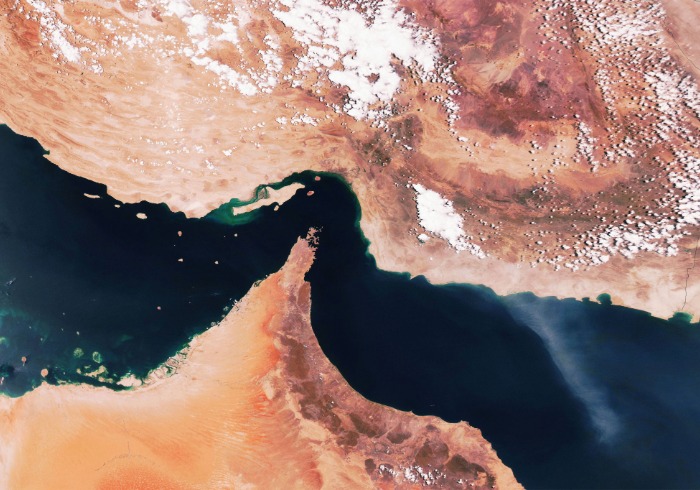
Iran’s exports have been significantly dented by the re-introduction of a US blockade outside the Strait of Hormuz, while Saudi Arabia’s exports have been hit by escalating tensions in the Gulf and Red Sea, said senior oil market analyst Rohit Rathod in an August 18 report.
Russia’s exports have been affected by Ukrainian drone strikes on Black Sea infrastructure, and US exports have eased following a slowdown in strategic reserve releases and a lack of arbitrage opportunities for shipments to Asia, he said. The combined drop in exports from the four markets have fallen to a record low.
“For a brief window in mid-July, global crude markets looked well-supplied,” Rathod said, noting that traffic briefly resumed through the Strait of Hormuz after June’s memorandum of understanding between the US and Iran. “It was, in hindsight, a false dawn.”
Vortexa said that over the last four weeks, the volume of crude oil on the water has been drawn down at a rate of over 7 million barrels per day. Overall, the size of drawdown is almost twice that of the depletion of inventory that took place in March following the start of the conflict.
Rathod suggested crude prices “appear to be significantly undervalued relative to what physical data is revealing”.
“Summer trading lulls, seasonally lower price volatility, and the brief sense of comfort created by the July peak may have dulled the market’s sensitivity,” he said.
ING analysts Warren Patterson and Ewa Manthey said today the draw in oil inventories has pushed crude prices higher, with uncertainty over the conflict supporting risk premiums.
“Reports of reduced vessel traffic through the Strait of Hormuz have also raised concerns over potential oil supply disruptions,” they said.
The International Energy Agency warned in June that oil inventories would likely continue shrinking for several months, even if the agreement between the US and Iran had held.
The agency said this could cause longer-term concerns over market volatility. However, large commodity traders and banks have maintained since February they are well prepared to handle price volatility by ensuring sufficient liquidity.
The warnings come as the US increases its focus on military control of the Strait of Hormuz.
Although Iran has continued to launch strikes on vessels transiting the strait – including drone attacks on two tankers owned by Abu Dhabi’s Adnoc – a small number of vessels have been able to pass through the southern route, close to Oman, under US protection.
Kpler crude oil analyst Homayoun Falakshai told Reuters today it “increasingly looks like Iran has at least partially lost control of the strait”.
Meanwhile, there have also been shifts in the sanctions-related risk landscape. Maritime intelligence firm Windward warned in an August 17 report that an anchorage area close to the Strait of Hormuz appears to have emerged as a sanctions evasion hub for Iranian oil trade.
Windward said it has identified a cluster of around 20 high-risk vessels at the Koh-e-Mubarak anchorage, located just south of the Strait between the Iran and Oman coastlines.
It said eight of the vessels identified have been designated by US sanctions authorities, while others show signs of deceptive activity.
Windward used satellite imagery to confirm a ship-to-ship transfer to a tanker that was not transmitting its location – long regarded by authorities as an indicator of potential high-risk behaviour.
It also found another vessel was broadcasting its location under a false identity, and appeared to be carrying no cargo, despite Vortexa data showing it should have nearly 2 million barrels of crude on board.
A different vessel loaded with Iran-origin naphtha arrived in the region despite declaring its destination as India, which Windward said suggests potential transshipment or misdeclared routing.
Over the past week, some vessels have remained stationary in the area for extended periods, suggesting the location is becoming “an established and ongoing shadow fleet aggregation point”.
“Iranian anchorages are now visibly functioning as institutionalised evasion infrastructure rather than opportunistic gathering points,” the report said.
As of press time, several vessels visible in the area present a “critical” sanctions risk, according to PurpleTrac, a risk management tool provided by maritime intelligence company Pole Star Global.