
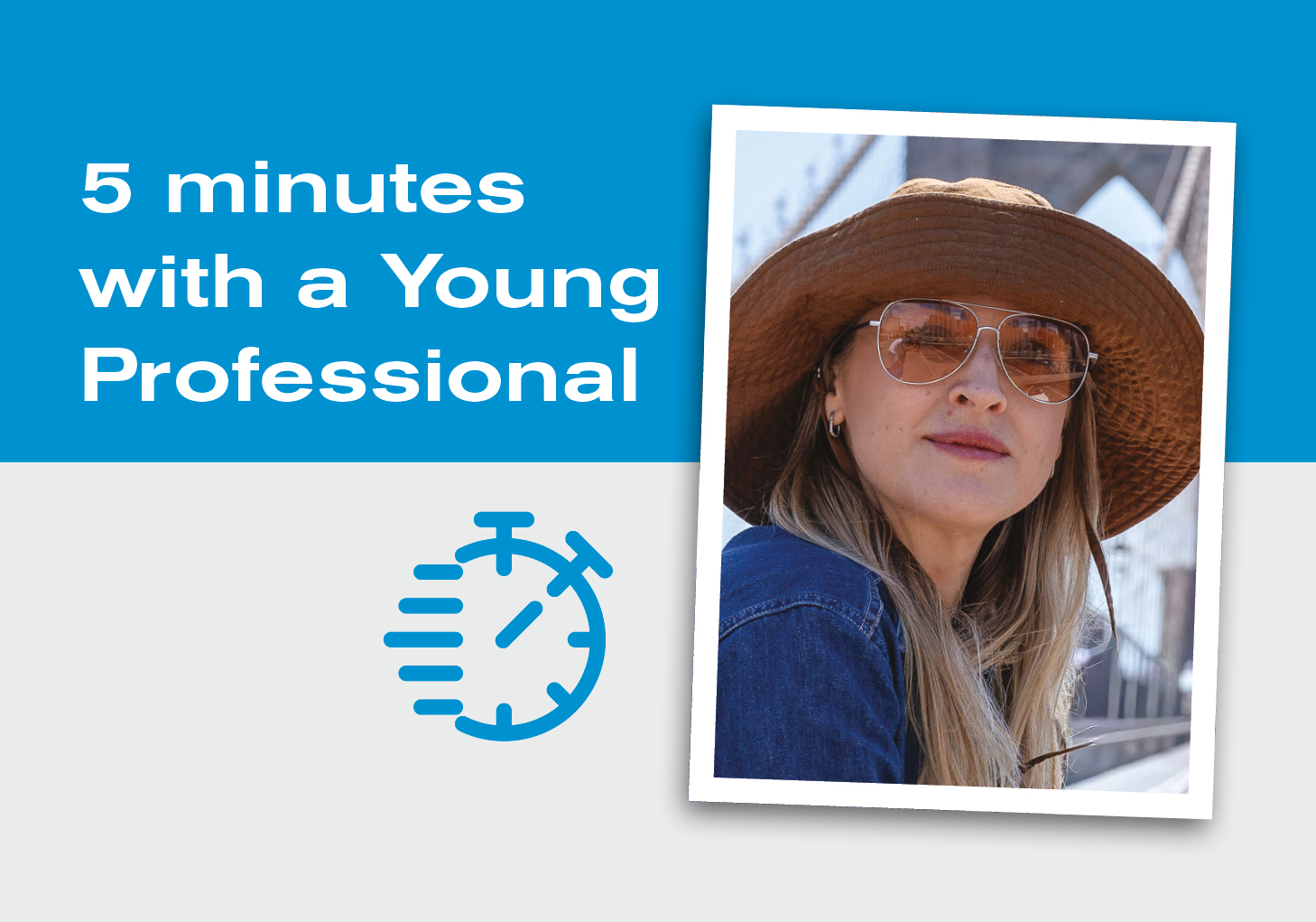
From a factoring company and receivables fintech to ING’s working capital solutions business, Kasia Rytelewska is building a career spanning non-bank funding, supply chain finance and digital trade. The Baft Future Leader discusses solving inefficiencies while remembering the businesses and relationships behind every transaction.
GTR: What’s your job title, and what do you do day to day?
Rytelewska: I’m a commercial product manager at ING. I’m part of a global team based in Amsterdam, looking after working capital solutions – both receivables and payables.
My role is very diverse, so no two days look the same for me because I’m exposed to the whole market and work closely with clients, platforms and various departments within the bank.
Usually, my primary focus is translating business and client needs into clear requirements for our delivery and tech colleagues to build the right products and solutions.
At the moment, my biggest project – and one of the reasons I was hired by ING in the first place – is the digital transformation of working capital solutions. We’re reimagining future customer journeys and figuring out how to put all the pieces together. You have things constantly popping up – most recently agentic AI – so it’s about how to navigate that while still building something sustainable and scalable for the future.
GTR: How did you end up in working capital solutions?
Rytelewska: Completely by coincidence. I was born and raised in Warsaw, Poland, but I moved to the Netherlands 16 years ago to study and ended up staying. During my master’s degree, I was looking for a thesis topic when a good friend got a job at a factoring company. Around the same time, I was doing an accounting course and came across receivables finance.
I remember thinking: “What is factoring?” It sounded fascinating, and there was so little academic literature about it. So I decided to write my thesis on the globalisation of factoring.
Funnily enough, that friend sent my thesis to their employers’ headquarters in the UK. My first interview basically became my thesis defence – they printed my 75-page thesis and started asking questions. That became my ticket into the world of factoring.
GTR: What drew you to receivables finance in particular?
Rytelewska: My first role was as a European client auditor, and my boss at the time took me around Europe showing me the ropes. We spent time meeting entrepreneurs and understanding how their businesses worked. One day it would be a transportation company moving oranges from Spain to Poland. The next it would be a temp agency hiring seasonal workers to pick strawberries in the Netherlands. I loved how tangible it was.
I remember working with Dutch tomato farmers supplying large retailers. Earlier in my career, those farmers were my clients. Now, at ING, my clients are often the large corporates buying from businesses like that, so it’s interesting seeing both sides of the equation.
GTR: What part of the role do you enjoy most?
Rytelewska: Making an impact and working on the future. Nobody has all the answers right now, whether that’s around AI, digitisation or customer experience, so it’s exciting trying to connect the dots and build something strategic.
But at the same time, I really love the human side of the business. I never see transactions as just numbers – I see people behind them.
I still remember meeting with entrepreneurs while they proudly walked me around their warehouse or explained how they came up with their company’s name. That’s the true essence of trade and working capital finance for me.
GTR: What excites you most about digitisation in trade finance?
Rytelewska: The possibility of removing friction. As consumers, we expect everything in real time, and businesses expect the same level of service now. They don’t want to wait 60 days to get paid or months to be onboarded. Technology can help us scale access to finance and make things much more efficient.
But at the same time, we still need human judgement and intuition. With AI and cyber fraud risks increasing, creativity and critical thinking become even more important. It’s almost a paradox – the more technology we introduce, the more valuable the human side becomes.
GTR: You were recently involved in the Bankers’ Association for Finance and Trade (Baft) Future Leaders programme. What did you take from that experience?
Rytelewska: It was truly amazing. Our project focused on collaboration between banks and non-banks, which felt very personal to me because my career has spanned both worlds. I loved how collaborative and global the programme was, bringing together people from various regions and institutions.
What stood out most was the focus on the big picture – the persistent trade finance gap and how to better reach smaller, underserved businesses in supply chains, who often struggle most to access finance.