
The ICC’s Digital Standards Initiative managing director on digital trade fatigue, why platforms are holding back adoption and what it will take to reach 50% digital trade by the early 2030s.
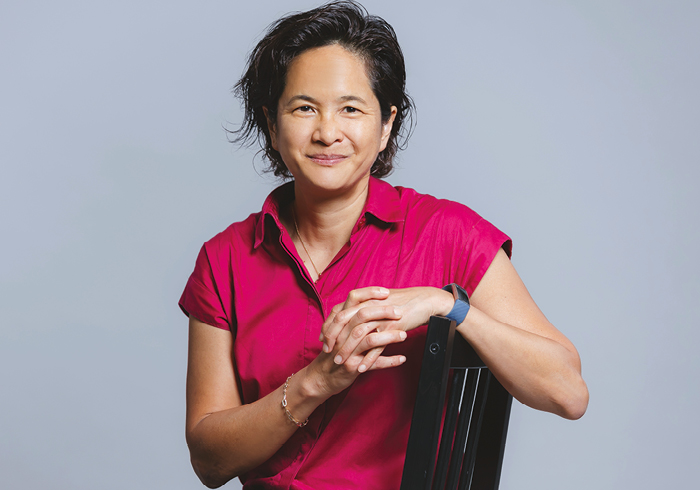
Pamela Mar is on a world tour. It may not involve a band and screaming fans, but the travel schedule of the International Chamber of Commerce (ICC)’s digital trade lead is whirlwind enough to give a pop star a run for their money: in just a few weeks, she’s been to Tunisia, Nigeria, Kenya, Japan, Geneva and Latvia, with London and other European hubs straight after.
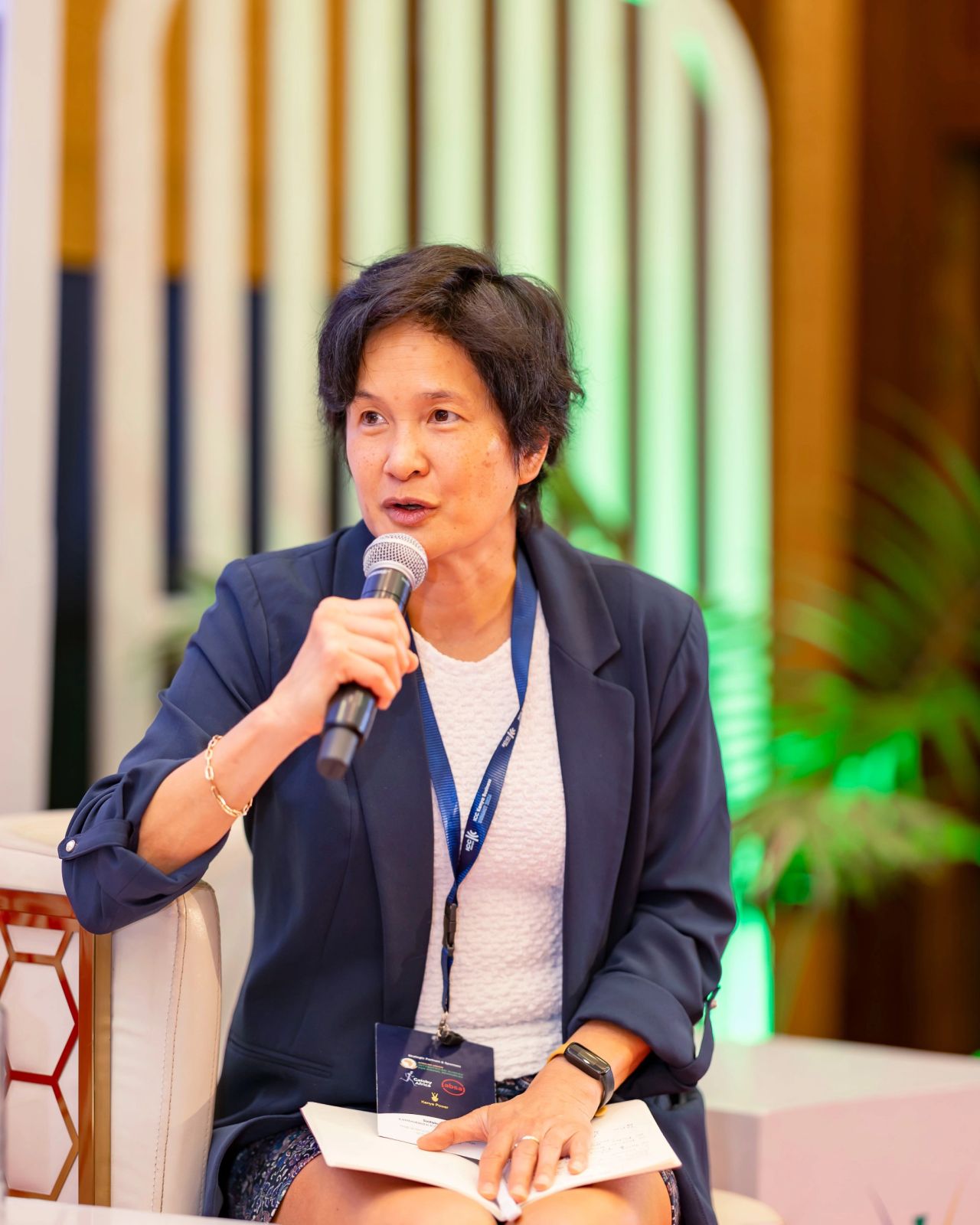
And while she doesn’t enjoy having the spotlight on her, the regular travelling and public speaking is a key part of her role at the helm of the Digital Standards Initiative (DSI), which started as a public-private partnership between the ICC, the Asian Development Bank, the Singapore government and the World Trade Organization to “unblock digital trade”, she explains.
Today, the DSI’s global advocacy role includes pushing for legal reforms enabling the use of digital trade documents such as electronic bills of lading, aligning trade data standards across banks and corporates, and supporting digital trade capacity-building programmes in developing economies.
Before landing in her current role, Mar had a somewhat unconventional – but equally globetrotting – trajectory into trade.
A child of Chinese parents who grew up living in different cities, including New York, Tokyo, Washington, DC, and Hong Kong, Mar ended up enrolling at Yale University to double major in philosophy and East Asian studies.
“I often heard that philosophy was useless,” she recalls. “But it actually turned out to be quite useful, because the powers of persuasion and reading who you’re dealing with and understanding their motives – that’s what philosophy teaches you.” It’s a skill she can now apply when convincing governments and development banks to back the DSI’s digital trade reform projects.
“The [digital trade] fatigue is understandable. We want to encourage more enterprises to go digital, but we have a system which by design makes true scale difficult.”
After Yale, she worked in business development at regional satellite television operator Star TV across Asia, then quit to pursue her dream of working in development in Thailand – teaching business skills to farmers and campaigning for factories to bring more jobs from urban areas to rural communities.
But soon she realised she “was not that effective there – I’ve been raised in cities, so I’m pretty useless in the village”, she laughs.
She went on to work for the World Economic Forum in Geneva as associate director for China, at a time when the organisation was encouraging the nation to participate in its annual Davos summit.
However, she was curious to “get to the heart of it and work for a proper Chinese company”. So, in 2005, she got a job in Shenzhen at electronics manufacturer TCL – the first major Chinese company to go global by buying a foreign brand – as part of the team leading its acquisitions in France and the US.
But, after four years, Mar found that her American roots were more of a limitation than an asset. “If you’re not one of the gang, it’s very difficult.” She then hopped across to Hong Kong to work for Li & Fung – the supply chain management multinational connecting brands and retailers to thousands of manufacturers across more than 40 countries – where she would end up staying for 13 years.
There, Mar led on sustainability within their factory network, which then “brought me into digitalisation, because one of the ways to be sustainable is you have to digitalise”. The experience exposed her to the realities facing small suppliers in developing markets, fundamentally shifting her views on supply chain modernisation and what is actually possible to implement at the factory level.
“If I compare myself to someone who comes to digital trade from banking, or even from one of the big multinationals like Nestlé or H&M, my perspective would be very different, because they run the supply chain, so whatever the buyer says goes.
“I actually saw things from the other angle,” she says, which became “extremely helpful in my current job, because you’re able to distinguish between what’s going to fly and what’s not”.
Leading the DSI’s interoperability push
It was also at Li & Fung where she first came into contact with the ICC. In 2020, she worked with the organisation and McKinsey on a joint research project amid “the drying up of trade finance in Asia” during the pandemic, which was hitting small manufacturers “very hard”.
The resulting report, titled ‘Reconceiving the Global Trade Finance Ecosystem’, proposed an “interoperability layer”, she explains: a framework of shared standards, protocols and best practices that would allow the industry’s fragmented digital networks to connect with each other, rather than continuing to operate as isolated silos.
It was this collaboration that built the bridge between Mar and the ICC. When the managing director role at the DSI became vacant in 2022, the organisation approached her to fill it. The job’s mandate included “implementing part of what I had already worked on, so it was super interesting”, she says.
One of Mar’s first tasks was to figure out how to accelerate legal reforms to enable the adoption of digital trade. “Going country to country with a comprehensive infrastructure model could take years”, so the strategy was to focus on a “single point of entry to catalyse the change process”, she says.
That single point was the Model Law on Electronic Transferable Records (MLETR), a legal framework created by the United Nations Commission on International Trade Law to regulate the digitalisation of documents of title, “which are the linchpins to shipping and financing processes”, Mar explains.
“The key was to drive understanding and visibility of MLETR through a simple global tracker that tracked countries’ progress in legal reform,” she says. The project “really helped popularise MLETR and put DSI on the map”.
From there, the focus shifted. “Then it was mobilising the ICC network to actually advocate” for legal reform, Mar says, working through ICC national committees and local partners, “because domestic business advocacy is essential”.
Three years later, she thinks “the campaign has been quite successful and the results are pretty clear”. The DSI reports that around 62.5% of global exports now originate from economies that have either adopted, aligned with or committed to aligning with MLETR, up from just 34.3% of global exports in October 2023.
Meanwhile, the DSI’s key trade documents and data elements framework – which maps the core documents used in international trade, identifies which data elements they share, and standardises them so that different systems can read and exchange information seamlessly – has become a key reference point for banks, corporates, logistics providers, customs authorities and technology firms on their journey to digital interoperability.
In practice, this means commercial data entered once by, say, an exporter in China, can then be reused across customs, logistics and trade finance processes rather than being repeatedly re-entered into different systems.
But the path isn’t exactly straightforward. While progress in MLETR adoption has been a measure of success for the DSI, the current figure still lags its original target of 80% to 90% of world trade being either aligned or committed to align by the end of this year.
“Obviously, we’re falling short,” Mar acknowledges, but predicts “we’ll get there in one or two more years”.
There are signs of momentum. Adoption of electronic bills of lading has risen from around 5% in 2024 to 12.8% today, according to data from the Digital Container Shipping Association, following a concerted push by the DSI and other industry bodies to drive uptake.
Yet the figures are a stark reminder of the challenge ahead: despite years of advocacy, legal reform and industry collaboration, nearly nine out of 10 bills of lading are still paper-based.
The “spaghetti bowl” dilemma
One reason Mar thinks progress has been slow is the “spaghetti bowl” of platforms operating across digital trade and their inability to communicate with one another. Historically, the market has relied on specialist intermediaries, such as essDocs (now Ice Digital Trade), Bolero and GSBN, to issue, transfer and authenticate trade documents, including bills of lading.
Mar says these providers can be useful, but their lack of interoperability has fragmented the ecosystem. After “mapping 28 pilots on a world map, point-to-point of digital trade documents, there were something like eight platforms and nothing interconnects”, she says.
An easier solution would be to improve the trusted transfer of trade records “at the source”, Mar argues, via companies’ ordinary workflows – also known as their enterprise resource planning (ERP) systems, the central software used to manage operations, from inventory and supply chains to finance and human resources.
“That’s how companies are sharing data already, so if we can secure the record at the point of creation, it also eliminates the threat that company data will be stranded across different platforms,” she says.
“Today, if a tariff pops up overnight, you need to be able to redirect or transit cargo instantly. And you can only do that with digital.”
For lenders, the success of interoperability also depends on the state of their data.
“Standards for trusted data could probably be improved,” Mar says. “I trust that once documentation comes into the bank and is ingested into the database, the data should be sound because it’s subject to compliance and regulation.
“But the whole process of transferring data from client document to bank is fraught with problems. And, to some extent, the platforms make the data flow easier, but they don’t necessarily solve the problem of verification of the data’s truth.”
Trusted data must be verified closer to its source through digital identities and technologies such as internet of things sensors, Mar says. “If you’re reporting a weight, I want to see the sensor reading the weight.”
Plus, financial institutions remain constrained by “multi-gazillion-dollar” legacy technology investments that don’t always easily connect with clients’ ERPs or newer platforms without expensive custom integration work, she notes.
For a Fortune 500 company, this may not be a huge problem, but “we need to make it super easy for an SME to know what document to use in what instance, and for that data in the document to already be living in their ERP, so that the process of creating a trade document never crosses their mind”.
“You cannot expect mom and pop to deal with trade standards.”
Optimism amid digital trade fatigue
Perhaps one of the biggest structural hurdles the DSI is now facing is the sense across trade finance that, after years of pilot projects, platform launches, conference panels and industry coalitions, actual adoption remains thin and real transformation is hard to point to. The collapse of TradeLens, a US$100mn initiative between shipping giant Maersk and IBM that wound down after four years, is just one cautionary tale.
“The fatigue is understandable,” Mar concedes. “The irony is we want to encourage more enterprises to go digital, but at the same time, we have a system which by design makes true scale difficult.”
This is why the DSI has been focusing its efforts on working with ERP and IT infrastructure providers to “solve the digital islands problem” and make sure the “model works for industrials and financials running very heterogeneous supply chains”, she says.
One example is a proof of concept for an “AI-powered trade finance ERP connector” developed with Microsoft and HSBC, Lloyds and ANZ, unveiled at Sibos 2025, which uses DSI’s data standards to move trade information directly from corporate ERP systems into trade finance workflows.
Despite all the challenges, Mar’s optimism remains unshakeable. She is encouraged by the fact that digital trade discussions have moved on: “We’re no longer arguing with people about ‘whether’, but rather about ‘how’. I mean, the debates about ‘how’ are pretty intense too!”, she laughs. “But at least we’ve got the same destination.”
And the geopolitical and supply chain disruptions of recent years, instead of wavering her determination, have further cemented her case for digitalisation.
“Today, if a tariff pops up overnight, you need to be able to redirect or transit cargo instantly. And you can only do that with digital,” she says.
Mar predicts that 50% of world trade will be conducted digitally by 2030-32. It won’t be an easy feat, she’s aware – “in contrast to my optimism, wherever I look in countries, I see problems everywhere” – but she points to progress across Asean, where DSI has now locked funding to implement MLETR, and Africa as evidence that momentum is building.
“We’re only just starting. But I’m very impressed.”
Getting personal
Most underrated country you visited this year?
I loved Rwanda. The whole place feels very together – the roads are smooth, it is very orderly, and the economy is moving. They’re not resting on their mineral wealth. There’s a sense of hope.
Top city you’ve lived in?
Shenzhen was not the easiest place to live in. The roads were very messy, and you might fall into a hole in the sidewalk. But they were experimenting heavily – solar traffic lights, electric buses… they opened two new border checkpoints with Hong Kong while I was there.
What do you do in your downtime?
Tennis, tennis and tennis.
What’s a book, podcast or film that’s changed the way you see life?
Anything by Mark Nepo.
What do you wish more people understood about what you do day-to-day?
That everything we do has to have an impact, an end that is measurable and part of a known process. DSI is small and we have limited resources. We can’t just shoot from the hip.
What’s the one trade document you’d abolish tomorrow if you could?
Every trade document has a purpose, so my goal is to let people use what they want, but in a way that can be understood by diverse systems used around the world.
What’s the one digital dilemma you thought would be solved by now that hasn’t been?
We are solving the important ones!