


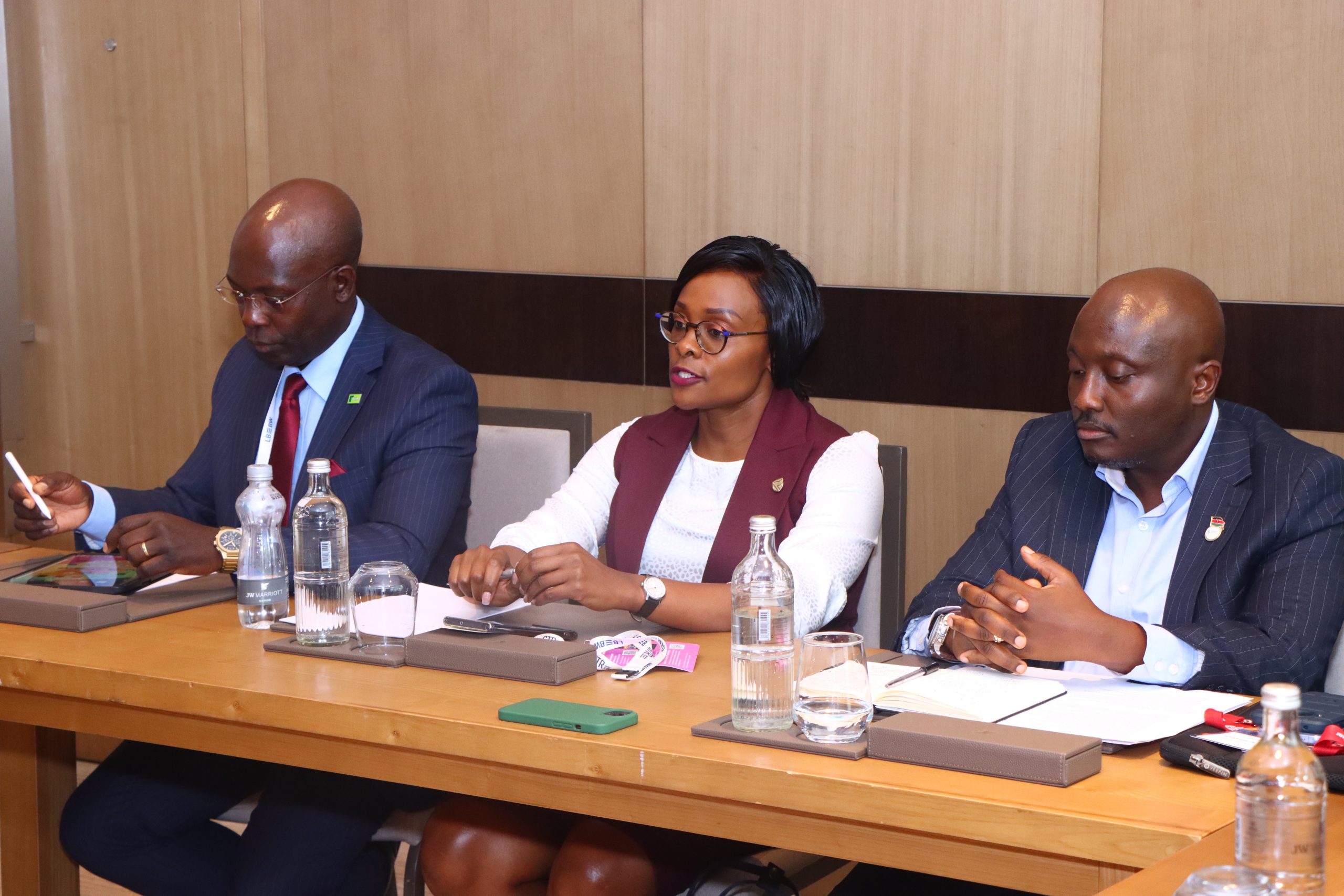
Gathered in Nairobi on the sidelines of GTR East Africa in mid-May, senior bankers from across the region took stock of how the Middle East crisis is reverberating through the region’s trade and commodity flows, working capital needs and financing structures.
Top of the agenda was the impact of Strait of Hormuz disruptions on fuel, fertiliser, agriculture and construction supply chains, and participants also discussed the strategic value of Kenya’s government-to-government oil procurement model and the lessons it holds for neighbouring markets. There was broad agreement, too, that the Middle East crisis is accelerating long-overdue conversations about export diversification, intra-African trade, local value addition and the resilience of East Africa’s trade finance ecosystem for years to come.
The Middle East crisis and its widespread ramifications
When Houthi attacks on Red Sea shipping first disrupted global trade routes in 2025, the immediate concern for East Africa centred on fuel. But the impacts of the February 2026 US-Israeli attack on Iran and the closure of the Strait of Hormuz have extended well beyond pump prices, touching agriculture, construction, manufacturing and the cost of doing business across the region.
“The Middle East crisis presents three issues in my view,” said Phanice Mokua, head trade for Kenya at Stanbic Bank. “There’s a question around what the impact on dollar demand will be to meet higher payment obligations if we continue to see sustained elevated commodity prices, coupled with freight cost, premium costs escalation and longer cycles. If ships have to use alternate routes to avoid the Strait of Hormuz, transit times will be extended.”
Agriculture, as the bedrock of East African employment and GDP, is bearing the heaviest burden. “Specifically, when you look at fertiliser or other input products, you are seeing very high price volatility,” said Linda Teggisa, head of transaction banking at NMB Bank in Tanzania. “And with that price volatility essentially comes inflationary pressure, coupled with the uncertainty it creates around planning, production and cash flow.”
For smallholder farmers especially, “we are also seeing a level of limited collateral”, she noted.
Another sector that is equally exposed but less often discussed is construction, said George Kiluva, head of trade finance at Nairobi-headquartered KCB Group.
“Vessels are not bringing in bitumen and coal for running industries, and if this continues, we will see construction, especially in this country, come to a stall until shipping normalises,” he said. “We’ve seen [the prices of] pipes and tanks go up, and that goes on to put even more negative effect on top of what fertiliser has done.”
Working capital demand has spiked as a result, added Brendan Du Preez, group director for trade and working capital finance at Equity Group Holdings.
“The volumes have still been relatively the same, but the need for working capital has substantially increased,” he said. “We’ve also seen prices become quite volatile – some clients are only importing what is strictly required because of the pricing risk.”
Meanwhile, many containers carrying raw materials are still queuing at the Strait, causing further delays to production and increasing costs, according to Kiluva – but manufacturers aren’t waiting for those costs to land.
“We saw manufacturers adjusting prices even before they received the delayed materials. They were quick to move and adjust pricing,” he said.
“The trade cycle for African corporates in Eastern Africa has increased drastically, which means you need to have more funding capital requirements,” added Arnaud Levasseur, executive vice-president of trade finance at Mauritius Commercial Bank (MCB). “And obviously, the credit committee teams are working day and night on approving temporary excesses.”
Against this backdrop, Kenya has fared better than its neighbours, regional trade finance leaders argued. In 2023, facing acute foreign exchange shortages, the Kenyan government struck a series of direct, state-to-state oil supply deals with GCC-based national energy companies. Rather than buying fuel on the open spot market, the East African nation locked in long-term contracts that fixed the costs of freight and the premium fees charged on top of the global benchmark price.
The arrangement, which channels oil imports through a small number of contracted government-affiliated suppliers, was originally designed to ease pressure on Kenya’s dollar reserves by allowing payments to be deferred. It has since proved an unexpected buffer against the Red Sea and Strait of Hormuz disruptions of the past couple of years.
“Kenya has been shielded, to some extent, from the impact of the Middle East shocks on oil prices,” said Mokua. “Some elements of the cost are fixed over and above the global benchmark price, which contains price volatility if compared to levels in the spot market.”
That shielding did not cover all price components, she added, as Kenya has still seen “the value of a vessel coming into the country increase twofold”. “But it could have been worse if we had not entered into long-term oil supply arrangements.”
Patrick Makau, who leads trade and working capital across East Africa at Standard Chartered, pointed to contracted supply security as the key differentiator. “We’re seeing the benefits of consistent supply because those cargoes are contracted, as opposed to other markets where we’ve seen disruption and non-contracted cargoes being diverted.
“In periods like this, what matters is not only access to cargo but the strength of the trade corridor supporting it – from origination and documentation to financing and settlement across multiple markets.”
International financial institutions like Standard Chartered have provided a critical de-risking layer by confirming the letters of credit underpinning the deals, he argued. “We know the international producers in the Middle East would want that level of comfort.”
In light of the current Gulf crisis, the programme has faced some scrutiny. “We have had to answer fresh questions and confirm that things are still the way they were” pre-conflict, said Kiluva, “and it has come to pass that we have not seen a major shift in the confidence that the international banks have given to the programme”.
Other East African nations have handled the price swings in different ways. In Tanzania, initially maintaining the standard bulk procurement system meant the country would have absorbed the full market-pricing shock before the government activated an interim emergency programme to bring in roughly 860,000 metric tonnes by consolidating orders over a period of three months under the bulk procurement system.
“Tanzania has also experienced consistent supply through contracted cargoes,” noted Teggisa. The main challenge is “the price hikes and volatility that are prevalent across markets beyond East Africa”.
Meanwhile, Uganda is relatively shielded by a diversified sourcing strategy coordinated through the Uganda National Oil Company, which imports fuel from its international supplier, Vitol Energy, Makau added.
However, fuel prices suffer a “lag effect”, Du Preez noted, meaning “we are only now feeling the impact from events two months ago”.
“We all pray the crisis goes away and we begin recovery quickly before the effects become more entrenched,” said Kiluva.
Export diversification: an opportunity within disruption
The disruption of GCC trade routes has triggered a strategic rethink across the region’s export sectors. For decades, East Africa’s commodity exports have flowed to established markets via well-worn routes.
But the region’s diversified export base – unlike West Africa’s reliance on oil and cocoa or southern Africa’s reliance on minerals, East Africa’s export portfolio spans tea, coffee, horticulture, pulses and a growing mineral sector – gives it more room to manoeuvre when one market or route is disrupted, pointed out Leslie Fatch, head of global markets and trade finance at Malawi’s FDH Bank.
“This gives us an opportunity to diversify markets. We have commodities which are in demand. It gives us a chance to define where we channel them,” he said.
Tea is one such example, with Makau reporting a jump in demand from Standard Chartered’s tea clients since the first quarter of the year: “The Arabian countries are still drinking tea despite what is happening,” he said, and demand in Asian markets like Pakistan remains robust.
“What the disruption is really doing is forcing exporters to think more actively about corridor diversification – not just where demand sits today, but how goods move reliably across Africa, the Middle East and Asia when one route comes under pressure.”
The region’s exporters are also opening new channels across cut flowers, horticulture, coffee and other agricultural goods, Makau noted. “East African exports will hit about a trillion dollars by 2030, and intra-African trade will hit US$140bn,” he projected.
Meanwhile, Tanzania is deepening its mineral portfolio, Teggisa added, with the sector “playing an increasingly active stabilising role” not just in generating export revenue but also providing the foreign exchange buffer that allows the country to finance its import bill, including fuel and food.
“When it comes to ports and further investments in the mining sector, those aspects are needed to continue bringing in FX inflows, which is an aspect of resilience that is highly required for a net importing country,” she said.
Tanzania also has vast arable land, second only to Ethiopia in the region, but Teggisa argued the potential remains untapped. “How are we truly optimising the ability to scale in agriculture and support national requirements for food and agri-related exports? Exports regionally have grown, but the potential for that growth is really massive, especially where there is collaboration in terms of investment and reverse origination – banks speaking more to each other.”
But diversification comes at a cost. New markets introduce uncertainty, longer trade cycles and heavier working capital demands for exporters already operating on squeezed margins. “The traditional trade route provides certainty,” acknowledged Fatch. “The new markets provide uncertainty, but the opportunity there is that you have new markets where you can explore selling your products.”
The greater prize, Makau argued, lies further upstream: “We should be doing the value addition here. We do that for tea. We don’t do that for cobalt, titanium, uranium. We should be doing the value addition here so that when we send it out, more money comes to the continent.”
Kiluva highlighted refinery capacity within East Africa for import substitution of both fuel and fertiliser as an upstream opportunity with the clearest near-term prospects.
“I think fertiliser is going to come much, much faster, because there are already plants within East Africa. The Dangote fertiliser plant [in Nigeria] is a benchmark. We expect to see a big leap in getting self-sustainability for fertiliser and for fuel,” he said.
Meanwhile, Ethiopia’s ban on internal combustion engine vehicle imports, he added, signals a broader EV transition.
Levasseur also noted that, while the current crisis adds pressure to some sectors, it also “creates opportunities for other sectors to emerge – we’ve seen it in renewable energy”, specifically a growth in solar and wind farms and low-wastage projects.
For financial institutions, wind and solar capacity coming online across the region represents “alternative opportunities that us as banks can support”, Du Preez agreed.
But the crisis has also exposed structural gaps in how banks support agricultural producers through multi-season shocks, Fatch said. “We need solutions that address the long term, not just seasonalities. How then do we support farmers to ensure we sustain production over time?”
Warehouse receipt financing and structured commodity trade finance are a part of the toolkit to “ensure the collateral element is not becoming a burden for stakeholders already dealing with large inflationary pressures”, Teggisa argued, adding risk distribution “is extremely key”.
“As a bank with some really key corporate relationships in the market, what we have seen in the process of anticipating demand for financing working capital requirements related also to expansion of manufacturing capacity, etc, is a very good level of demand coming forward,” she said. “But the question is – do we wait until some of these requirements are online, when the corporates are ready, or do we start those conversations with our fellow partners sitting around this room to see how best we can collaborate?”
MCB is backing the broader opportunity with capital. Levasseur confirmed the group is launching a US$1bn trade finance programme this July to “push value creation across the continent over four years” – including funded and unfunded facilities, covering overseas confirmations and other instruments. “I believe investors are there. I believe capital is there. Africa is great, and Africa is the future.”
The SME conundrum and the innovation push
Underpinning the larger structural conversation around the future of East African trade finance is a persistent challenge: reaching the SMEs that drive the region’s economies in a way that makes financial sense for banks.
“There’s a lot more maintenance and handholding at the US$1mn level than there is at the US$100mn level. Capital is extremely, extremely expensive,” Mokua said.
For Equity, the answer lies partly in data, Du Preez explained – working backwards from anchor corporates into supplier ecosystems, and understanding behavioural patterns. “If you are a small buyer, you’re buying only for today to sell in the next three days, so you need three-day money. Behavioural data is something, as an industry, we haven’t really solved.”
A data privacy barrier complicates interbank collaboration, he noted. For instance, KYC (know-your-customer) documentation cannot be transferred freely between competing institutions even after it has already been completed.
Standard Chartered’s Makau said the bank is increasingly looking toward supply chain finance as the practical solution: “Take the risk on the anchor, provide no collateral, no recourse to the suppliers, provide better pricing on the anchor risk to the suppliers. That’s how we come in.”
Another way to improve SME reach is to push for digital adoption, he said. “Scalability in trade has been challenged because of our reliance on paper-based documents – but if we rely on data, and corporates are able to work with the suppliers to give us the right data, then we use our digital platforms to drive that scalability. Our supply chain finance programmes are 100% digital, because there’s no other way you can do it.”
Makau added that “using digital platforms, by our estimation, will add about US$35bn to that ecosystem of African exports”.
At the same time, Levasseur pointed to the legal infrastructure that must accompany the technology. Mauritius ratified changes to accommodate electronic bills of exchange last year after the banking industry, led by the MCB teams, pushed for the law changes.
The adoption of the Model Law on Electronic Transferable Records (MLETR) is the next step for the country, he said. “This then allows a standardised approach for digital trade transactions, which allows for scale-up of trade finance for SMEs.”
“This is where banks need to go beyond only the banking side,” he said, so entire economies are able to leverage technology to improve small businesses’ access to finance.
Building resilience
Asked what structural shifts would most strengthen East Africa’s trade finance ecosystem, the table agreed on the imperative to move from aspiration to action.
Teggisa called for strategic mobilisation of capital and collaboration between multiple stakeholders, particularly “as far as the sectors we’re targeting for growth are concerned”, with risk distribution and innovative financing structures as the connective tissue.
“The current crisis has shown us we need political will,” Fatch added. “Once we have that, it will create an enabling environment where regulation speaks to the initiatives being put in place.”
Kiluva also argued for leadership at every layer: “Those who are out to trade, to make money – financial institutions specifically – need to show leadership.”
Meanwhile, Mokua called for a reality check on intra-African trade: “We need to stop talking about intra-Africa regional trade as if things are working. Local currency settlements supporting structures such as rules of origin require political will. We cannot claim to remove tariff barriers and then proceed to introduce non-tariff barriers, for example, institution of permit requirement once goods get to a port of destination.”
Makau urged for strategic public-private engagement and tactical pragmatism at the forefront: “Supply chain finance that actually works, nearshoring of suppliers, manufacturing and investment on the ground, and driving all of this for scalability through digitisation.”
Levasseur called for “collaboration to make sustainability sustainable for African trade – I believe we have the experience, the knowledge and the capacity to do it, because problems of Africa should be solved by Africans”.
Du Preez summarised it: “Local sourcing, local production, local sales. Change starts today. Each step forward will improve lives and bring prosperity. Less speak, more action.”