

From document automation and fraud detection to smarter decision support, AI is transforming how banks deliver trade finance. Lokesh Gupta, vice-president, product management & development, corporate banking & integrated quality at Oracle, outlines how cloud-native, AI-enabled platforms are driving efficiency, resilience and growth across global commerce.
Trade finance is entering a new phase of digital transformation. As supply chains grow more complex and regulatory requirements intensify, banks and financial institutions are under pressure to reinvent their operations. The need for faster, more transparent and highly secure trade finance solutions has never been more urgent.
Artificial intelligence (AI) is increasingly central to these efforts, helping organisations to reimagine their strategies, streamline operations and gain a competitive edge in a dynamic marketplace.
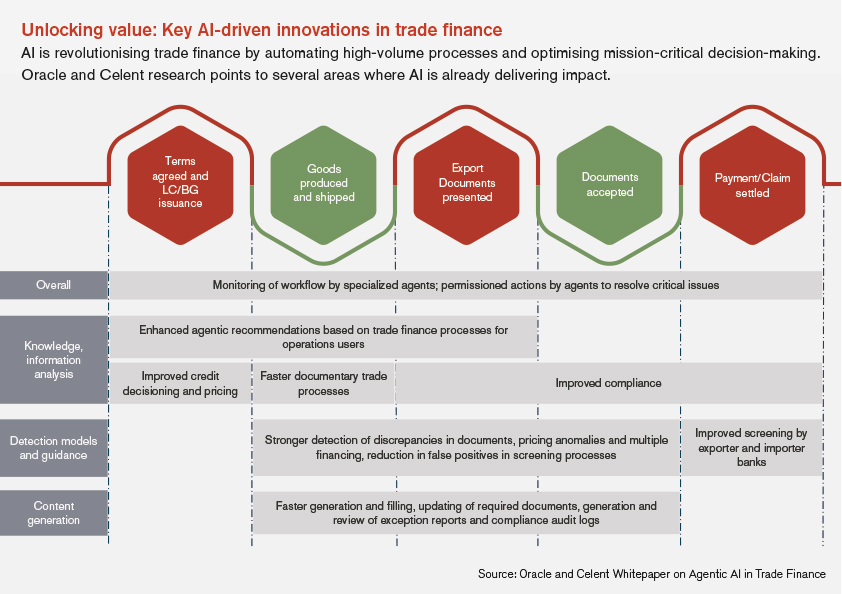
Intelligent process automation: Activities such as document checking, sanctions screening and compliance verification can be automated to reduce manual effort and improve consistency. Combined with approaches such as tokenisation and digital public infrastructure, automation can strengthen control frameworks and support more robust trade management.
Advanced fraud and risk management: Machine learning models can analyse vast transaction datasets in real time, rapidly flagging anomalies that may indicate fraud or elevated risk. This proactive risk management safeguards both institutions and their clients on a global scale.
Enhanced operational efficiency: Automated document processing can shorten transaction cycles and reduce errors associated with manual handling. AI-powered compliance tools can also improve name screening and transaction pattern recognition, supporting stronger regulatory adherence while helping to lower risk and operational costs.
AI-powered decision support: Within Oracle Banking Trade Finance, AI agents, such as Insights Agents, Deterministic Agents and Complex Decisioning Agents, are designed to augment key decision points in trade operations. These include capabilities such as letter of credit issuance validation, bank guarantee vetting and document data extraction, using large language models alongside embedded analytics. The aim is to support dynamic credit and risk assessments, improve liquidity forecasting and tailor banking solutions to client needs. The Oracle Banking Trade Finance Trade Advisor for credit limit valuation can also help streamline bill discounting by drawing on past transaction behaviour and preferred banking practices.
Smarter digital servicing for corporates: AI can also support trade operations at scale through intelligent exception handling and contextual, actionable alerts and notifications, delivering personalised and efficient trade intelligence to the institution’s customers. In Oracle Banking Digital Experience for Trade & Supply Chain Finance, assistants for receivables-based finance, payables-based finance, and dynamic discounting are designed to surface actionable insights and recommendations to help corporates access financing when needed. AI-led digital transformation can also lower the total cost of ownership, improve visibility for both banks and customers, and support scalability.
The integration of AI within trade finance thus delivers meaningful benefits on multiple fronts. Banks that have embraced cloud-native AI embedded solutions demonstrate improved agility, operational resilience and the capability to respond to evolving market demand. These solutions offer flexible integration with core banking and trade systems, enabling intelligent process automation, advanced risk analytics and improved decision support.
Overcoming challenges: Building trustworthy and responsible AI solutions
Adopting AI in trade finance brings unique practical and governance challenges. Integration with legacy platforms, data privacy and security requirements, and ongoing regulatory compliance typically require sustained investment and specialist expertise. Institutions also need to establish baseline ethical frameworks, such as the OECD AI principles for responsible AI – supported by human oversight – to help protect fundamental rights, including strong data governance, safety and security, intellectual property considerations and potential impacts on competition. Oracle’s Intelligent Bank AI architecture incorporates human-in-the-loop capabilities to support responsible oversight aligned with global ethical standards.
A further challenge highlighted in industry surveys is the tension between high strategic priorities and limited investment capacity. Banks need to strike a delicate balance between pursuing transformational change and managing ongoing operational risks within uncertain economic and geopolitical climates.
Oracle’s componentised, modular approach is intended to support progressive modernisation, enabling banks to move step-by-step, minimise risk and reduce disruption compared with traditional ‘rip and replace’ strategies.
Looking forward: The next era of digital trade finance
The trade finance outlook is being shaped by continuous digital transformation, with AI a key catalyst. Intelligent automation, predictive analytics and customer-centric digital platforms are setting new expectations. As SaaS and cloud-based AI adoption increases, banks may gain greater flexibility, cost efficiency and faster innovation cycles.
Predictive analytics, dynamic risk scoring and seamless API integration with B2B networks and consortia are becoming essential differentiators. As revenue mixes evolve away from traditional products and towards open account and structured finance, AI-driven platforms can help banks reposition portfolios, reduce long-term costs and unlock new opportunities.
Oracle’s embedded AI capabilities in trade finance are positioned to support this shift by strengthening risk management, improving operational efficiency and enhancing client value.
About the author

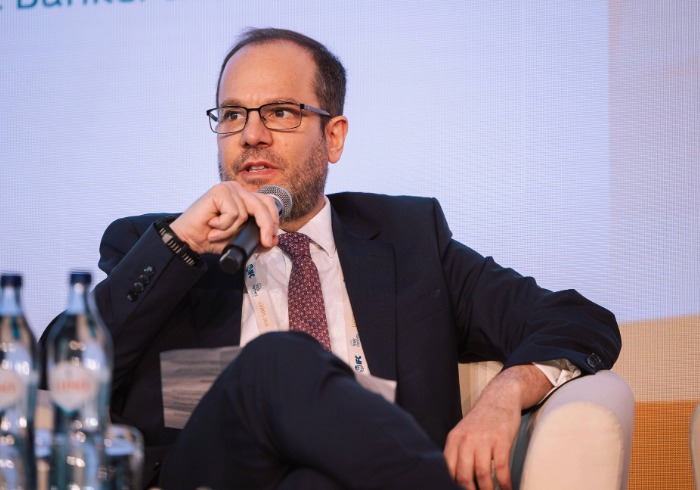
Lokesh Gupta leads the corporate banking product portfolio, encompassing cash management, trade finance, supply chain finance, credit, treasury and corporate lending. He is at the forefront of harnessing Agentic AI on cloud-native SaaS platforms to deliver transformative business outcomes for clients.
Lokesh brings more than 33 years of global technology leadership experience at renowned financial institutions, including Barclays, Morgan Stanley, Lehman Brothers, Goldman Sachs and Nomura. Throughout his career, he has led large-scale digital transformation initiatives and shaped technology strategy across corporate banking, retail banking, wealth management, prime brokerage and fund services.
He is deeply passionate about building customer-centric engineering cultures, fostering product innovation through next-generation technologies like Agentic AI, and mentoring the next generation of technology leaders.