
Banks are benefitting from higher demand for trade lending, a GTR review of half-year earnings suggests, although there are signs of weakening in the Middle East after months of disruption to shipping and supply chains.
Several lenders in Europe and Singapore reported higher trade loan volumes, continuing a trend apparent from last year’s full-year earnings reports.
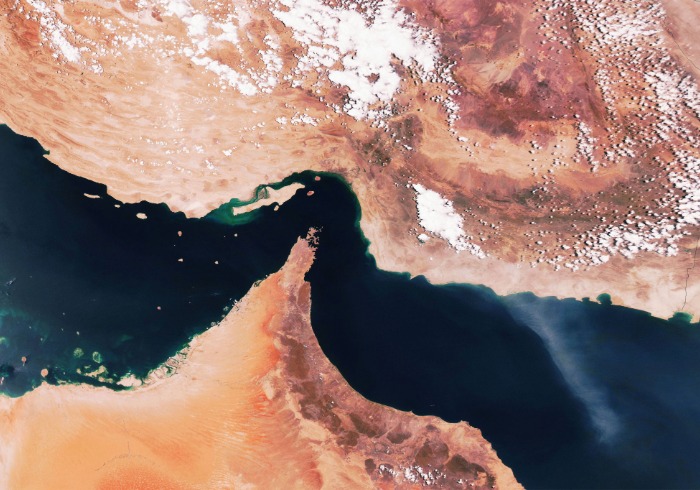
The picture in the Middle East, the epicentre of trade disruption brought about by the near-total closure of the Strait of Hormuz in March, is mixed. Many banks reported large gains in trade loan volumes, but there were signs of slackening in the second quarter and one bank chief spoke of a “downturn” in the sector.
Two major lenders – Deutsche Bank and Standard Chartered – said they have been “rationalising” and “optimising” capital-intensive exposures in their trade portfolios.
There are wide discrepancies in how banks report trade finance volume or income, if at all, and GTR’s review only covers some lenders and markets.
Most large US, European and Chinese banks, for example, do not break out income from trade-related lending or services, meaning the results only provide a partial snapshot of global trade finance revenue for the first half of 2026.
Europe
HSBC reported broad-based growth in its Global Trade Solutions division during the first six months of the year. Total revenue jumped by 12% year-on-year to US$1.54bn. Revenue from fees was US$817mn, implying just over US$700mn in interest earnings.
Trade loan balances at the London-headquartered bank grew by almost a third year-on-year to hit US$120bn at the end of June, while documentary credits and short-term trade-related transaction exposures surged by almost 30% to stand at US$8.5bn.
Revenue was buoyed by a one-off recovery fee in the first quarter, on which the bank declined to comment.
HSBC said trade fee growth in the second quarter came from “continued growth in guarantees in Asia and US, demonstrating the strength of the franchise in volatile market conditions”.
At Asia and emerging markets specialist Standard Chartered, trade and working capital operating income over the first half slipped 2% to US$611mn. The bank attributed the drop to “portfolio optimisation actions partially offset by higher capital-light unfunded exposure”.
Net fee and commissions of US$327mn were slightly higher than the first six months of last year, implying the fall came from lower interest income.
Despite the overall fall across the first six months, in the second quarter the bank notched a 4% uptick in trade and working capital operating income year-on-year.
Financial guarantees, trade credits and irrevocable letters of credit grew during the first half, standing at US$120.7bn at the end of June compared with US$114.2bn at the end of December.
Other major UK-headquartered lenders don’t report trade revenues, but they provide indications of documentary credit volumes. Barclays said documentary credits and other short-term trade transactions edged up to £1.26bn in June compared to £1.10bn at the end of December. Lloyds said contingent liabilities, including performance bonds and letters of credit, stood at £3bn at the end of the first half, largely unchanged from December.
In France, Natixis said global trade revenue leapt by 27% year-on-year in the second quarter, without giving the figure. The bank said that performance had helped drive overall global banking revenue in the period to €555mn.
Deutsche Bank said year-on-year growth of 7%, or €8bn, in the second quarter was “driven by trade finance”. Germany’s largest lender anticipates that corporate treasury service revenue will be slightly higher across the full year because of both interest and fee income from trade finance products.
In trade, the lender is continuing a “rationalisation of our portfolio which was low yielding”, chief financial officer Raja Akram told analysts on a July 29 call. The bank declined to comment further.
In response to a question from an analyst, Akram said: “We are actually seeing loan growth after a long time and that too in trade finance which is where all the good stuff happens, the fees come associated with that, the payments business comes with that.”
The two biggest Dutch lenders indicated improved activity in trade finance, without providing figures.
ING said one of the drivers of an 11% boost to wholesale banking fees in the second quarter was “higher deal flow in trade finance”.
Rabobank said trade and commodity finance was one of several drivers of a 6.8% growth in wholesale banking loans. “Geopolitical developments” had reinforced “the need for secure supply chains, commodity flows, and working capital solutions”, the lender said. This had “supported demand by, among others, trade and commodity finance and value chain finance where higher commodity prices and increased trade-related activity contributed positively to the net fee and commission income and helped maintain overall stability”.
In Switzerland, the cantonal and other banks specialising in trade finance had not published interim results as of press time. But UBS noted that “trade and export finance remained strong, particularly among clients in the energy sector”.
Across the border, UniCredit announced trade and correspondent banking interest revenue in the first half was up by 5.5% year-on-year to €600mn, while fees climbed 3.7% to €400mn.
Spain’s Santander said trade finance and capital-light export finance contributed to a 22% year-on-year rise in loans and advances in the corporate and investment banking division. Export finance was also the main driver of higher activity in global transaction banking, the lender reported. BBVA only said that a quarter-on-quarter rise in net fees and commissions was partly due to guarantee activity in working capital and trade finance.
Africa
The African Export-Import Bank, whose main business is trade and project finance, posted a US$534mn profit for the first half of the year. Net interest income rose by almost 20% year-on-year to just over US$1bn, overshadowing fee and commission income of US$71mn. The multilateral lender said in its earnings statement that it had paid a US$347mn dividend to its shareholders for the 2025 financial year, following a profit of US$1.15bn.
Ecobank, which operates in several African markets, said trade finance loans and loans supported by development finance institutions had pushed net revenue in its commercial banking segment up by 11% to US$323mn for the first six months of the year.
Trade and term lending also drove a 4% uptick in trade loans to US$8.4bn, the Togo-headquartered bank said. Documentary and commercial letters of credit rose by US$200mn to US$1.3bn during the first half. In Nigeria, higher trade services transactions also contributed to 27% constant-currency growth in non-interest revenue.
Of the South African banks that released half-year results, Standard Bank reported “stronger trade finance activity underpinned by a 10% increase in off-balance sheet trade exposures to R179bn”.
Headline trade and working capital earnings at Absa fell by 2% to R2.1bn in constant currency terms. The lender said trade finance growth in markets outside of South Africa was offset by lower financial institutions trade loan balances inside the country. The bank also noted “lower utilisation” of working capital and supply chain finance facilities in regional countries, and “subdued activity in selected markets”.
Egypt’s Banque du Caire added E£3.5bn (US$69mn) in outstanding letters of credit between December and June, bringing the total to E£9.8bn.
Middle East
In the UAE, lenders largely reported improved trade finance volumes despite the disruption to trade in the Gulf wreaked by the closure of the Strait of Hormuz. But signs of strain emerged in data for the second quarter, the first that fully encompassed the Iran war.
Emirates NBD group chief executive Shayne Nelson told analysts: “There’s only two main areas we’ve seen a downturn. One is trade finance, which you probably expect given the conflict, and two is car loans.”
The bank nevertheless reported a 22% increase in trade loans between December and June to reach Dh54.2bn (US$14.7bn); fee and commission income also grew slightly year-on-year to reach Dh744mn in the first six months. However, fees slipped by 5% on a quarterly basis in Q2 as the bank saw “lower volumes” in trade finance, group chief financial officer Patrick Sullivan said.
Trade-related loans at First Abu Dhabi Bank jumped to Dh104.4bn in June from Dh73.8bn in December, while open letters of credit pared 4% to Dh56bn. Group chief financial officer Lars Kramer said the bulk of short-term trade financing was “predominantly” in January and February, before the US-Israeli attack on Iran.
Mashreq reported the opposite trend: its letters of credit jumped by Dh8.8bn to Dh20.9bn, while trade loans slipped by 6% to Dh25bn between December and June. ADCB reported a 24% lift in trade loans, while trade finance commissions rose 16% to Dh449mn.
Saudi banks provided little information on trade finance, but letters of credit outstanding at the end of June fell from SR8.7bn (US$2.3bn) to SR8.1bn year-on-year at Riyad Bank, and were also down 3% at Saudi National Bank (SNB), to SR17.6bn. At SAB, they were flat at SR17.5bn. SNB also reported a 39% drop in trade finance fees, without providing the total fee figure.
Bahrain-headquartered Bank ABC reported US$4.1bn in short-term trade and transaction contingent items in June, down US$600mn from December.
Singapore
In the trade finance hub of Singapore, OCBC said trade-related net fees and commissions were up 8% in the first half to S$154mn, although the figure includes remittance and guarantee fees.
At UOB, trade-related fees – also including remittances and guarantees – were flat at S$155mn (US$121mn). However, gross trade loans soared by 33% to reach S$50bn at the end of June.
In Malaysia, Indonesia, Thailand and Vietnam, the bank’s trade loans grew by 14%. Wee Ee Cheong, UOB’s deputy chairman and chief executive officer, said the bank sees “significant opportunities to grow wealth, support cross-border ambitions and capture a larger share of trade and investment flows across Asean”.
Trade loans at UOB almost matched those at cross-town rival DBS, which reported S$52bn in gross loans for the H1 period. Interest earned on the assets was around S$1bn. DBS chief executive Tan Su Shan described trade as one of the “structural growth engines” for the lender’s institutional banking business.
“In trade, we are facilitating both what we call the intentional supply chain shift, as companies diversify their upstream supply chains, as well as facilitating inventory financing and receivables financing, particularly in the high growth TMT sector,” she told reporters in a media briefing.
Americas
In the US, Citi is the only major bank to report earnings from trade, although its trade and treasury solutions unit also includes other transaction banking product lines. Revenues in the unit were up 18% year-on-year to US$4.7bn in the first half, off the back of higher net interest and fee income.
The bank noted “continued demand for trade loans”. Financial standby letters of credit were largely stable at US$81.6bn.
Volumes appeared muted in Brazil. Bradesco’s foreign trade finance loans shrank by 3% to R$51.5bn (US$970mn) between December and June, while “financing and export” loans were largely stable at R$35bn.
Banco do Brasil said confirmed export credits in June were R$12bn lower than December at R$174bn, although “contracted open credits for import” more than doubled to R$3.45bn in the same period.