
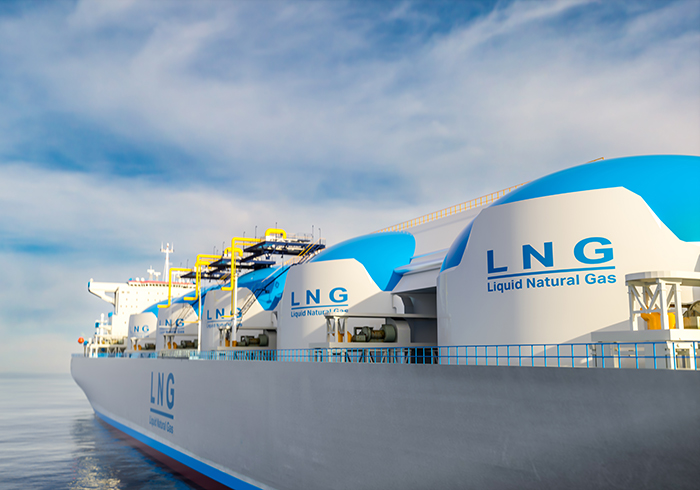
The ongoing conflict in the Middle East could curtail LNG supply by 15% and delay capacity growth over the next four years, analysts have said.
Damage to LNG infrastructure in Qatar, alongside the effective closure of the Strait of Hormuz, could lead to a cumulative loss of around 120 billion cubic metres (bcm) of LNG supply between 2026 and 2030, according to the International Energy Agency’s (IEA) latest Gas Market Report.
“While new liquefaction projects in other regions are expected to offset these losses over time, the impact will prolong tight markets through 2026 and 2027,” the IEA said.
As a result, the wave of expansion in LNG supply is set to be delayed by “at least two years”.
Earlier this year, QatarEnergy declared force majeure to its buyers, a day after military attacks prompted the state energy company to halt LNG production at its facilities in the Ras Laffan and Mesaieed industrial cities.
Analysts reported in March that the closure of the Strait of Hormuz and a production shutdown in Qatar were set to trigger a 70% drop in LNG exports from the Middle East over the course of the month.
According to the IEA’s latest report, global LNG trade grew by 9.5% year-on-year between October and March, thanks in part to new liquefaction projects in North America such as the Plaquemines LNG plant in Louisiana.
North American LNG supply grew by around 35% year-on-year from October to March, while the US’ Department of Energy has also taken steps to increase its LNG exports to both free trade and non-free trade agreement countries.
Nonetheless, the Middle East crisis remains a major supply shock for LNG, pushing global LNG production from “double-digit growth to contraction”, the IEA said.
Global LNG production dropped by 8% year-on-year in March, while LNG deliveries fell by 10% year-on-year in the first 20 days of April.
Despite this, intelligence firm Wood Mackenzie reported that disruptions to the LNG market have been cushioned by fuel diversification in the power markets.
Though the war triggered a supply shock that “matched the scale of Russia’s 2022 curtailment into Europe”, prices were constrained.
“Wholesale power prices across Europe’s five major markets averaged just over €90/MWh in March 2026,” the firm said, which is significantly below the €280/MWh recorded during the first months of Russia’s war with Ukraine.
This was driven in part by LNG start-ups adding 40 million tonnes per annum of new supply since the beginning of 2026.
Peter Osbaldstone, research director, Europe power at Wood Mackenzie, said: “The Ukraine war illustrated for Europe the benefits of diversifying away from volatile fossil fuels.
“Battery storage and renewables set prices with increasing frequency, reducing the influence of gas. That structural shift insulated power markets when this crisis hit.”
While natural gas prices rocketed following the closure of the Strait of Hormuz, Asian and European spot prices have climbed down since the ceasefire – but remain above pre-conflict levels, the IEA said.
Both Wood Mackenzie and the IEA also drew attention to China’s reduction in its imports of LNG and the effect this has had on pricing.
The IEA reported that several Asian countries are actively trying to reduce their use of natural gas, which it said will “play a key role in balancing the market”.
LNG imports for the region fell by 6% in March, fuelled by China reducing its imports by 30% year-on-year. This resulted in the country’s lowest monthly LNG import level since May 2018, the agency said.