
Banks are rapidly accelerating AI experimentation across trade finance and transaction banking operations, but discussions at the Baft (Bankers’ Association for Finance and Trade) Global Annual Meeting in Orlando revealed an industry increasingly torn between excitement over efficiency gains and unease over security, governance and the long-term implications for banking jobs.
Across multiple panels on transaction banking, embedded finance and trade digitisation, speakers described AI as one of the few realistic ways to modernise a heavily manual industry still dependent on document checking, fragmented data and operationally intensive workflows.
Joon Kim, global head of trade finance and cash management platform at BNY, said banks without clear AI strategies risk falling behind competitors already embedding automation into trade operations.
“If you do not have an AI initiative at your respective organisations, and do not have a use case, I think that’s sort of like… a red flag,” Kim said at the May 3-6 event. “AI is going to be a fundamental element that’s going to drive our business so that we can build the scale and do more trade transactions for our clients.”
Kim argued AI is already proving valuable across operational areas such as document processing and transaction execution, particularly within a business that remains “very manual” and paper heavy.
“Trade finance is really about how do we process these transactions as quickly as we can so that the importers and exporters do not think of letters of credit or standby or supply chain financing as a means for banks to just delay payments, not providing the financing,” he said.
The comments reflected a noticeably pragmatic tone around AI, with much of the discussion focused on operations and profitability rather than wholesale transformation. Examples included speeding up workflows and cutting costs inside transaction banking businesses facing growing pressure on margins.
But the debate at Baft also suggested the industry’s AI conversation is increasingly being shaped by concerns over risk. As banks look to automate document checking, client onboarding and other manual processes, questions are growing around data leakage, autonomous decision-making and accountability – as well as the future of operations-heavy roles across trade and transaction banking.
The strongest warnings came from Simon Shepherd, managing director of Myriad Group Technologies, which provides software solutions for third-party management, due diligence and client onboarding, who said many institutions are becoming increasingly cautious about how AI systems interact with sensitive client information and operational processes.
“One of the issues with AI is that it is data hungry, and you are already starting to see a trickle of stories about how data has leaked into the public domain, so we are very, very cautious about it,” Shepherd said.
“I think our overriding concern is security; AI is a security problem before it is necessarily a useful tool.”
That concern also surfaced in discussions about “agentic AI” – systems capable of independently initiating actions or payments.
Michelle Zhao, global product lead for cross-border services at Mastercard, said banks are still grappling with how to handle authentication and determine true intent when payments are initiated by AI tools.
Zhao also referenced research that tested whether AI systems can effectively audit and monitor other AI agents inside financial environments.
“There’s an AI bot generating functions, and another group of bots to basically audit and monitor, and [it was found] that all of them fail,” she said.
In one case, Zhao said, an AI model “directly rejected to monitor due to ethical reasons” – meaning the AI itself decided it should not carry out the oversight role.
The comments reflected wider unease among transaction banking executives about allowing increasingly autonomous systems to take decision-making roles inside payments, compliance and transaction processing environments.
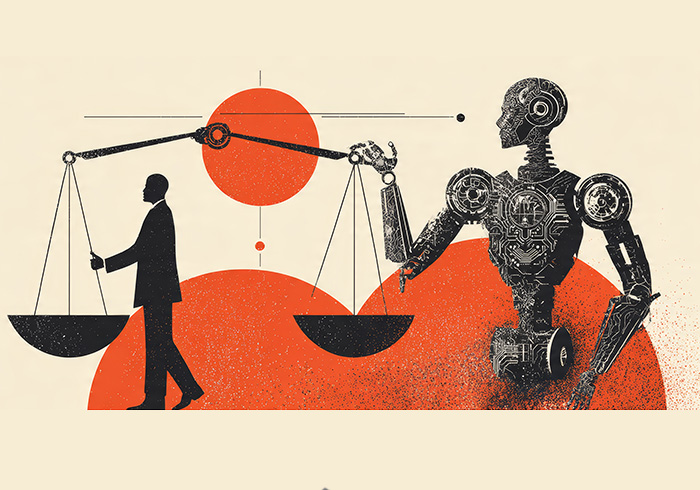
“You cannot fire AI”
Few speakers addressed job losses directly. But repeated references to “efficiency”, “scale”, streamlining and eliminating workflow steps suggested many banks increasingly see AI as a way to reduce reliance on labour-intensive operational structures that have historically underpinned trade and transaction banking.
Some banks see adoption of AI as a solution to looming operational staffing gaps as experienced back-office staff retire.
“There’s a lot of industry talk about back-office operations people retiring and who replaces them,” one technology provider representative told GTR at the event. “But the point is they may not need to replace those people.”
On stage, panellists stressed that human judgement and relationship management are likely to remain central even as automation expands.
That theme surfaced during leadership-themed discussions focused on workforce development and future skills. Nicole Meyer, founder of the Meyer Partnership, an executive search and leadership advisory firm, said “strategic thinking” and “data literacy” would become increasingly important as AI adoption accelerates.
James Rausch, managing director and head of global transaction banking at RBC Capital Markets, said banks should stop asking whether AI will replace jobs and instead rethink how employees use the time automation creates.
“We have to stop asking, ‘Will AI replace my job?’ and start asking, ‘What will my job look like when AI handles parts of a job that don’t require me?’” Rausch said. “The explicit goal is not to do the same work faster. It’s to do better work.”
He added that banks are increasingly turning to AI to free employees from repetitive tasks and redirect them toward higher-value client interactions and strategic work.
Others argued that accountability will remain difficult to automate fully.
“When I think about artificial intelligence, also leadership as well, I mean genuinely, you cannot fire AI,” said Tsvetanka Nankova, global head of sales institutional cash and trade finance at Deutsche Bank. “You need somebody to be accountable to own decisions, and that’s going to be the leader.”