
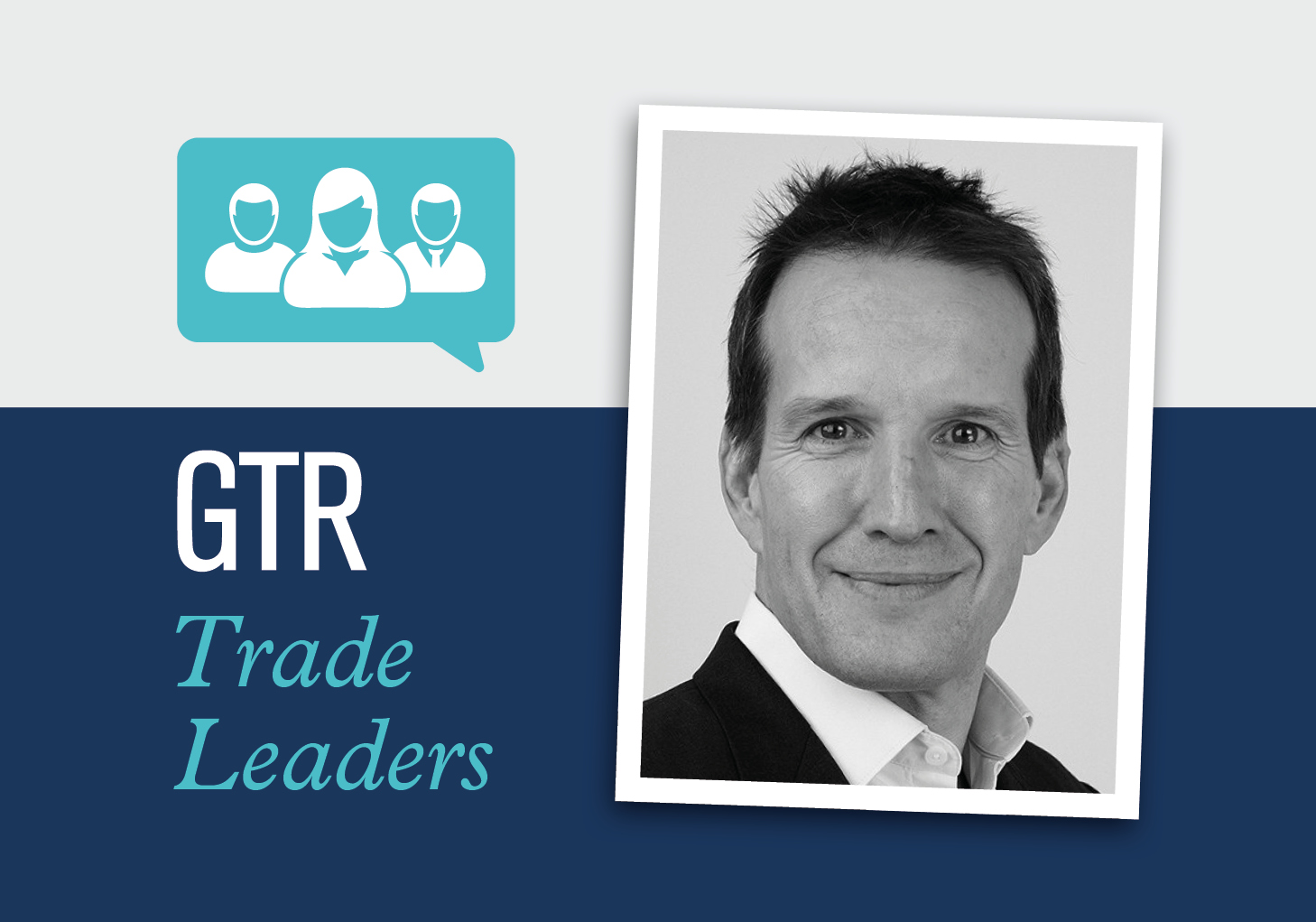
With nearly three decades in the insurance market, Matthew Strong has witnessed the credit and political risk sector evolve from a niche political risk play into a core tool for banks’ capital management and risk distribution strategies. Now deputy CEO of Howden Capital, Advisory and Placement (CAP), he is helping steer the broker’s next phase of growth amid rising geopolitical complexity and sustained client demand.
Speaking with GTR at Howden’s London office, Strong reflects on the market’s expansion, the shifting balance between credit and political risk, and why insurers’ capacity continues to hold firm even as global volatility intensifies.
GTR: You’ve been involved in the insurance market for the best part of three decades. What led you to credit and political risk, and to your current role at Howden?
Strong: I started in the insurance industry in 1994, as a marine insurance broker. After that, in my mid-20s, I lived in Zimbabwe for a year, doing something completely different: running a furniture manufacturing business. However, after a time I realised that, whilst I was having a great time in Zimbabwe, it was time to return to London.
At that point, I had insurance and broking knowledge as well as the experience in Africa, and on returning in 1998 an opportunity arose in the political risk team at JLT as a broker. I ended up staying there for 25 years, during which time the company was acquired by Marsh, in 2019. Alongside various roles in London at JLT I also spent five years in Singapore and two years in Chicago working in the credit and political risks market in the Asia and North America regions.
In 2024 I joined Howden, which already had a well-established and respected credit and political risk practice, and the conversation was around how to grow the business together as a team. That was an exciting new challenge and I was attracted by Howden’s entrepreneurial mindset and ambition.
Credit and political risk is a unique business, every area of the market needs a different approach, and every day can be different to the last – and that’s never been truer than today. It’s a small part of the wider trade and investment ecosystem, but it is an important part.
GTR: How has the sector changed over the years?
Strong: It’s grown significantly over time. When I first joined this market in 1998 there were approximately six insurers in this space; there are now in excess of 75. With that, the market has deepened and widened in capability, and the needs of clients have evolved and grown with time as well. The largest users of the market are banks, trading houses and corporates, as well as public sector entities.
Credit and political risk isn’t like other areas of insurance where there is a legal requirement to buy it, unlike marine insurance, for example. Clients are using the market as a growth enabler, whether that’s from a risk mitigation or risk distribution perspective, or particularly with banks, for capital management purposes.
In the early days of my career, the market was predominantly political risk rather than credit, whereas now it’s the other way round.
GTR: Today, trade seems to be characterised by uncertainty and volatility. Is that reflected in what Howden is seeing from the market?
Strong: Just looking at the beginning of 2025, there were forecasts it was going to be a volatile year, and even by the time we got halfway through it was already more volatile than expected. There was also volatility emerging from places we didn’t necessarily anticipate, with various intertwined geopolitical factors – whether that is investment in technology, critical minerals, tariffs and so on. As a result of that, we’re seeing a convergence between the geopolitical and economic points.
We’ve also had an interesting start to 2026. The situations in Ukraine and Iran are still there, and now we have Greenland and Venezuela too – to name just some of the headline events – and this kind of uncertainty means risks are increased, or certainly brought into sharper focus.
Banks, traders and corporates need to continue trading and investing, so the question becomes how you best manage those risks and navigate this world, despite the increased uncertainty.
I mentioned that our market has never been bigger on the supply side, but the demand has also continued to increase, and that’s across all of our core client groupings – and we foresee that continuing. It is worth noting that despite the growing volatility, the insurance market capacity and capabilities remains consistent and continues to increase, providing clients with stability.
GTR: Have you seen a spike in claims as a result of the more challenging environment?
Strong: In recent times there has been a more constant level of claims activity and on watch lists – that’s because of the nature and the size of the market now. At present we have not seen a ‘spike’ per se, although there is a gradual uptick.
Even in situations like the invasion of Ukraine, there haven’t been major spikes in the level of losses. And the claims track record in the market is incredibly strong, which is of course critical for clients and the track record of the market.
That’s where the partnership approach between the insurer and the client comes through, particularly in challenging situations.
GTR: You mentioned banks using credit risk insurance for capital management purposes. To what extent are the Basel reforms impacting demand?
Strong: Of course every client has a different rationale, and while some banks have been using the product for 20-plus years, others are coming to the market now. Originally it was more about risk mitigation or distribution, but capital management has become increasingly important under the Basel framework.
This has fuelled demand over a long period of time and the ability of credit risk insurance to free up capital is a key driver for uptake in many cases.
GTR: As you say, the credit side of this business has grown larger than the political risk side. Why is that?
Strong: It’s important to distinguish between the trade credit market, and the structured credit and non-payment insurance market. Both sides have continued to grow, albeit at different paces.
The reason it’s important to make that distinction is because there are different drivers behind the two sides. While the trade credit market continues to grow, structured credit has moved from focusing on trade to supporting a wider range of asset classes and underlying structures, particularly for banks.
That really reflects how the banks have evolved their utilisation of the insurance market over time , and the insurers continue to stand behind them.
The political risks market is growing, albeit at a slower pace given the main demand has been for comprehensive credit coverage, especially from banks.
GTR: Howden recently launched the Global Trade Credit Insurance (TCI) Network, which brings together operations from different countries to provide clients and insurers with a more coordinated offering. Could you tell us about the background to this initiative?
Strong: The launch of the Global TCI Network reflects the growth of the Howden as a company, in that we now have trade credit expertise in every corner of the world.
With Howden having now expanded into 56 countries, it’s about knitting together more closely and collaboratively all of our trade credit expertise around the globe. It means we can better serve our clients, particularly on the multinational level, while maintaining that entrepreneurial specialist approach and engaging with insurers in the best possible way.
GTR: Finally, what keeps you busy outside of work?
Strong: My teenage children! I also love sport and fitness, whether that’s playing or watching. Nothing too extraordinary, but I like to have some sort of fitness challenge every year. This year it’s walking 106km around the Isle of Wight in 24 hours in May, so training for that is also keeping me busy at present!